
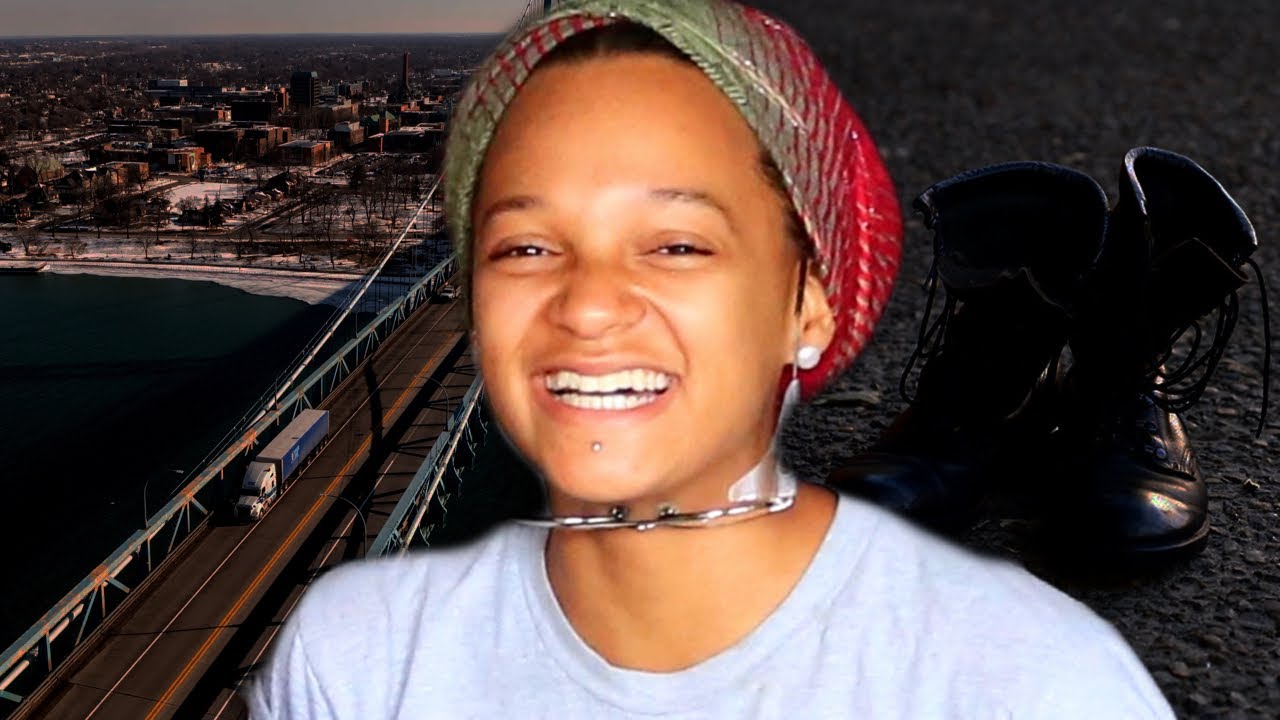
Tonee Marie Turner Disappears After Getting Off Bus in Pittsburgh Pennsylvania
The disappearance of Tonee Marie Turner remains one of Pittsburgh’s most haunting missing person cases. Tonee was 22 years old when she vanished on December 30, 2019, after what appeared to be an ordinary day in the city. She was a young artist, a metal fabricator, a ceramics teacher and a deeply loved member of the local creative community. Her life was filled with art, movement, expression and connection, which makes the mystery surrounding her disappearance even more painful.
Tonee was last seen after leaving Dobra Tea in the Squirrel Hill neighborhood of Pittsburgh, Pennsylvania. She reportedly took her usual bus toward Hazelwood, where she lived, and was seen getting off near her regular stop. After that, she disappeared. Later that night, several of her personal belongings were found on or near the Homestead Grays Bridge, including items that seemed unlikely for her to leave behind willingly.
Her case has remained open because there are still no final answers. Did Tonee make it to her home area and encounter someone? Did she go to the bridge on her own? Did someone else leave her belongings there? Was the bridge the actual center of the mystery, or only the place where clues were found? Years later, those questions continue to sit at the heart of the case.
Tonee’s disappearance is not only a story about a missing person. It is also a story about a family searching for answers, a community mourning uncertainty and a young woman whose life and art still matter.
Who Tonee Marie Turner Was
Tonee Marie Turner was born on June 10, 1997. By the time she disappeared, she had already become known in Pittsburgh as a creative and thoughtful young woman with a strong artistic presence. She was connected to several parts of the city’s arts and community scene, especially through her work in metal fabrication, ceramics and youth programming.
Tonee worked as a metal fabricator at Studebaker Metals in Braddock. Metalwork requires patience, precision and strength, and Tonee’s role reflected both her creativity and her hands-on skill. She was not simply someone who admired art from a distance. She made things. She shaped materials. She turned ideas into physical objects.
She also taught ceramics at the Braddock Carnegie Library, sharing her creative skills with others. Ceramics is an art form rooted in touch, patience and transformation. Clay begins as something soft and unfinished, then becomes something lasting through pressure, shaping and fire. In many ways, that work reflected the kind of creative life Tonee was building.
Tonee was also connected to the Braddock Youth Project, where she had been involved as a participant and later in a leadership role. That part of her life showed her connection to community, mentorship and young people. She was not only creating for herself. She was part of something larger.
A Young Artist With Community Roots
People who knew Tonee described her as artistic, caring, intelligent and full of life. She was the kind of person whose presence could stay with others. Her creative work, friendships and community involvement made her disappearance feel even more shocking because she had so many ties to the people and places around her.
Tonee’s life crossed different parts of Pittsburgh. She moved through Squirrel Hill, Hazelwood, Braddock and other areas connected to her work, home and personal life. Her story was not confined to one neighborhood. She was part of the larger fabric of the city.
Her identity as an artist is central to understanding why her case resonated with so many people. Artists often leave pieces of themselves in their work, and Tonee’s creative path made her visible to friends, coworkers, students and community members. She had talent, curiosity and a future that seemed open.
That future was interrupted on December 30, 2019. What began as a normal day became the start of an unresolved mystery that still leaves family, friends and supporters searching for clarity.
The Day Tonee Disappeared
On December 30, 2019, Tonee was in the Squirrel Hill area of Pittsburgh. She spent time at Dobra Tea, a local tea house known as a calm gathering place. Around 6:00 p.m., she reportedly left the business and began her usual trip toward Hazelwood.
Tonee took the bus, following a route that was familiar to her. This detail is important because her movements that evening did not immediately appear unusual. She was not known to be taking a strange route or heading somewhere completely unexpected. She seemed to be following a routine path toward home.
A bus driver reportedly saw her get off at or near her normal stop around Hazelwood Avenue and Giddings Street. That location was close to where she lived. If that account is accurate, it means Tonee made it back to her neighborhood area after leaving Squirrel Hill.
After that moment, the timeline becomes unclear. Tonee did not return home in a way that brought peace to her family. She did not continue normal communication. She did not show up the next day as expected. Somewhere after getting off the bus, she vanished.
The Belongings Found on the Bridge
Later on December 30, 2019, Tonee’s belongings were found on or near the Homestead Grays Bridge. The discovery of those items became the central mystery in the case. Among the belongings reportedly found were her phone, wallet, keys, diary, shoes and a ceramic pot.
Those items raised immediate concern. A phone, wallet and keys are personal essentials. Most people do not willingly abandon them without a serious reason. Shoes are also significant because leaving them behind in late December in Pittsburgh would be alarming. The ceramic pot connected the discovery to Tonee’s identity as an artist and maker.
The location also created questions. The Homestead Grays Bridge crosses the Monongahela River and connects areas near Pittsburgh. It is not the same as simply finding someone’s bag on a sidewalk near home. The bridge setting led to public speculation about whether Tonee may have gone there herself, whether someone else brought the items there, or whether something happened on or near the bridge.
The belongings were reportedly found around 8:30 p.m., a few hours after Tonee left Dobra Tea. That leaves a narrow but critical window of time. Investigators, family and supporters have had to consider what could have happened between the moment she got off the bus and the moment her belongings were discovered.
A Timeline Filled With Questions
The known timeline appears simple at first. Tonee left Dobra Tea around 6:00 p.m. She took her usual bus toward Hazelwood. She reportedly got off at her normal stop near home. Later that evening, her belongings were found near the Homestead Grays Bridge. After that, she was missing.
But a simple timeline does not mean a simple case. The distance and movement involved create uncertainty. If Tonee got off near her home, why would her belongings later be found at the bridge? Did she travel there herself? Did she meet someone? Did something happen in Hazelwood before the items were placed elsewhere? Did the belongings accurately show where Tonee had been, or did they create a confusing trail?
These questions matter because the location of belongings does not always equal the location of a disappearance. In some cases, personal items are found where a person was last present. In other cases, items are moved, staged, discarded or separated from the person for reasons that are not immediately clear.
The case also raises questions about communication. Tonee’s phone was among the items found, which meant she could not be easily reached afterward. The presence of her wallet and keys also made it harder to imagine that she had simply chosen to leave and start over. People who voluntarily disappear often take items needed for movement, money and access. Tonee’s belongings being left behind makes the situation feel more urgent and unusual.
Theories and Public Discussion
Over the years, different theories have circulated about what may have happened to Tonee Marie Turner. Some people have wondered whether she may have died by suicide because her belongings were found near a bridge. Others believe the circumstances are suspicious and could point to foul play. Still others have questioned whether someone may have used the bridge to mislead investigators.
It is important to be careful with theories. Public discussion can help keep a case visible, but speculation is not the same as proof. Tonee’s family and community deserve answers based on evidence, not assumptions.
The bridge discovery naturally shaped much of the public conversation. When personal belongings are found near a high bridge, people often jump to one explanation. But cases are rarely that simple. Investigators have to consider the physical evidence, witness accounts, surveillance, phone activity, relationships, mental state, transportation routes and possible outside involvement.
Tonee was described by loved ones as someone whose disappearance was out of character. That does not rule out any possibility, but it does explain why her family and supporters have continued to seek more information. They wanted more than assumptions. They wanted facts.
The Emotional Weight for Her Family
For Tonee’s family, December 30, 2019, became the day their lives changed. A missing person case creates a unique kind of pain because there is no clear ending. Families are left in a painful space between hope and grief, searching for answers while trying to survive each day without the person they love.
When someone is murdered, a family has the terrible reality of death. When someone is missing, the uncertainty can be its own form of suffering. Every unknown number, every possible sighting, every rumor and every anniversary can reopen the wound. Families have to live with questions that most people can barely imagine.
Tonee’s loved ones had to wonder where she was, what happened to her and whether someone knew more than they were saying. They had to deal with the public attention around the case while also holding private grief. They had to keep her name alive without knowing whether the next update would bring hope or devastation.
The fact that Tonee disappeared just before the start of a new year adds another emotional layer. Many people see the end of December as a time to reflect and plan for what comes next. For Tonee’s family, the end of 2019 became the beginning of a long search.
The Impact on Pittsburgh’s Creative Community
Tonee’s disappearance affected more than her immediate family. It touched Pittsburgh’s creative and community circles because she had been active in art, education and local work. She was not a distant figure. She was someone people had worked with, learned from, laughed with and admired.
Artists often help cities understand themselves. They create objects, images and spaces that reflect emotion, struggle and imagination. Tonee’s work in metal and ceramics connected her to that tradition. She was building a life through creativity and craft.
Her disappearance left people asking how someone so connected could vanish with so few answers. Community members shared her story, created memorials and continued speaking her name because they did not want her case to fade. In missing person cases, public attention can make a difference. It keeps pressure on systems, reminds witnesses that information still matters and tells families that their loved one has not been forgotten.
Tonee’s case also raised broader conversations about how missing Black and biracial women are covered, searched for and remembered. Many families and advocates have argued that missing women of color often do not receive the same level of attention as other cases. Tonee’s story became part of that larger concern, making continued awareness even more important.
Why Her Belongings Matter
The items found near the Homestead Grays Bridge remain some of the most important known details. Tonee’s phone could have contained messages, calls, location information or contacts that helped investigators understand her final known movements. Her diary may have offered a glimpse into her emotional state, thoughts or recent concerns. Her keys and wallet showed that she did not have basic items needed for normal daily life after she disappeared.
The shoes are especially haunting. Shoes are practical, personal and necessary. Leaving them behind suggests a moment of crisis or a situation where normal behavior had broken down. Whether Tonee removed them herself or someone else placed them there is one of the difficult questions in the case.
The ceramic pot is also deeply symbolic. It was not just an object. It connected to Tonee’s identity as an artist. The presence of that item among her belongings makes the scene feel personal and specific. It reminds people that Tonee was a maker, a teacher and a creative person carrying part of her world with her.
In any investigation, belongings can tell part of the story, but they do not always tell the whole story. They can show where someone may have been, what they carried and what was left behind. But they cannot speak clearly without context. That is why witness information remains so important.
The Search for Answers
After Tonee was reported missing, family, friends, police and community members searched for information. Her case spread through local media, missing person websites, social media posts and community discussions. People shared her photo, her description and the details of where she had last been seen.
The search for Tonee has lasted for years because there has been no final resolution. Her name continues to appear in missing person databases and cold case discussions. Each new mention keeps the possibility alive that someone may remember something useful.
In cases like this, even a small detail can matter. Someone may have seen Tonee after she got off the bus. Someone may have noticed a person with her belongings. Someone may have seen activity near the bridge that did not seem important at the time. Someone may know who she planned to meet or what was happening in her life in the days before she disappeared.
Time can make investigations harder, but it can also change people. A person who was afraid to speak in 2019 may feel differently years later. A friendship may end. A relationship may change. A secret may become too heavy to carry. Cold cases often move forward when someone finally decides to tell what they know.
Remembering Tonee Beyond the Mystery
It is easy for missing person cases to become focused only on the disappearance. The timeline, the clues and the theories can overwhelm the person at the center. But Tonee Marie Turner was more than a mystery. She was a daughter, sister, friend, artist, worker, teacher and community member.
She had a life before December 30, 2019. She had skills, dreams and relationships. She made art with her hands. She helped others learn. She moved through Pittsburgh with purpose. She left an impression on people who still remember her.
Remembering Tonee means holding both truths at once. Her disappearance matters and deserves attention, but so does her life. The art she made, the people she taught, the friendships she built and the love her family carries are all part of her story.
The mystery should not erase her humanity. It should make people care more deeply about finding answers.
A Case Still Waiting for Resolution
The disappearance of Tonee Marie Turner on December 30, 2019, in Pittsburgh, Pennsylvania, remains unresolved. The known facts create a disturbing picture. She left Dobra Tea in Squirrel Hill, took her usual bus toward Hazelwood, reportedly got off near her home and then vanished. Later that night, her belongings were found on or near the Homestead Grays Bridge.
Those details have led to years of questions. The bridge, the abandoned items, the short timeline and the lack of confirmed answers all make the case deeply unsettling. For Tonee’s family and friends, the most important question remains simple and painful: what happened to Tonee?
Until that question is answered, her case remains open in the hearts of those who love her. Her name continues to be shared because silence helps no one. Every retelling is a reminder that Tonee mattered, that her story is not finished and that someone may still hold the information needed to bring her family closer to the truth.
Discover more from City Towner
Subscribe to get the latest posts sent to your email.