History of Fontana California
Fontana, California is a city with a history shaped by open land, agriculture, industry, transportation, migration, and steady reinvention. Located in San Bernardino County, in the heart of Southern California’s Inland Empire, Fontana grew from a rural settlement into one of the region’s most important cities. Its story reflects many of the larger changes that transformed inland Southern California during the twentieth century, from ranching and farming to wartime manufacturing, suburban growth, and modern economic expansion.
Long before Fontana became a city, the area was part of a wider landscape used by Native peoples who lived throughout the valleys, foothills, and mountain areas of what is now Southern California. The region offered access to seasonal water sources, plants, wildlife, and travel routes between the mountains, desert, and coastal areas. Later, Spanish and Mexican land systems reshaped the area, placing large sections of land into ranchos used for cattle, farming, and settlement. These early landholding patterns laid the foundation for later American development after California became part of the United States.
Fontana’s modern history began taking shape in the early twentieth century, when land developers saw opportunity in the wide, open spaces west of San Bernardino and east of Los Angeles. What had once been ranch land began to attract farmers, settlers, business owners, and investors who believed the area could become a productive agricultural community. The region’s location was one of its greatest strengths. It sat close enough to major transportation corridors to support commerce, but far enough inland to offer large parcels of land for farming, industry, and housing.
The Vision of Azariel Blanchard Miller
One of the most important figures in Fontana’s early development was Azariel Blanchard Miller, often known as A. B. Miller. He is widely recognized as the founder of modern Fontana. Miller was a businessman and land developer who saw potential in the area during the early 1900s. He purchased large amounts of land and worked to create a planned agricultural community.
Miller’s vision was not simply to sell land. He wanted to build a community that could support families, farming, business, and long term growth. He encouraged settlers to come to the area and promoted Fontana as a place where people could raise crops, keep livestock, and build a future. His efforts helped shape the city’s early identity as a farming and ranching center.
The name Fontana comes from the Italian word for fountain, a fitting choice for a community whose development depended heavily on water, irrigation, and the promise of fertile land. In a dry inland region where water access was essential, irrigation systems played a major role in turning open land into productive farms. Miller and other early developers worked to make the area attractive to agricultural settlers by supporting water infrastructure and promoting the richness of the soil.
A. B. Miller’s influence remains visible in Fontana’s civic memory. Schools, landmarks, and local histories continue to recognize his role in shaping the city. His early planning helped transform Fontana from scattered ranch land into an organized community with ambition, structure, and a sense of identity.
Fontana as an Agricultural Community
During its early years, Fontana was known for agriculture. The community supported citrus groves, vineyards, poultry farms, hog ranches, and other agricultural operations. The surrounding land was open and productive, and many families came to Fontana seeking independence through farming. The area’s warm climate and access to transportation made it suitable for growing and shipping crops.
Citrus became especially important in the broader Inland Empire, and Fontana shared in that agricultural boom. Orange and lemon groves spread across parts of the region, giving the landscape a rural character that would be hard to imagine today. Vineyards and orchards also contributed to the local economy, while livestock operations added another layer to Fontana’s farming identity.
Poultry and hog farming became strongly associated with Fontana during the early twentieth century. These industries helped support local families and made the area known for practical, hardworking agricultural life. Fontana was not a glamorous city in its early days. It was a place where people worked the land, raised animals, built homes, and depended on cooperation to grow the community.
Community life centered around schools, churches, civic groups, local businesses, and agricultural networks. Residents often knew one another, and the town developed the close ties common in farming communities. While Los Angeles was growing rapidly to the west, Fontana remained more rural, with open land, dusty roads, and a slower pace of life.
Transportation and the Rise of a Strategic Location
Transportation played a major role in Fontana’s development. The city’s location along important routes made it valuable for both agriculture and industry. Roads and rail connections helped local farmers move goods to market, while later highway development connected Fontana to the growing economy of Southern California.
The arrival and expansion of regional transportation networks made Fontana more than just a farming settlement. It became a place where goods could be produced, moved, and distributed. This advantage would become even more important during the industrial expansion of the 1940s.
As automobiles became more common and Southern California became increasingly connected by highways, Fontana’s position gained new importance. Its inland location offered room for factories, warehouses, housing, and commercial growth. It was close enough to Los Angeles to benefit from the region’s economy, but it had more available land and lower development pressure during much of its early growth.
This strategic location would eventually make Fontana a key city in the Inland Empire, especially as the region became a major hub for logistics, transportation, manufacturing, and commuter housing.
The Kaiser Steel Era
Fontana changed dramatically during World War II. One of the most defining moments in the city’s history came with the construction of the Kaiser Steel mill. Industrialist Henry J. Kaiser helped establish the massive steel plant in Fontana to support wartime production. The facility became one of the largest steel mills in the West and transformed Fontana from an agricultural town into an industrial city almost overnight.
The Kaiser Steel plant opened during the early 1940s and became essential to shipbuilding, military production, and postwar industrial growth. The plant produced steel used for ships, infrastructure, and other major projects. Its presence brought thousands of workers to Fontana and changed the city’s population, economy, and culture.
Before Kaiser Steel, Fontana’s identity was rooted in farms, ranches, and small town life. After Kaiser Steel, the city became a place of industry, labor, and working class opportunity. New workers arrived from across the country, including people seeking stable jobs during and after the war. Many came from states in the South and Midwest, bringing different cultures, traditions, and experiences with them.
The steel mill created a strong blue collar identity in Fontana. Generations of families depended on Kaiser Steel for employment. The plant offered wages that allowed many workers to buy homes, raise families, and build a middle class life. Around the mill, neighborhoods expanded, businesses opened, and the city’s population grew.
The Kaiser Steel era also brought challenges. Heavy industry changed the environment, affected air quality, and tied the city’s economy to one dominant employer. Still, for many residents, the plant represented opportunity, pride, and the backbone of Fontana’s rise.
Incorporation and Postwar Growth
Fontana officially incorporated as a city on June 25, 1952. By then, it had become much more than a rural agricultural settlement. The city had grown around industry, housing, schools, and civic institutions. Incorporation allowed Fontana to create its own municipal government and guide its development more directly.
The postwar years were a period of expansion. Veterans, workers, and families moved into Fontana and the surrounding communities. New subdivisions appeared as Southern California’s population surged. Fontana became part of the broader suburban growth that reshaped the region after World War II.
Although the steel mill remained central to the local economy, Fontana also developed schools, parks, shopping areas, and public services to support its growing population. The city had to balance its industrial identity with the needs of families who wanted safe neighborhoods, good schools, and community amenities.
Fontana’s growth during this period reflected the optimism of mid twentieth century America. Many residents believed hard work could lead to homeownership and upward mobility. The city’s working class character remained strong, but it also became increasingly suburban as more people settled in the area and commuted to jobs across the region.
Racing, Car Culture, and Route 66 Influence
Fontana also developed a strong connection to Southern California car culture. Its wide roads, industrial spaces, and proximity to Route 66 helped create an environment where automobiles played a major role in local identity. The historic Route 66 corridor passed through the area, linking Fontana to one of America’s most famous highways.
Car culture became part of everyday life in Fontana and the Inland Empire. Hot rods, cruising, racing, and custom cars were all tied to the region’s postwar personality. Southern California was already famous for automotive innovation and youth car culture, and Fontana had the space and attitude to fit into that world.
Later, Fontana became closely associated with professional racing through the development of the California Speedway, later known as Auto Club Speedway. Built on land connected to the old Kaiser Steel site, the speedway symbolized the city’s transformation from heavy industry to entertainment, sports, and redevelopment. It brought national attention to Fontana and gave the city a new landmark tied to speed, engineering, and modern recreation.
The connection between steel, cars, highways, and racing gives Fontana a unique place in Southern California history. Few cities reflect the region’s automotive identity as clearly as Fontana does.
The Decline of Steel and Economic Transition
The decline of Kaiser Steel marked one of the most difficult chapters in Fontana’s history. Like many American industrial centers, Fontana faced major economic change as steel production became less profitable and global competition increased. The plant eventually closed, leaving behind job losses, uncertainty, and a large industrial site that needed a new future.
For many families, the closure was deeply personal. Kaiser Steel had provided stable employment for decades. Its shutdown meant the end of an era and forced the city to rethink its economic base. The loss of heavy industry could have permanently damaged Fontana, but the city adapted.
Over time, former industrial land was redeveloped for new uses. Warehousing, logistics, commercial centers, housing, and entertainment projects helped replace parts of the old economy. Fontana’s location near major freeways made it especially attractive for distribution and goods movement. As the Inland Empire became one of the nation’s most important logistics regions, Fontana benefited from its access to transportation corridors and available land.
This transition was not simple. It brought debates over traffic, air quality, job quality, land use, and the balance between economic development and residents’ quality of life. Still, Fontana showed resilience by moving beyond its dependence on steel and building a more diverse modern economy.
Population Growth and a Changing Community
Fontana experienced major population growth in the late twentieth and early twenty first centuries. As housing costs rose closer to Los Angeles and Orange County, many families moved inland in search of more affordable homes and larger living spaces. Fontana became a popular destination for people looking for suburban neighborhoods within commuting distance of major job centers.
This growth changed the city’s demographics, culture, and physical landscape. New homes, schools, shopping centers, parks, and roads expanded across the city. Areas that had once been agricultural or open land became residential neighborhoods. Fontana grew into one of the largest cities in San Bernardino County.
The city also became increasingly diverse. Families from many backgrounds made Fontana home, contributing to a rich mix of cultures, languages, food traditions, churches, businesses, and community organizations. The city’s identity expanded beyond its agricultural and industrial roots to become a broad suburban community with deep working class foundations.
Fontana’s rapid growth also created challenges. Traffic congestion, school crowding, infrastructure needs, and environmental concerns became important civic issues. Like many fast growing cities, Fontana had to manage development while preserving community stability and improving public services.
Schools, Parks, and Civic Identity
As Fontana grew, schools became central to the city’s identity. The Fontana Unified School District served generations of students and reflected the city’s changing population. Schools were not only places of education, but also centers of community life, athletics, arts, and family connection.
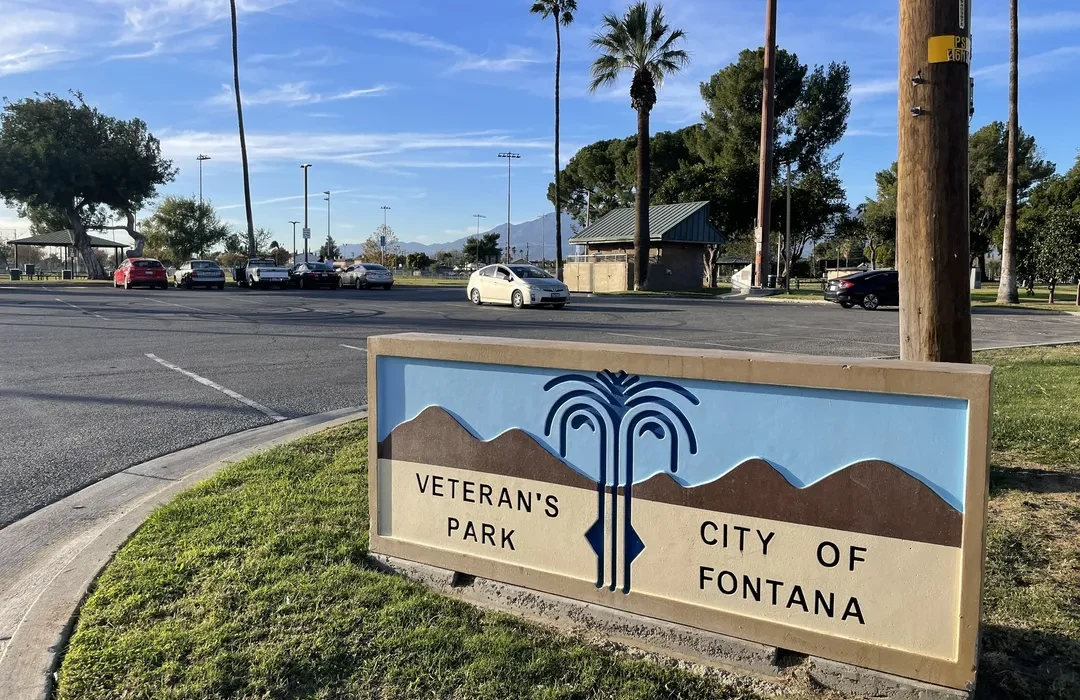
Parks and recreation also became important as the city expanded. Fontana invested in public spaces, sports facilities, community centers, libraries, and programs designed to serve residents of all ages. These amenities helped the city move beyond its image as a purely industrial place and strengthened its role as a family centered community.
Civic pride has remained an important part of Fontana’s story. Residents have celebrated the city’s agricultural past, steel industry heritage, Route 66 connections, racing culture, and modern diversity. Local events, museums, public art, and historical markers help keep parts of that history alive.
Fontana’s civic identity is not built on one single story. It is a combination of ranching, farming, migration, labor, industry, cars, suburban growth, and cultural diversity. That layered history gives the city a distinct character within the Inland Empire.
Fontana in the Modern Inland Empire
Today, Fontana is one of the key cities in the Inland Empire, a region that has become central to Southern California’s economy. The city benefits from its location near major freeways, including Interstate 10, Interstate 15, and State Route 210. These routes connect Fontana to Los Angeles, Orange County, the High Desert, the San Gabriel Valley, Riverside County, and beyond.
Modern Fontana includes residential neighborhoods, industrial parks, commercial centers, schools, hospitals, recreational facilities, and cultural institutions. Logistics and transportation remain important parts of the economy, but the city is also shaped by healthcare, retail, education, construction, public service, and small business activity.
Fontana’s growth reflects a broader shift in Southern California. Once considered more distant from the coastal centers of power, Inland Empire cities have become major population and employment centers in their own right. Fontana is no longer just a place people pass through on the way to somewhere else. It is a major city with its own history, economy, and community life.
The city continues to face important questions about growth, sustainability, housing, traffic, public health, and environmental justice. Its industrial past and logistics present create both opportunity and responsibility. As Fontana moves forward, its leaders and residents must balance economic strength with quality of life.
The Legacy of Fontana’s History
The history of Fontana, California is a story of transformation. It began as land shaped by Native presence, ranching, and early settlement. It became a planned agricultural community through the vision of A. B. Miller. It rose to national importance through Kaiser Steel and wartime production. It endured industrial decline and reinvented itself through redevelopment, transportation, logistics, housing, and civic growth.
Fontana’s past is not separate from its present. The city’s wide streets, working class spirit, industrial corridors, diverse neighborhoods, and transportation links all carry traces of earlier eras. The agricultural community, the steel town, the Route 66 stop, the racing destination, and the modern Inland Empire city all exist together in Fontana’s identity.
What makes Fontana important is not only that it grew, but how it grew. It adapted again and again as Southern California changed around it. When farming defined the region, Fontana farmed. When the nation needed steel, Fontana produced it. When industry declined, Fontana found new paths. When families needed homes, Fontana expanded. That ability to adjust has been one of the city’s strongest qualities.
Fontana’s history is the history of people building opportunity from land, labor, movement, and persistence. It is a city shaped by hard work and reinvention, with roots deep in agriculture and industry and a future tied to the continued growth of the Inland Empire.
Discover more from City Towner
Subscribe to get the latest posts sent to your email.