25 Fun Facts About Des Moines Iowa
Des Moines, Iowa is one of the most important cities in the Midwest, serving as the capital of Iowa and the cultural, political, and economic center of the state. Located where the Des Moines River and the Raccoon River meet, the city has a story shaped by Native history, frontier settlement, state government, agriculture, railroads, insurance, immigration, politics, arts, and modern urban growth.
Des Moines is a city that feels both practical and important. It does not always carry the same national image as larger Midwestern cities like Chicago, Minneapolis, St. Louis, or Kansas City, but it has a powerful identity of its own. It is the place where Iowa’s government operates, where presidential campaigns often begin building momentum, where the Iowa State Fair celebrates the state’s agricultural roots, and where businesses, neighborhoods, schools, restaurants, and cultural institutions help define central Iowa.
The city’s history stretches far beyond its modern skyline. Before Des Moines became a capital city, the land was home to Native peoples and connected to river routes, seasonal movement, trade, hunting, and settlement patterns. Later, the area became the site of Fort Des Moines, a military post established in the 19th century. From that fort and river settlement, Des Moines grew into a city that would become one of the leading urban centers of the American heartland.
Today, Des Moines is known for its golden domed Iowa State Capitol, downtown skyline, insurance and financial companies, growing food scene, public art, bike trails, political importance, and welcoming Midwestern character. Its story is one of steady transformation, from river junction to state capital, from frontier town to regional business hub, and from traditional government city to modern metro area.
The City Began Where Two Rivers Meet
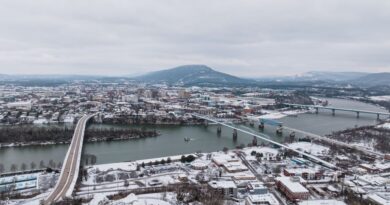
The geography of Des Moines is one of the biggest reasons the city developed where it did. The meeting of the Des Moines River and the Raccoon River created a natural location for travel, trade, settlement, and later urban growth. Rivers were essential in early American history because they provided transportation routes, water, food, and access to surrounding lands.
Long before European American settlement, the area was part of a larger Indigenous landscape. Native nations, including the Sauk, Meskwaki, Dakota, and others connected to the region, used the land and waterways in ways that reflected deep knowledge of the environment. The rivers were not just physical features. They were part of life, movement, and culture.
The name Des Moines is commonly linked to the French phrase “Rivière des Moines,” often translated as “River of the Monks.” The exact origin of the name has been debated, but it became associated with the river and later the city. Over time, Des Moines became the name of Iowa’s capital and one of the best known cities in the state.
The river location still matters today. Trails, bridges, parks, riverfront development, and downtown views continue to connect Des Moines to the waterways that shaped its beginning. The city grew around the rivers, and the rivers remain part of its identity.
Fort Des Moines Helped Shape the Early City
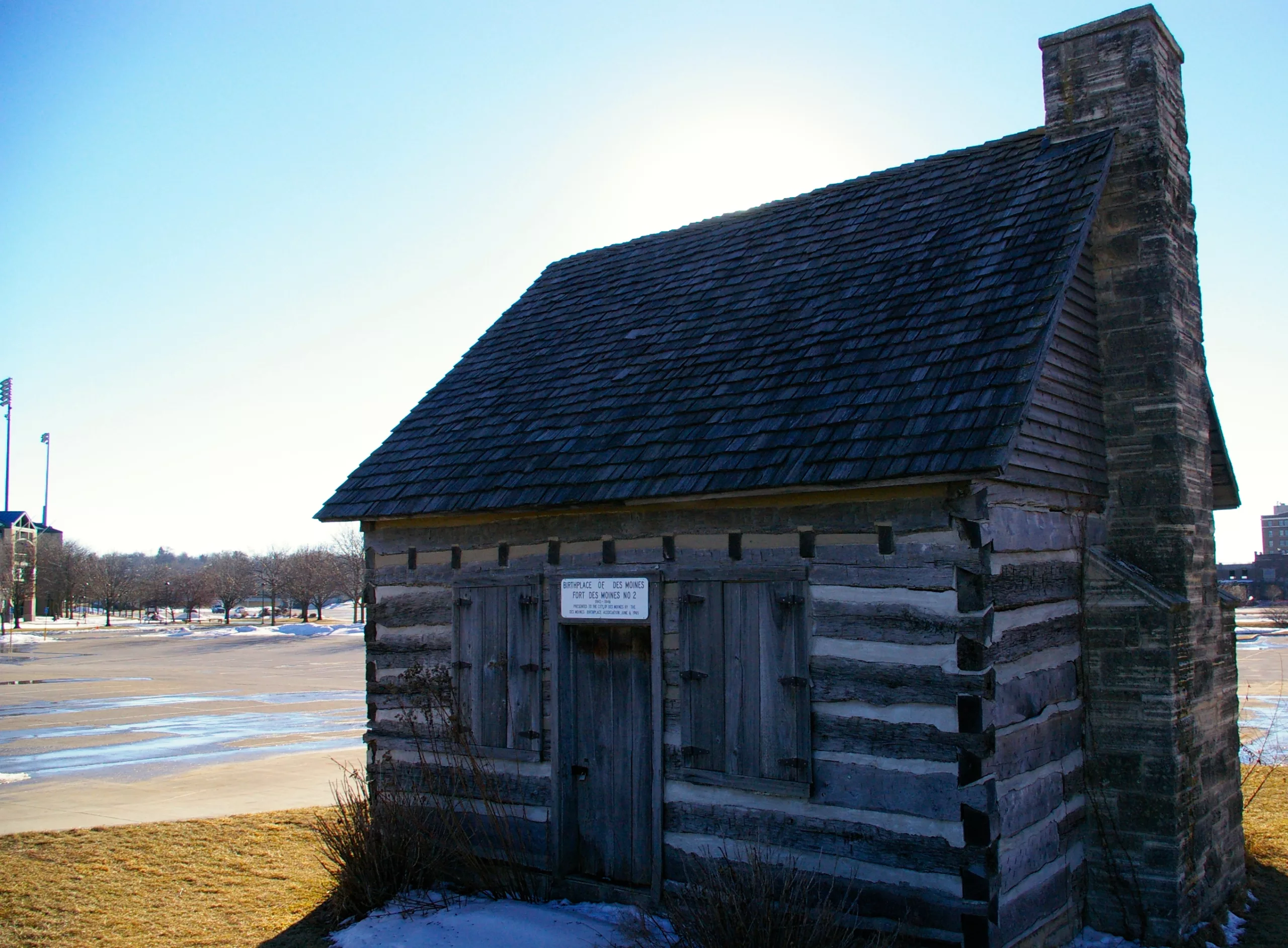
The modern city traces much of its early development to Fort Des Moines, a United States Army post established in 1843 near the confluence of the Des Moines and Raccoon rivers. The fort was created during a period of westward expansion, land pressure, and major change for Native communities in Iowa.
Although the military post did not last long as a major fort, it helped anchor settlement in the area. After the fort was abandoned, settlers remained and the community began to grow. The settlement was first known as Fort Des Moines before the name was eventually shortened to Des Moines.
Early life in the settlement was practical and difficult. Residents dealt with muddy streets, limited infrastructure, rough roads, basic buildings, and the challenges of building a town in a developing region. However, the location gave the settlement advantages. It sat near rivers, along travel routes, and in a central part of Iowa that would become increasingly important as the state grew.
The legacy of Fort Des Moines remains important because it connects the city to its frontier era. It also reminds people that Des Moines grew during a complicated period of American history involving military expansion, settlement, and the displacement of Indigenous communities.
Becoming the State Capital Changed Everything
One of the most important events in Des Moines history was becoming Iowa’s state capital. Iowa became a state on December 28, 1846, and its first capital was Iowa City. As settlement moved westward, leaders wanted a capital closer to the center of the state. Des Moines was selected as the new capital, and the state government moved there in 1857.
This decision changed the future of the city. Becoming the capital brought political power, government jobs, legal institutions, public buildings, and long term economic stability. It also gave Des Moines a permanent role in the identity of Iowa.
The Iowa State Capitol eventually became the city’s most famous landmark. With its golden dome and hilltop setting, it stands as a symbol of state government and civic pride. The Capitol gives Des Moines a visual identity that is instantly recognizable across Iowa.
Government continues to shape the city today. State offices, political events, lobbying, law, public policy, and civic activity all help make Des Moines more than just another Midwestern city. It is the place where Iowa’s laws are debated, decisions are made, and public life is centered.
Agriculture Is Still Part of the City’s Identity
Des Moines is an urban center, but it has always been connected to agriculture. Iowa is one of the nation’s most important agricultural states, known for corn, soybeans, pork, cattle, eggs, and farm production. Des Moines grew as a place where rural Iowa connected with government, business, transportation, finance, education, and culture.
The Iowa State Fair is one of the clearest examples of that connection. Held in Des Moines, the fair is one of the most famous state fairs in the country. It brings together livestock shows, agricultural exhibits, competitions, concerts, food vendors, family traditions, and visitors from across Iowa and beyond.
The fair is more than entertainment. It represents Iowa’s rural roots and Des Moines’ role as a gathering place for the entire state. For many families, attending the fair is an annual tradition tied to food, music, animals, rides, and community pride.
Agriculture also influenced the growth of businesses in Des Moines. Farmers and rural communities needed banks, insurance companies, equipment suppliers, newspapers, legal services, and markets. Des Moines became a city that served the needs of the surrounding agricultural region.
Railroads, Industry and Business Helped the City Grow
During the 19th and early 20th centuries, railroads helped Des Moines grow into a stronger commercial center. Rail lines connected the city to other parts of Iowa, the Midwest, and national markets. Goods, people, livestock, grain, coal, and manufactured products could move more efficiently.
Railroads changed the city’s economy. They encouraged warehouses, factories, mills, depots, and industrial neighborhoods. They also made Des Moines more connected to the wider country. The city was no longer simply a local river settlement and capital. It became part of a growing transportation and business network.
Industry also played a role in the city’s development. Coal mining was once important in the Des Moines area, and manufacturing helped provide jobs for working families. Factories, printing businesses, food processing, machinery, and other industries contributed to the city’s growth.
Over time, Des Moines became especially known for insurance and financial services. The city developed into one of the major insurance centers in the United States. That industry helped create office jobs, corporate growth, downtown development, and a professional identity that continues to define the city.
Des Moines Has a Strong Political Reputation
Des Moines is deeply connected to American politics. As Iowa’s capital, it is already important in state government. But the city also gained national attention because of the Iowa caucuses, which have traditionally been an early event in presidential nomination campaigns.
During presidential election seasons, Des Moines often becomes a major stop for candidates, journalists, campaign workers, political organizers, and national observers. Candidates hold town halls, speeches, fundraisers, interviews, and public events in the city and surrounding metro area.
This political role gives Des Moines influence beyond its population size. National conversations often pass through Iowa, and Des Moines becomes part of that spotlight. Residents may have opportunities to see presidential candidates up close in ways that people in larger states might not.
Politics is part of the city’s rhythm. It shows up in the Capitol, media coverage, campaign offices, civic forums, and local conversations. Des Moines is not just a place where politics happens far away. It is a place where state and national politics can feel very close.
Downtown Des Moines Has Changed Over Time
Downtown Des Moines has gone through many stages. In its early years, downtown was the center of trade, government, hotels, shops, banks, theaters, newspapers, and transportation. As the city grew, downtown became more built up, with larger office buildings and civic institutions.
Like many American downtowns, Des Moines faced challenges during the mid 20th century as suburban growth, highways, and shopping centers changed how people lived and spent money. Some older buildings were lost, and parts of downtown became less active after business hours.
In more recent decades, downtown Des Moines has seen new investment, housing, restaurants, entertainment venues, hotels, public art, bridges, trails, and riverfront improvements. The Principal Riverwalk and other projects have helped reconnect downtown to the rivers.
Today, downtown is a mix of government, business, culture, nightlife, sports, dining, and urban living. It shows how Des Moines has worked to modernize while holding on to its role as the center of the region.
Des Moines Has a Growing Cultural Scene
Des Moines has built a strong cultural identity through art, music, theater, festivals, museums, public spaces, and education. The city is home to the Des Moines Art Center, performing arts venues, libraries, historic neighborhoods, and public art that gives the city creative energy.
The Pappajohn Sculpture Park is one of the city’s most recognizable cultural attractions. Located downtown, it brings large scale public art into an open urban setting. It gives residents and visitors a free, walkable place to experience art in the middle of the city.
Music, theater, and festivals also add to Des Moines’ personality. The city hosts concerts, local performances, cultural celebrations, food events, farmers markets, and community gatherings throughout the year. These activities help make Des Moines feel lively and connected.
Education has also shaped the city. Drake University, founded in 1881, is one of Des Moines’ important institutions. It has influenced law, journalism, politics, athletics, business, and local culture. The university adds student energy and academic tradition to the city.
Food, Markets and Local Flavor Give the City Personality
Des Moines’ food scene reflects both Iowa tradition and modern diversity. The city is known for Midwestern comfort food, pork tenderloin sandwiches, steaks, burgers, breakfast spots, bakeries, craft beer, farmers markets, and global restaurants.
The Downtown Farmers’ Market is one of the city’s most popular food experiences. It brings local farmers, food vendors, bakers, artists, and residents together in a lively outdoor setting. It connects the city to Iowa agriculture while also showcasing local creativity.
The city’s food scene has grown with immigrant communities and changing tastes. Mexican food, Vietnamese food, Thai food, East African food, Indian food, Mediterranean dishes, and other global flavors are part of the Des Moines dining landscape. This diversity adds depth to a city once known mainly for traditional Midwestern food.
Restaurants, cafes, breweries, and bakeries have helped make neighborhoods more active. Food is one of the ways Des Moines shows its balance between old and new, local and global, practical and creative.
25 Fun Facts About Des Moines, Iowa
- Des Moines is the capital city of Iowa.
- The city sits where the Des Moines River and the Raccoon River meet.
- Des Moines became Iowa’s capital in 1857.
- Iowa became a state on December 28, 1846.
- The city was originally known as Fort Des Moines.
- Fort Des Moines was established in 1843.
- The Iowa State Capitol is famous for its golden dome.
- Des Moines is one of the most important insurance and financial centers in the United States.
- The Iowa State Fair is held in Des Moines and is one of the most famous state fairs in the country.
- The Iowa State Fair is known for livestock shows, concerts, competitions, food, and long standing family traditions.
- Des Moines has played a major role in presidential politics because of the Iowa caucuses.
- The city’s name is commonly connected to the French phrase “Rivière des Moines.”
- The exact origin of the name Des Moines has been debated by historians and language experts.
- Drake University was founded in Des Moines in 1881.
- The Drake Relays, hosted by Drake University, are one of the city’s major athletic traditions.
- Des Moines has a growing trail system that supports biking, walking, running, and outdoor recreation.
- The Pappajohn Sculpture Park brings large public artworks into downtown Des Moines.
- The Des Moines Art Center is one of Iowa’s major cultural institutions.
- The city has experienced major floods because of its location near two rivers.
- The 1993 flood was one of the most significant modern flood events in Des Moines history.
- Downtown Des Moines has been reshaped by riverfront improvements, new housing, restaurants, and entertainment venues.
- Des Moines has a strong farmers market culture that connects the city to Iowa agriculture.
- Pork tenderloin sandwiches are one of the classic Iowa foods associated with the region.
- Des Moines has become more diverse, with Latino, Asian, African, and other immigrant communities adding to the city’s culture and food scene.
- Des Moines is often described as a city that combines Midwestern friendliness, political importance, business strength, and growing urban energy.
Des Moines Continues To Grow and Reinvent Itself
Des Moines has never been a city frozen in one era. It has changed many times, from Native homeland to military post, from frontier settlement to state capital, from rail and industry center to insurance and finance hub, and from traditional Midwestern city to a modern metro area with an expanding cultural scene.
The city’s strength comes from its ability to adapt. It has kept its connection to Iowa agriculture while growing into a business and government center. It has preserved important landmarks while building new public spaces. It has honored long standing traditions while welcoming new communities and ideas.
Des Moines is also important because it reflects the broader story of the American Midwest. It shows how river towns grew, how state capitals shaped development, how agriculture supported cities, how immigrants built neighborhoods, how politics gained national attention, and how modern urban life can thrive in the heartland.
For residents, Des Moines is home. For visitors, it offers history, politics, food, art, parks, and a strong sense of place. For Iowa, it remains the center of government and one of the most visible symbols of the state’s identity.
Des Moines is not just a capital city with a golden dome. It is a city of rivers, neighborhoods, markets, campaigns, fairs, businesses, colleges, trails, and stories. Its fun facts show the lighter side of the city, but its deeper history shows why Des Moines has remained one of the most important and interesting cities in the Midwest.
Discover more from City Towner
Subscribe to get the latest posts sent to your email.