Winston Maxey Disappeared While Looking for New Opportunities in Coos Bay Oregon
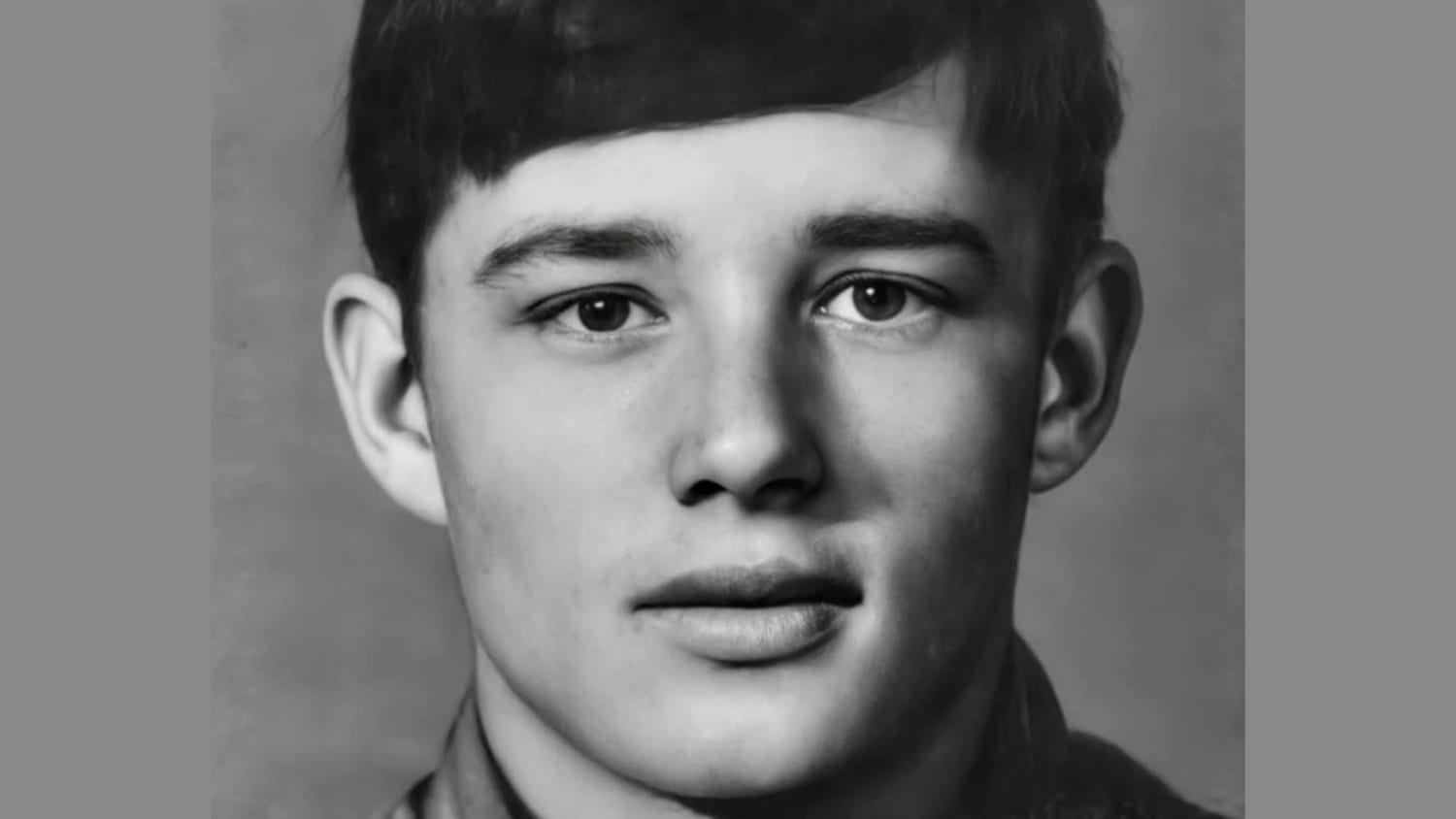
Winston Arthur “Wint” Maxey III was a teenage boy from Idaho whose story remained unresolved for decades. He was only 15 years old when he left Boise in 1971 and headed toward the Oregon coast. Like many young people, Winston appeared to be looking for opportunity, independence, and a future that felt bigger than the life he already knew. He had heard that there might be work available along the coast, and Coos Bay, Oregon, became the place he planned to reach.
Winston was young, but he was old enough to dream about earning money and making his own way. During that time, hitchhiking was more common than it is today. Teenagers and young adults sometimes traveled long distances by accepting rides from strangers, especially when they did not have money, transportation, or family support for the trip. But hitchhiking also carried danger. A person traveling alone had little control over who picked them up, where they were taken, or what might happen along the way.
When Winston left Boise, he reportedly told his sister he was going to Coos Bay. That detail became important because it showed he had a destination in mind. He was not simply wandering without a plan. He believed there was a reason to go west, and he wanted to find work near the Oregon coast. But once he left Idaho, his family never heard from him again.
What happened after he began that journey became a mystery that lasted for 50 years.
Leaving Boise For the Oregon Coast
In the spring or early summer of 1971, Winston left Boise, Idaho, and began making his way toward Oregon. The route from Boise to Coos Bay would have been a long and difficult trip for a teenage hitchhiker. It would have required multiple rides, patience, trust, and luck. Each stop would have placed him in unfamiliar towns, on unfamiliar roads, and in the company of strangers.
Coos Bay was a working coastal community with logging, fishing, shipping, and other labor opportunities tied to the region’s economy. For a young person hoping to find a job, the promise of work may have sounded exciting. The coast may have represented freedom, possibility, and a chance to begin again.
But Winston’s youth made him vulnerable. He was not an adult with stable transportation, money, or a strong support network waiting for him. He was a teenage boy traveling away from home, moving through places where few people knew his name. If he ran into trouble, there may have been no one nearby to protect him or immediately report that something was wrong.
His family did not know what happened to him after he left. They did not know whether he made it to Oregon. They did not know whether he found work, met someone dangerous, became injured, or died shortly after arriving. For decades, all they had was uncertainty.
The Discovery Near Snedden Creek
On July 29, 1971, human remains were found near Snedden Creek in the Englewood area of Coos Bay, Oregon. The remains belonged to a young male, but investigators could not identify him at the time. His body was in poor condition, which made both identification and cause of death difficult to determine. The young person found near the creek became an unidentified juvenile male.
At the time, investigators worked with the tools available to them. They canvassed neighborhoods, followed leads, and tried to determine who the boy was. But without modern DNA testing, digital databases, social media, genetic genealogy, or the forensic resources that exist today, there were limits to what could be done. If no one nearby recognized him, and if no missing person report could easily be connected to him, the case could stall quickly.
The body found in Coos Bay was eventually buried as unidentified. Over time, the young male became known publicly by names connected to the location and circumstances of the discovery. Some referred to him as the Coos Bay John Doe. Others knew him by the nickname “Frog Boy,” a name tied to how his body was reportedly found. But behind those labels was a real person with a family, a name, and a life that had been cut short.
That person was Winston Arthur Maxey, though it would take half a century before that truth was known.
A Family Left Without Answers
For Winston’s family, his disappearance created a painful gap that remained open for decades. When a loved one leaves home and never calls, never writes, and never returns, the uncertainty becomes its own kind of suffering. Families are left to imagine every possibility. Maybe he started a new life somewhere. Maybe he was afraid to come home. Maybe he was hurt. Maybe someone harmed him. Maybe he died alone.
Those questions can follow a family for generations. Birthdays pass. Holidays pass. Parents age. Siblings grow older. New family members are born into a story they did not witness but still inherit. In Winston’s case, the pain was even more complicated because his family did not know that the unidentified remains found in Oregon in 1971 were his.
For 50 years, two mysteries existed side by side. In Idaho, Winston Maxey was a missing teenager who had left for the Oregon coast and never contacted his family again. In Oregon, an unidentified young male found near Snedden Creek remained nameless. The tragedy was that those two mysteries were connected from the beginning, but the technology needed to prove it did not yet exist.
The lack of answers also meant there was no clear ending. Without identification, there could be no proper understanding of where Winston had been found. Without a cause of death, there could be no definite explanation of what happened. Without a suspect or confirmed accident, there could be no legal resolution. The case remained suspended between disappearance, death, and uncertainty.
The Limits of the Original Investigation
The investigation in 1971 faced serious challenges. The remains were not easily identifiable, and the medical examiner could not determine a cause of death. That left investigators without some of the most important facts in any death investigation. They did not know who the victim was. They did not know exactly how he died. They did not know whether they were dealing with an accident, natural causes, exposure, drowning, foul play, or something else.
When a body is discovered outdoors near water, time and environmental conditions can quickly damage evidence. Weather, animals, moisture, terrain, and decomposition can all affect what investigators are able to recover. In 1971, forensic science was far less advanced than it is now. Even if evidence existed, the ability to interpret it was limited.
Investigators also had to rely heavily on local knowledge and traditional missing person comparisons. If a missing teenager from Idaho was not quickly connected to an unidentified body in Oregon, the connection could be missed. Communication between jurisdictions was not as fast or organized as it is today. Records were not instantly searchable. A case in one state could remain disconnected from a case in another.
Those limits do not mean the case was ignored. They mean the tools of the time were not enough to give Winston his name back.
The Long Years as an Unidentified Boy
For decades, Winston’s remains were known only as an unidentified juvenile male. That status is one of the saddest realities in any cold case. A person without a name can be difficult for the public to connect with emotionally. They may become known by a nickname, a location, or a case number instead of their real identity.
But unidentified people are not unknown to everyone. Somewhere, they usually have family members who loved them, searched for them, wondered about them, or carried the pain of their absence. The unidentified boy in Coos Bay had a name. He had been born Winston Arthur Maxey III. He had people who remembered him as Wint. He had a life before the creek, before the burial, before the long years of uncertainty.
His case remained unresolved, but it was not forgotten. Over time, cold case investigators, forensic specialists, and advocates continued to push for answers in unidentified remains cases across the country. As DNA testing improved, old cases that had once seemed impossible began to reopen. Remains that had been buried for decades could be exhumed. Profiles could be built. Databases could be searched. Families could finally be found.
Winston’s case became one of those cases where time did not erase the possibility of truth.
The DNA Breakthrough
The major breakthrough came decades after Winston’s death. In 2017, officials exhumed the unidentified remains from Coos County so DNA could be collected. That step was crucial. Without DNA, the case may have remained stuck in the same place it had been since 1971.
The process took time. DNA from older remains can be difficult to obtain and analyze, especially when the remains have been exposed to environmental damage or buried for many years. But modern forensic science gave investigators new options. DNA profiles could be compared to databases, and genetic genealogy could help identify relatives even when a direct match was not immediately available.
Eventually, the DNA work led investigators toward Winston’s family. The case became even more remarkable because one of the key family connections involved a daughter Winston reportedly did not know he had. She had searched for her biological family and later became part of the path that helped bring Winston’s identity to light.
In 2021, the unidentified remains found near Snedden Creek in 1971 were identified as Winston Arthur “Wint” Maxey III. After 50 years, the boy without a name finally had one again.
Identified After 50 Years
The identification of Winston Maxey was powerful because it solved one part of the mystery while leaving another part unresolved. It answered the question of who the unidentified boy was. It confirmed that Winston had made it to Coos Bay, Oregon, or at least to the area where he had intended to go. It gave his family a long-awaited answer about where he had ended up.
But the identification did not explain how he died.
His official cause of death remains undetermined. That means there is still no confirmed explanation for what happened to him before his remains were found on July 29, 1971. The family and some advocates believe foul play may have been involved, but publicly available official information does not establish a confirmed cause of death. That distinction matters. Winston’s case is no longer an unidentified person case, but it remains an unresolved death investigation.
For his family, the identification likely brought both relief and renewed pain. Knowing the truth after 50 years can provide closure in one sense, but it can also reopen grief. Instead of wondering where he went, the family now had to face the reality that he died as a teenager in Oregon, far from home, and that the circumstances of his death remain unclear.
The Mystery That Still Remains
The central mystery now is not who the unidentified boy was. That question has been answered. The mystery is what happened to Winston Arthur Maxey between the time he left Boise and the time his body was found near Snedden Creek.
Did he arrive in Coos Bay safely? Did he meet someone who offered him work? Did he accept a ride from the wrong person? Did he get into a dangerous situation while hitchhiking? Did he suffer an accident near the creek? Was he harmed by someone who saw him as vulnerable? These questions remain unanswered.
Because Winston was traveling alone, there may have been very few witnesses who knew his identity. If he encountered danger, the people nearby may not have known who he was or where he came from. If someone harmed him, that person may have believed the crime would never be connected to a missing teenager from Idaho. For decades, that was nearly true.
The identification changed that. It restored his name and created a clearer timeline. But it did not erase the missing pieces. The case remains important because someone, somewhere, may have known something about the unidentified boy found in Coos Bay in 1971. Memories may be old now, but even old memories can matter.
Why Winston’s Story Matters
Winston’s story matters because it shows the human cost of unresolved cases. He was not just a hitchhiker. He was not just an unidentified body. He was a teenage boy trying to make his way to the Oregon coast. He had a family, a name, a past, and a future that never happened.
His case also shows the importance of forensic progress. Without DNA testing and genetic genealogy, Winston might still be unidentified. His family might still have no idea that the remains found in Coos Bay were his. His daughter and relatives might still be searching through fragments of family history without knowing where his journey ended.
The case also reminds people how vulnerable young travelers can be. A teenager leaving home to hitchhike hundreds of miles faces risks that may not be fully understood at the time. Winston’s journey reflects an era when hitchhiking was more accepted, but it also reflects the dangers that came with placing trust in strangers.
Most of all, Winston’s story matters because identification is dignity. To give someone their name back is to restore part of what was lost. It allows families to mourn with knowledge instead of only uncertainty. It allows a person to be remembered properly. It turns a cold case label back into a human being.
Remembering Winston Arthur “Wint” Maxey
Winston Arthur “Wint” Maxey III disappeared after leaving Boise, Idaho, for the Oregon coast in 1971. His remains were found near Snedden Creek in Coos Bay, Oregon, on July 29, 1971, but he remained unidentified for 50 years. In 2021, DNA and genetic genealogy finally confirmed that the unidentified juvenile male found in Coos County was Winston.
His identification answered a question that had lasted half a century, but it did not answer everything. His cause of death remains undetermined. The circumstances of his final days remain unclear. The people who loved him still do not have the full story of what happened after he left Idaho.
Winston was 15 years old, a young person with hopes of finding work and making his way in the world. He deserved to grow older. He deserved to be safe. He deserved to return home or build the life he imagined when he headed toward Coos Bay. Instead, his journey ended in mystery.
Today, his name is known again. That matters. Winston is no longer only the unidentified boy found near Snedden Creek. He is Winston Arthur Maxey III, remembered by family, recognized by investigators, and restored to history after decades without his name.
His case stands as a reminder that every unidentified person has a story, every missing person leaves behind people who wonder, and every cold case deserves another look. Even after 50 years, truth can still surface. Even after decades of silence, a name can still be returned. And even when a case remains unresolved, remembering the person at the center of it keeps hope alive.
Discover more from City Towner
Subscribe to get the latest posts sent to your email.