
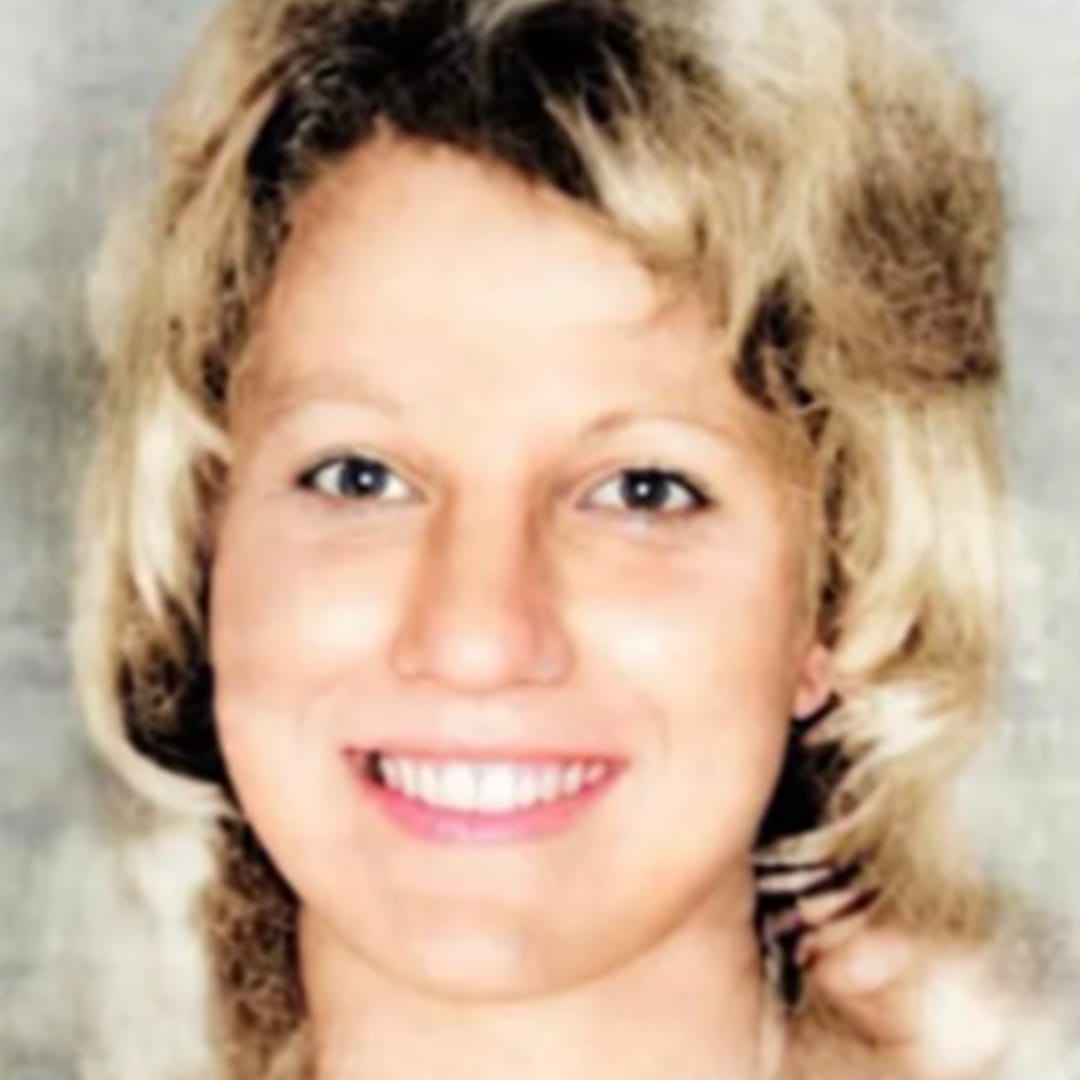
Patricia Otto Disappearance in Lewiston Idaho
Patricia Lee “Patty” Otto was a 24-year-old mother of two who disappeared from her home in Lewiston, Idaho, on the night of August 31, 1976. She left behind her young daughters, her vehicle, her clothing and nearly everything she would have needed to begin a new life.
Patty has never been found. Investigators came to believe she was likely the victim of foul play, but her remains have not been recovered and no one was ever charged in connection with her disappearance.
The circumstances surrounding Patty’s final night immediately focused attention on her troubled marriage to Ralph Otto. Her younger daughter later recalled witnessing a violent confrontation between her parents shortly before Patty vanished. Ralph gave different accounts of what happened afterward, but maintained that Patty left the home voluntarily.
Patty’s relatives rejected the claim that she abandoned her children. She had previously separated from Ralph and had taken the girls with her. Her family believed it was completely out of character for her to disappear without contacting her parents, siblings or daughters.
What happened inside the Otto home on August 31, 1976, remains at the center of one of Idaho’s most enduring missing person cases.
Patricia Lee Otto’s Early Life
Patricia Lee Otto was born on August 4, 1952. She grew up in Lewiston, a city in northern Idaho near the Washington border and the meeting point of the Snake and Clearwater rivers.
Patty was described as a caring woman who enjoyed spending time with her family. She liked baking, decorating furniture and improving the appearance of her home. Her life revolved largely around her two young daughters, Natalie and Suzanne, who was known as Dallas during childhood.
Patty was approximately 5 feet 3 inches tall and weighed around 140 pounds. She had blond or strawberry blond hair, hazel eyes and a scar on her back.
She was only 18 when she married Ralph Otto in October 1970. Ralph was considerably older, and their relationship reportedly became increasingly unstable as the years passed.
Family accounts described Ralph as jealous and controlling. Alcohol misuse was also a major problem within the marriage. According to Patty’s relatives, arguments sometimes became physical, leaving her fearful and uncertain about the future.
Despite the difficulties, Patty tried to maintain a stable home for her daughters. She was careful about where the children stayed and reportedly avoided leaving them alone with Ralph when he had been drinking.
A Marriage Marked by Conflict
By the spring of 1976, Patty had decided that she could no longer continue living under the same conditions. She filed for divorce and moved into an apartment of her own.
Leaving the marriage demonstrated that Patty was capable of making organized plans when she wanted to separate from Ralph. She found another residence, took her daughters and began creating a life outside the family home.
During the separation, Patty reportedly dated a man she had known from school. However, Ralph eventually entered treatment for alcoholism and convinced Patty that he was trying to change.
Hoping the marriage could improve, Patty returned to him. The reconciliation did not bring lasting peace. The jealousy, arguments and drinking reportedly resumed.
By late August 1976, Patty was taking classes at Valley Business College. Her studies suggested that she was trying to gain skills that could help her become more financially independent.
The events of August 31 began as part of that effort. Patty attended an evening class while her daughters remained with relatives because she did not trust Ralph to care for them while drinking.
The Events of August 31, 1976
On August 31, 1976, Patty attended an evening class at Valley Business College. After class, she met with her sister before going to her mother’s home to collect her daughters.
The children were already asleep when Patty arrived at approximately 11:00 p.m. She gathered them and drove back to the family residence in Lewiston.
Ralph was at the house when Patty returned. An argument soon began.
The daughters were downstairs while their parents fought upstairs. They reportedly heard shouting, crashing and other sounds indicating that the confrontation had become physical.
Suzanne was only three years old at the time. She later said she moved toward the stairs and saw her parents fighting. According to her recollection, Ralph had his hands around Patty’s neck, pushed her against a wall and dragged her away from the area where the child could see them.
Because Suzanne was so young, adults initially questioned whether the memory had been a dream or a childhood misunderstanding. As she grew older, however, Suzanne remained certain that she had witnessed a real event.
She recalled that the confrontation was frightening and unlike an ordinary disagreement. It was also the last known sighting of Patty by anyone other than Ralph.
Conflicting Accounts of Patty’s Departure
Ralph claimed Patty left the home after their argument. However, his descriptions of her alleged departure reportedly changed.
In one version, Patty went into a spare bedroom after the confrontation. Ralph said a car horn sounded outside and Patty then left with someone.
Another account suggested that Patty spent the night in a camper, ate breakfast there and walked away the next morning.
The differences raised serious concerns. The stories did not identify the person who supposedly collected Patty, explain where she planned to go or account for why she left without her car and belongings.
There was no confirmed witness who saw Patty enter another vehicle or walk away from the residence. No friend came forward to say that Patty had asked for transportation or a place to stay.
The claim that she left voluntarily also conflicted with her previous behavior. When Patty separated from Ralph earlier that year, she took her children with her and arranged another place to live.
This time, she supposedly left in the middle of the night without the girls, transportation, luggage or any known plan.
The Children Are Told Their Mother Is Gone
After Patty disappeared, Ralph reportedly told the daughters that their mother had left them and would not return.
He did not immediately make the missing person report. Patty’s parents and sister contacted law enforcement after becoming alarmed by her unexplained absence.
The family found the idea of abandonment impossible to accept. Patty was deeply connected to her daughters and had taken careful steps to protect them.
She also maintained relationships with her parents and siblings. Even if she had decided to leave Ralph again, relatives believed she would have contacted someone and made arrangements for her children.
Patty’s sudden silence was one of the strongest indications that something terrible had happened.
Her daughters were left with questions they were too young to understand. One moment their mother was inside the home, and the next they were told she had chosen to leave them behind.
That explanation shaped much of their childhood. As Suzanne grew older and examined her memories, she became convinced that her mother never left the house alive.
The Personal Belongings Left Behind
Patty’s vehicle remained at the residence. Her clothing and personal property were also left behind.
There was no indication that she packed a suitcase, collected money or prepared for an extended absence. Investigators found no evidence that she arranged a new apartment, purchased transportation or contacted anyone about leaving Lewiston.
Her wedding rings became one of the most troubling pieces of the case. Patty was reportedly not known to remove them. After she vanished, the rings were found inside the pocket of one of Ralph’s coats.
The rings later disappeared and were not preserved as evidence. Their loss prevented investigators from testing them when forensic technology improved.
If Patty had voluntarily removed the rings, questions remained about why she placed them in Ralph’s coat instead of taking them or leaving them somewhere more obvious.
The discovery strengthened the family’s suspicion that Ralph knew more than he admitted.
Patty also left behind the daughters she had previously taken with her when leaving the marriage. For relatives, that fact was more persuasive than any physical possession. They did not believe she would disappear without ensuring the girls were safe.
The Initial Investigation
Lewiston police questioned Ralph and examined the circumstances surrounding Patty’s disappearance.
The investigation took place in an era before many modern tools existed. There were no mobile phone records, computerized financial histories, widespread security cameras or modern DNA databases.
Investigators could not track Patty’s location through electronic devices or quickly determine whether she had used a bank card in another city. They depended heavily on witness statements, physical searches and the credibility of the people closest to her.
Authorities searched areas connected to the family but did not locate Patty’s body or develop enough physical evidence to support a homicide charge.
The home did not provide investigators with a publicly confirmed crime scene. If evidence of violence had been cleaned or removed before police became involved, detecting it in 1976 would have been much more difficult than it would be today.
Ralph remained the last known adult to see Patty and became the central person of interest. However, suspicion alone could not establish what happened or prove where her body had been taken.
Ralph’s Behavior After the Disappearance
Family members described Ralph’s conduct after Patty vanished as alarming.
On September 1, Patty’s sister reportedly went to the home to help care for the children. She observed that Ralph had resumed drinking and was looking for a .357 handgun.
Relatives later returned and reportedly found him sleeping heavily with the unloaded firearm nearby. Patty’s sister removed the weapon.
The incident increased the family’s fear but did not provide direct proof concerning Patty’s whereabouts.
Even more troubling were allegations that Ralph later attempted to arrange the murder of a law enforcement official involved in the investigation.
Reports differ regarding the intended targets and the exact legal charges. Some accounts state that Ralph tried to hire someone to kill the lead investigator. Others indicate that a police chief and additional officers may have been threatened.
The alleged murder for hire plot resulted in criminal proceedings against Ralph. Some reports state that he was convicted and served time, while also indicating that part of the legal outcome was later overturned because of a technical issue.
Whatever the precise legal history, the allegation intensified suspicion surrounding Patty’s disappearance. Attempting to harm an investigator would suggest an extraordinary desire to disrupt the inquiry.
However, the plot did not legally prove that Ralph killed Patty. Authorities still lacked a body, a verified murder location and physical evidence directly establishing what happened inside the home.
Ralph Otto’s Death
Ralph later died of a heart attack while incarcerated on an unrelated matter. His death is generally placed in 1983.
Because he died without being charged in Patty’s disappearance, he never faced a trial in which the evidence and allegations could be examined publicly.
His death also ended the possibility that detectives could confront him with future forensic findings or persuade him to disclose Patty’s location.
If Ralph was responsible, he took essential information with him. If another person was involved, that individual has remained unidentified.
The absence of a prosecution left Patty’s daughters with no official explanation. They grew up without their mother and without a court judgment determining who caused her disappearance.
After Ralph’s death, relatives raised the children. Natalie later died as an adult, leaving Suzanne as one of the most prominent family members continuing the public search for answers.
Finley Creek Jane Doe
In 1978, skeletal remains belonging to an unidentified woman were discovered near Finley Creek in northeastern Oregon.
The woman became known as Finley Creek Jane Doe. Decades later, the unidentified remains attracted attention because of reported similarities to Patty.
The woman was said to have been wearing red pants and a light colored or white blouse. Patty had reportedly been wearing red slacks and a white shell blouse when she disappeared.
A modern facial reconstruction of Jane Doe also appeared similar to photographs of Patty. Some people observed a resemblance between the reconstruction and Suzanne.
The physical similarities caused Suzanne and independent researchers to question whether Finley Creek Jane Doe could have been Patty.
Authorities had previously excluded Patty through dental comparisons. However, the family raised concerns about whether the correct dental records were used and whether historical documentation contained errors.
Oregon officials maintained that the dental evidence did not support identifying Jane Doe as Patty. The remains were reportedly cremated after the unidentified woman’s case was closed, creating a major obstacle to future DNA testing.
Without preserved remains or another biological sample, the connection may never be conclusively tested.
Finley Creek Jane Doe remains a disputed possibility rather than an official identification. Suzanne has continued to argue that the matching clothing, physical resemblance and questions surrounding the dental comparison deserve closer examination.
The Difficulty of a No Body Case
Patty’s case demonstrates the enormous challenge of investigating a suspected homicide when the victim has not been found.
Without a body, authorities cannot determine the cause and manner of death through an autopsy. They cannot collect evidence from clothing, injuries or the location where the remains were concealed.
Prosecutors can bring murder charges without recovering a victim, but they need a powerful collection of circumstantial or forensic evidence. In Patty’s case, investigators lacked the electronic records and scientific tools commonly used in modern no body prosecutions.
The delay in reporting her disappearance may also have cost investigators valuable time. A search conducted immediately after the final argument could have focused on Ralph’s movements, his vehicle and any locations he visited during the night.
By the time authorities became fully involved, evidence could have been moved, cleaned or destroyed.
Lewiston’s location also gave a person many possible places to conceal a body. The region includes rivers, steep terrain, rural roads, wooded areas and access to nearby Washington and Oregon.
If Patty was transported away from the home, identifying the destination decades later would be extremely difficult without a confession or specific witness information.
Suzanne’s Search for Her Mother
Suzanne has spent much of her adult life trying to learn what happened to Patty.
Her childhood memory of the violent confrontation remained central to her understanding of the case. She has publicly stated that she believes Ralph killed her mother.
As a child, Suzanne did not have the language or authority to challenge the explanation that Patty had abandoned the family. As an adult, she revisited the events and began working with advocates, journalists and investigators.
Her efforts helped renew public attention. The case was featured in missing person databases, podcasts, articles and television coverage.
Suzanne also pursued the possible connection to Finley Creek Jane Doe. The resemblance between Patty and the reconstruction made the theory emotionally significant, even though officials continued to consider Patty excluded.
For Suzanne, finding Patty’s remains would provide more than confirmation of death. It would allow the family to bury her, honor her life and end decades of uncertainty about where she was taken.
Renewed Attention to the Case
Public interest in Patty’s disappearance continued decades after August 31, 1976.
A billboard campaign was launched in Lewiston in July 2024 to place her face and story before a new generation. The billboard encouraged anyone with information to contact authorities.
Cold case publicity can be valuable because witnesses may not realize that investigators still want to speak with them. Others may have remained silent out of loyalty, fear or concern about becoming involved.
The death of a suspect can also change the willingness of witnesses to talk. Someone who feared Ralph during his lifetime may no longer feel threatened.
Investigators working with Idaho’s cold case resources have continued examining leads. Advances in search technology, forensic testing and digital record organization may help detectives reevaluate evidence collected in 1976.
The most important breakthrough may still come from a person rather than a laboratory. Someone may know where Ralph went after the argument, whether he borrowed equipment or why his accounts changed.
Even information that seems minor could help identify a location connected to Patty’s disappearance.
Unanswered Questions
Many central questions remain unresolved.
Investigators do not know exactly when Patty died, assuming she was killed. They have not publicly established how her body was removed from the residence or what vehicle may have been used.
It is unknown whether Ralph acted alone or received help. Concealing a body can require transportation, time and knowledge of an isolated location.
No confirmed witness has reported seeing Patty after the argument. No bank transaction, letter or telephone call has demonstrated that she remained alive.
The identity of the person who allegedly sounded a car horn outside the house has never been confirmed. If that event occurred, the individual could be a crucial witness. If it did not occur, the story may have been created to explain Patty’s absence.
The location of her wedding rings in Ralph’s coat also remains unexplained. Because the rings vanished, investigators lost the opportunity to examine them for traces that might have supported one version of events.
The greatest question is where Patty’s remains are located. Until she is found, uncertainty will continue surrounding the precise circumstances of her death.
Remembering Patty as More Than a Missing Person
Patricia Lee Otto was not simply the subject of an old police file. She was a daughter, sister and mother trying to build a safer and more independent life.
She attended business classes and had previously demonstrated the courage to leave a troubled marriage. Her efforts showed that she was thinking about the future.
Patty’s daughters were deprived of the chance to know her as adults. Their memories of her were shaped by an abrupt disappearance and the claim that she chose to abandon them.
Her family has consistently rejected that claim. They remember a mother who protected her children and remained connected to her relatives.
The passage of time should not reduce Patty to a photograph on a missing person poster. Her life had value, and the circumstances surrounding her disappearance deserve a complete investigation.
The Continuing Search for Patricia Otto
Patricia Lee “Patty” Otto remains officially missing. Authorities suspect foul play, but her body has never been recovered and no homicide charge has been filed.
The most likely reconstruction is that Patty returned home from class on August 31, 1976, and became involved in a violent confrontation with Ralph. She was never reliably seen again.
Ralph’s inconsistent accounts, the belongings left behind, Patty’s wedding rings and her daughter’s memories have kept suspicion focused on him. Because he died without being charged, the allegations were never resolved through a criminal trial.
The case can still be solved. A witness may finally disclose a hidden detail, investigators may identify a previously overlooked location or new evidence may clarify the Finley Creek Jane Doe question.
Someone may know what happened inside the Lewiston home and where Patty was taken afterward.
Until her remains are found and the circumstances are established, Patty’s daughters and surviving relatives will continue waiting for the truth about the night she disappeared.
Discover more from City Towner
Subscribe to get the latest posts sent to your email.