The Unsolved Murder of Karen Bodine in Olympia Washington
The murder of Karen Lee Bodine remains one of the most disturbing unresolved homicide cases in Thurston County, Washington. Karen was a 37-year-old mother of three who was last verifiably seen alive during the night of January 21, 2007, in the Lacey area near Olympia. By the following morning, she had been strangled, stripped of her clothing and left beside a rural road near an abandoned gravel quarry north of Rochester.
The circumstances surrounding her final hours suggested that someone within her social circle may have known what happened. Karen had spent part of the evening at a residence where several people were reportedly coming and going. Investigators later examined multiple individuals connected to the house, but no one was arrested or charged.
Karen’s body was discovered on January 22, 2007, near Littlerock Road Southwest and Sargent Road Southwest. The positioning of her remains, the evidence recovered from the ligature used to strangle her and tire tracks found near the scene gave detectives important leads. However, those clues have not yet resulted in the identification of her killer.
Nearly two decades later, Karen’s family continues to ask the same question that has appeared on billboards, websites and public appeals throughout Washington: Who killed Karen Bodine?
A Mother of Three
Karen Lee Bodine was born in March 1969. At the time of her death, she was living in the Olympia and Lacey region of Washington and was the mother of three children.
Her daughters, Karlee and Taylor, and their younger brother were still young when their mother was killed. Karen’s death changed the direction of their lives and left them without the opportunity to share many important moments with her.
Her children have described Karen as a loving and generous woman who cared deeply about her family. They have also acknowledged that she experienced difficult periods in her life. Those struggles, however, did not define her entire identity.
Karen was a mother, daughter, friend and woman whose life had meaning beyond the circumstances in which she was found. Her family has repeatedly asked the public to remember that she was a human being who deserved dignity and justice.
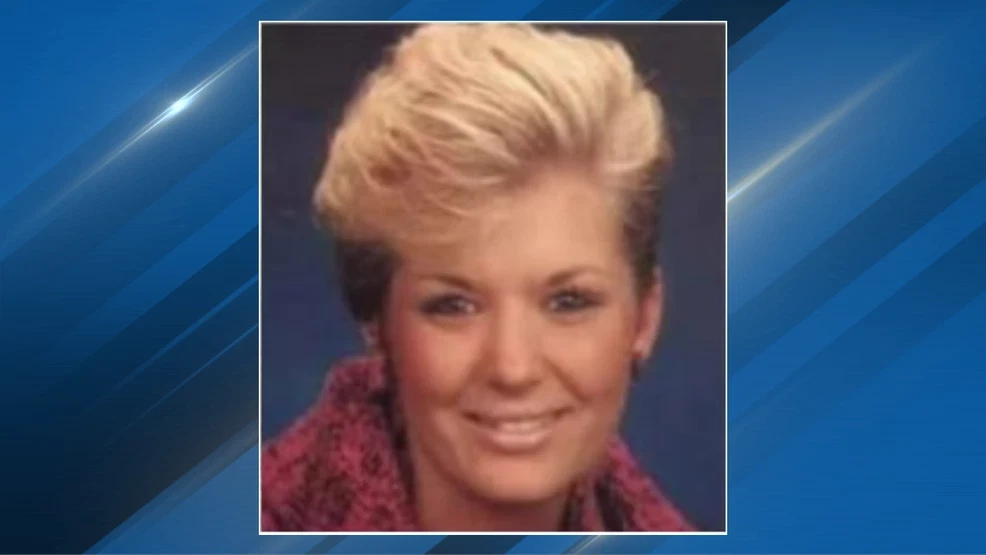
At the time of her murder, Karen was described as thin, with short, spiky blonde hair that had a pink tint. Her appearance was recognizable, and the people who spent time with her during her final evening would have known her well enough to understand her plans and emotional condition.
Karen’s Final Known Evening
Karen was last verifiably seen alive during the night of January 21, 2007, at a residence near 14th Avenue Southeast and Golf Club Road in Lacey.
The house was located within the greater Olympia area and reportedly had several visitors entering and leaving throughout the evening. That activity complicated the investigation because detectives had to determine who was present, when each person arrived and what each individual observed.
Karen reportedly became involved in an altercation with the homeowner. The nature of the disagreement has not been fully explained in public accounts, but it became an important part of the investigation.
Detectives later examined the homeowner and other people who had been at the residence. The homeowner reportedly underwent a polygraph examination, but the result was inconclusive. DNA associated with the homeowner did not match the publicly discussed samples recovered from Karen’s body.
An inconclusive polygraph is not proof of guilt, and a DNA exclusion does not answer every question about what happened inside the residence. No public evidence has established that the homeowner killed Karen or participated in disposing of her body.
Investigators have continued trying to determine exactly when Karen left the house, whether she left willingly and who accompanied her.
The Missing Hours
The period between Karen’s final confirmed sighting and the discovery of her body remains the most critical gap in the timeline.
Publicly available information does not establish the precise time she left the Lacey residence. It is also unclear whether she entered a vehicle voluntarily or was forced to leave with someone.
Karen may have planned to visit another person or travel to another location. She may also have believed she was accepting a ride from someone she trusted.
The distance between the Lacey residence and the location where her body was found suggests that a vehicle was almost certainly used. The drive from the Olympia and Lacey area to the rural property north of Rochester would have taken Karen farther south into Thurston County.
Investigators have never publicly identified the person who transported her.
Someone present at the house may have seen Karen leave. A witness may have noticed the vehicle, driver, direction of travel or approximate time of departure. Even a seemingly minor observation could help detectives reconstruct the missing hours.
The continued lack of a complete timeline suggests that at least one person may not have shared everything they knew.
The Discovery Near Littlerock Road
During the morning of January 22, 2007, a passing motorist discovered Karen’s body near the entrance to an old gravel quarry off Littlerock Road Southwest.
The recovery location was near Sargent Road Southwest, north of Rochester. Although the homicide is often associated with Olympia because Karen lived and spent her final hours in the Olympia and Lacey area, her body was found approximately 20 miles away in a more rural part of Thurston County.
The quarry area was reportedly known for illegal dumping and abandoned vehicles. A person familiar with the location may have viewed it as a place where unwanted property could be left without immediate detection.
Karen’s body had been placed close enough to the road to be seen after daylight. This may indicate that the killer acted quickly, wanted the body to be discovered or misjudged how visible it would become.
She was nude when she was found. Her body had reportedly been positioned near or partly on a discarded vehicle seat, with her head resting against it.
The arrangement appeared deliberate rather than accidental. Investigators and observers have described the scene as staged or posed, suggesting that someone intentionally positioned Karen after her death.
Cause of Death
An autopsy determined that Karen died from strangulation.
A ligature remained associated with her body when she was discovered. Strangulation is a close and personal form of violence that requires sustained force. It often indicates that the victim and killer were in physical contact for a significant period.
The examination reportedly found no indication that Karen had been sexually assaulted. However, the fact that her clothing had been removed raised questions about whether the killer was attempting to humiliate her, stage the scene or destroy evidence.
Karen may have been stripped before or after she died. Her clothing has not been widely discussed in public reports, and it is unclear whether investigators recovered it elsewhere.
The removal of her clothing could also have been intended to make identification more difficult or create a false impression about the motive.
The exact location where Karen was killed has never been publicly established. She may have been strangled at the quarry, inside a residence, in a vehicle or at another location before her body was transported to Littlerock Road.
DNA Recovered From the Ligature
One of the most significant pieces of evidence in the case is unidentified male DNA recovered from the ligature.
Additional reporting has suggested that investigators may have been dealing with mixed DNA involving more than one contributor. Mixed samples can be difficult to interpret because genetic material from several people may overlap.
DNA found on an object does not automatically prove that the contributor committed a crime. A person may have touched an item earlier or transferred genetic material indirectly.
However, DNA recovered from a murder weapon or ligature can be especially important if investigators can establish when and how it was deposited.
In 2007, forensic laboratories had fewer tools for separating complex mixtures than they do today. Advances in testing may now allow experts to isolate individual profiles that were previously impossible to identify.
If a complete male profile can be developed, investigators may be able to compare it with law enforcement databases. Genetic genealogy could also become an option if the evidence meets the necessary legal and scientific requirements.
The preserved DNA may represent the strongest opportunity to identify Karen’s killer.
Tire Tracks at the Scene
Investigators documented two sets of tire tracks near the location where Karen’s body was found.
The presence of multiple tracks raises several possibilities. More than one vehicle may have entered the quarry area, a single vehicle may have driven through more than once or some of the tracks may have been unrelated to the murder.
Detectives would have examined the width, tread design and direction of the tracks. Those details can sometimes help identify the type of vehicle that produced them.
Some reports have mentioned a brown vehicle from the 1980s, possibly a Toyota or Datsun, in connection with the area. However, no owner has been publicly identified, and investigators have not conclusively announced that the vehicle was involved.
If two vehicles were connected to the crime, more than one person may have participated in transporting Karen or placing her body.
The possibility of multiple participants has never been ruled out. One person could have committed the murder while another helped move the body, dispose of evidence or create an alibi.
The Possibility of a Staged Scene
The condition and positioning of Karen’s body led to speculation that the crime scene was staged.
Staging occurs when an offender deliberately alters a scene to mislead investigators, hide the true motive or make a crime appear to have happened differently.
Removing Karen’s clothing may have been an attempt to suggest a sexual motive even though the autopsy reportedly found no evidence of sexual assault.
Leaving her near a discarded vehicle seat may also have had meaning known only to the killer. The seat could have been used to transport her, may have already been at the quarry or could have been placed beneath her body intentionally.
The killer may have wanted Karen found quickly, or the roadside location may simply have been convenient during the darkness.
Whatever the reason, the placement of her body suggests that the offender made several decisions after her death. Those decisions may provide insight into the killer’s personality, familiarity with the area and relationship with Karen.
People Examined During the Investigation
Detectives have examined several people connected to Karen’s final evening.
Over the years, investigators have referred to a small group of individuals who remained relevant to the case. Some reports described approximately five or six people who had drawn investigative attention.
Law enforcement has not publicly named most of them. Being examined by investigators does not mean a person committed the crime, and no individual should be considered responsible without sufficient evidence.
Detectives reportedly considered the possibility that people present at the Lacey residence had incomplete or conflicting accounts.
The busy nature of the house may have allowed someone to leave with Karen without immediately attracting attention. It may also have created confusion about who was present at specific times.
Telephone records, witness interviews and other evidence were gathered. However, investigators were unable to establish a case strong enough to support an arrest.
Some people who knew Karen may have been involved in drug use or other illegal activity and may have feared speaking with law enforcement. Others may have remained silent out of loyalty, fear or concern about implicating themselves in unrelated conduct.
Could More Than One Person Be Involved?
Investigators have not excluded the possibility that multiple people were involved in Karen’s murder or the disposal of her body.
Transporting a deceased person can be physically difficult. A second person may have helped move Karen from a residence or vehicle and position her near the quarry.
Two sets of tire tracks could also support the theory that more than one vehicle was present, although they do not prove it.
Mixed DNA may indicate contact with multiple individuals, but it must be interpreted carefully. Karen could have come into contact with several people during her final evening without all of them participating in her murder.
One person may know who killed her while another knows how her body reached the quarry. Someone else may have helped clean a vehicle, hide clothing or provide a false alibi.
Even if several people were present, criminal responsibility could differ. A person who did not participate in the killing may still have information capable of solving the case.
After many years, relationships and loyalties can change. Someone who was afraid to speak in 2007 may no longer feel obligated to protect the killer.
Challenges Faced by Detectives
Karen’s homicide investigation has passed through the hands of several detectives.
Changes in personnel can create challenges because each investigator must study a large case file, understand earlier decisions and locate witnesses who may have moved or changed contact information.
Memories also weaken over time. A witness who once remembered a vehicle, conversation or sequence of events may now struggle to recall exact details.
Physical evidence must be preserved carefully, especially DNA samples that may be limited in quantity. Testing decisions can be difficult because certain procedures may consume part of the evidence.
The investigation reportedly contains extensive materials, including photographs, statements, telephone records and forensic reports.
Reviewing such a large collection can reveal contradictions or overlooked connections. Modern analytical tools can organize phone contacts, locations and relationships in ways that were more difficult in 2007.
Cold case detectives often begin by rebuilding the investigation from the beginning rather than accepting every earlier assumption.
The CrowdSolve Examination
In October 2019, Karen’s murder was selected for examination during a CrowdSolve event in Seattle.
The event brought together investigators, forensic specialists, criminologists, profilers and members of the public to review cold cases with fresh perspectives.
Participants were reportedly given access to extensive portions of Karen’s case file. They examined the crime scene, witness statements, forensic evidence and possible investigative strategies.
The disappearance of Nancy Moyer, another Thurston County cold case, was also examined during the event.
CrowdSolve did not directly produce an arrest, but it generated renewed public attention and encouraged further review of Karen’s evidence.
Outside participants may notice patterns that investigators close to a case have overlooked. They may also suggest new testing methods or identify questions that should be asked during follow up interviews.
The event helped return Karen’s name to the news and reminded potential witnesses that the investigation remained active.
A Daughter’s Campaign for Answers
Karen’s children have been among the strongest advocates for solving her murder.
Her daughter Karlee organized a billboard campaign displaying Karen’s photograph and asking, “Who killed Karen Bodine?”
The billboard was placed in the Olympia area, where it could be seen by thousands of drivers. It was intended not only to generate tips but also to reach the person or people who knew the truth.
The campaign reportedly cost approximately $7,000 and was funded through personal money and public support.
Karen’s family also created online resources, participated in interviews and held candlelight vigils near the location where her body was discovered.
Their advocacy has been motivated by grief and determination. Karen missed graduations, relationships, birthdays and the births of grandchildren.
Her children have lived most of their adult lives without knowing who killed their mother or why.
Vigils Near the Recovery Site
Annual vigils have helped keep Karen’s memory alive.
Family members, friends and supporters have gathered near the rural location where she was found. Candles, photographs and messages have transformed the scene from a place associated only with violence into a place of remembrance.
These gatherings also serve a practical purpose. They attract media coverage and renew public awareness at times when the case might otherwise receive little attention.
A person who remembers seeing something in January 2007 may encounter the story years later and finally understand the significance of what they witnessed.
Someone who heard a confession or suspicious statement may decide that continuing to remain silent is no longer acceptable.
The family’s persistence ensures that Karen is not reduced to a forgotten cold case file.
Renewed Attention From the Sheriff’s Office
The Thurston County Sheriff’s Office has continued reviewing Karen’s homicide through its cold case efforts.
New public appeals have asked anyone with information to contact investigators, regardless of how minor the detail may seem.
Cold case detectives understand that major breakthroughs often begin with small pieces of information. A witness may remember an unusual vehicle, a late night telephone call, muddy clothing or a sudden change in someone’s behavior.
Modern forensic technology has created additional opportunities. Evidence that produced no usable result in 2007 may now provide a genetic profile.
Investigators may also conduct new interviews with people who were originally reluctant to cooperate. Changes in personal relationships, criminal exposure or life circumstances can make witnesses more willing to speak.
The case remains active, and no statute of limitations prevents authorities from filing a murder charge if sufficient evidence is developed.
Major Unanswered Questions
Many important questions remain unanswered in the murder of Karen Lee Bodine.
Who was present at the Lacey residence during her final evening?
What caused the reported altercation?
When did Karen leave the house?
Did she leave voluntarily?
Who drove her away from the residence?
Where was she strangled?
Who removed her clothing?
Was the body transported in the discarded vehicle seat?
Why was she placed near the quarry entrance?
Who contributed the unidentified male DNA?
Were both sets of tire tracks connected to the homicide?
Was the reported brown vehicle involved?
Did one person act alone, or did others assist?
Who has withheld information from investigators?
Answering even one of these questions could change the direction of the case.
A Crime That Changed Three Young Lives
Karen’s murder did not end with her death. Its effects continued through the lives of her children.
They were forced to experience adolescence and adulthood without their mother. They also carried the burden of knowing that the person responsible had not been held accountable.
Children of homicide victims often experience grief differently from families who lose someone to illness or an accident. Their pain can include anger, fear and constant uncertainty.
Karen’s children have had to publicly discuss painful details in hopes of reaching a witness. Each interview and vigil requires them to revisit the worst moment of their lives.
Their advocacy reflects both love for their mother and frustration with a case that has remained unresolved for far too long.
The Search for Justice Continues
Karen Lee Bodine was last known alive on January 21, 2007, in the Lacey area near Olympia, Washington. Her body was discovered on January 22, 2007, near an abandoned gravel quarry off Littlerock Road Southwest, north of Rochester.
She had been strangled and stripped of her clothing. Her remains appeared to have been deliberately positioned near a discarded vehicle seat.
Investigators recovered unidentified male DNA, documented tire tracks and examined several people connected to her final evening. Despite those leads, no one has been arrested or charged.
The person who killed Karen may have believed that time would erase the evidence and weaken the determination of her family. Instead, advances in forensic science and the continued work of cold case detectives may increase the chances of solving the crime.
Someone knows how Karen left the Lacey residence. Someone knows where she was killed. Someone knows how her body reached Littlerock Road.
The silence surrounding those facts has lasted for years, but it does not have to last forever. Karen’s children, grandchildren and loved ones continue waiting for the truth and for the justice she deserves.
Discover more from City Towner
Subscribe to get the latest posts sent to your email.