Trevor Baldwin Shot to Death While Driving in Chesapeake Virginia
The murder of Trevor Daniel Baldwin on September 30, 2014, remains one of the most troubling unsolved homicide cases in Chesapeake, Virginia. Trevor was only 20 years old when he was shot while driving through the Western Branch area of the city. Moments after he was wounded, his silver 1996 Buick left the roadway and crashed into a tree near Dunedin Drive and Tasman Court.
What initially appeared to be a serious single vehicle accident quickly became a homicide investigation. When officers reached the scene, they found Trevor inside the damaged car with a gunshot wound. He died before he could explain who had shot him, why he had been targeted, or what had brought him to that section of Chesapeake that night.
More than a decade later, no one has been publicly charged with Trevor’s murder. His family has continued seeking answers, offering rewards, speaking with the media, and urging anyone with information to come forward. Investigators have kept the case open, but the identity of the shooter and the precise motive remain publicly unresolved.
Trevor Baldwin’s Early Life
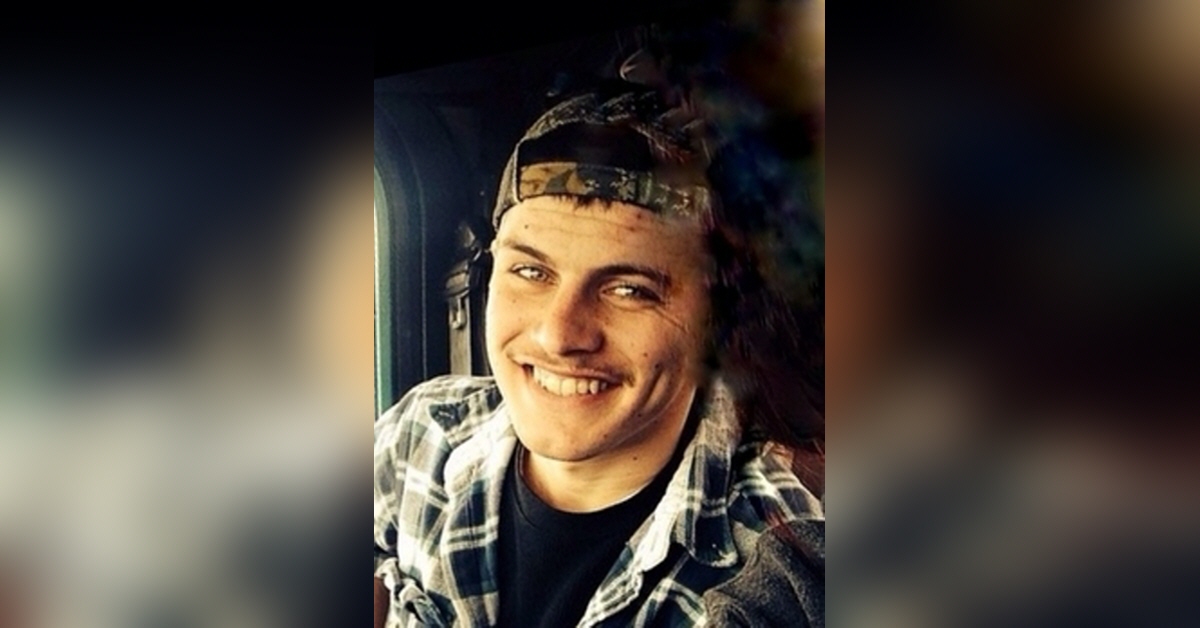
Trevor Daniel Baldwin was born on May 28, 1994. He was the son of Daniel and Melinda Baldwin and had an older brother named Troy. The brothers were reportedly close, and Trevor grew up surrounded by relatives, teammates, classmates, and friends who remembered him as energetic, sociable, and athletic.
Trevor spent much of his childhood in Kill Devil Hills, North Carolina. The coastal community shaped many of his early experiences before his family later moved to Virginia. He attended First Flight High School in Dare County, where he became involved in athletics.
Football and lacrosse were important parts of Trevor’s high school life. He was remembered as a competitive athlete who enjoyed being part of a team. Coaches, classmates, and friends described him as outgoing, talkative, respectful, and capable of making connections with many different people.
Trevor graduated from First Flight High School in 2012. After graduation, he attended Shenandoah University and became part of its football program. Although he did not remain at the university, his time there reflected his interest in athletics and his desire to move forward with his education.
By 2014, Trevor had returned to the Hampton Roads region and was living in Suffolk, Virginia. He had reportedly begun working with his father and was trying to establish the next chapter of his adult life. He was only 20, with much of his future still ahead of him.
The Night of September 30, 2014
On the evening of September 30, 2014, Trevor drove his silver 1996 Buick into the Western Branch section of Chesapeake. The publicly available information does not clearly explain where he had been earlier that evening, whom he expected to meet, or why he traveled to the area around Dunedin Drive and Tasman Court.
At approximately 9:00 p.m., Chesapeake police received a report of a vehicle that had left the roadway and struck a tree in Dunedin Park. From the first appearance, the scene may have looked like a traffic accident. A young driver had apparently lost control of his car and crashed.
When emergency personnel and officers examined Trevor, however, they discovered that he had been shot. The collision was not the beginning of the tragedy. It was the final result of the violence that had occurred moments earlier.
Trevor had apparently been driving when someone fired a gun at extremely close range. After the bullet struck him, he was unable to maintain control of the Buick. The vehicle continued forward, left the roadway, and collided with a tree.
Trevor died at the scene. He was unable to tell investigators whether the shooter had been inside the car, standing beside it, or approaching from another position. He could not identify anyone he had met or explain whether an argument, attempted robbery, or planned attack had occurred.
The Fatal Gunshot
Accounts of the investigation indicate that Trevor was shot once at close range. The bullet reportedly passed through his left arm and entered his chest, where it struck his heart. The path of the bullet suggested that Trevor’s arm may have been raised or positioned between the weapon and his chest when the gun was fired.
The close range nature of the shot became one of the most disturbing details in the case. It suggested that the shooter was not firing randomly from a great distance. The person was apparently close enough to Trevor to aim directly at him.
That possibility raised important questions about the shooter’s location. The person may have been seated inside the car, standing near the driver’s side window, or positioned next to Trevor during a confrontation. Publicly released information has not provided a definitive answer.
Early reports also referred to the possibility that people in the area heard more than one gunshot. Trevor, however, was reported to have been struck once. Investigators had to determine whether additional shots were fired, whether the sounds came from another source, and whether shell casings or other ballistic evidence were recovered.
The exact weapon used in the murder has not been publicly identified. No murder weapon has been announced as recovered, and no ballistics evidence has publicly connected the killing to a known suspect.
The Crash in Dunedin Park
The location where Trevor’s car crashed was near Dunedin Drive and Tasman Court in Chesapeake’s Western Branch area. It was a residential section where neighbors may have heard gunfire, the sound of the collision, or the arrival of emergency vehicles.
The crash itself may have affected the physical evidence inside and around the vehicle. Broken glass, deployed safety equipment, damaged car parts, and movement caused by the impact could complicate the reconstruction of the moments before Trevor’s death.
Investigators had to determine where the shooting occurred in relation to the crash. Trevor may have been shot at the same location where the car struck the tree, or he may have been wounded farther away and continued driving briefly before losing control.
The distance between the shooting point and the final resting place of the Buick could have been important. If Trevor drove even a short distance after being shot, evidence such as shell casings, witnesses, surveillance recordings, or a person fleeing the scene might have been located somewhere other than the crash site.
The public record has not revealed whether investigators established a precise shooting location. That uncertainty has remained one of the many unanswered questions surrounding the case.
A Possible Robbery Setup
Trevor’s mother has publicly expressed her belief that her son may have been lured to the area as part of a planned robbery. According to the family’s theory, a young woman may have arranged to meet Trevor and brought him to a location where others intended to rob him.
The robbery may then have gone wrong, leading to Trevor being shot at close range. This theory has been discussed in media interviews and case summaries, but law enforcement has not publicly confirmed it as an established fact.
The possibility of a setup would explain why Trevor traveled from Suffolk to a particular area of Chesapeake that night. It could also explain why the shooter was able to get close to him without causing immediate alarm. Trevor may have believed he was meeting someone he knew or someone he did not consider dangerous.
However, a theory is not the same as evidence that can support criminal charges. Detectives would need reliable witness testimony, telephone records, messages, forensic evidence, or other proof connecting specific people to the planning and execution of the crime.
No publicly identified person has been formally accused in court of arranging a meeting, attempting to rob Trevor, or firing the fatal shot.
Rumors And Possible Witnesses
In the days and years after Trevor’s murder, rumors reportedly circulated throughout the community. His family said that several people appeared to know or suspect who was involved. Certain names were allegedly repeated by witnesses, friends, relatives, and community members.
There were also claims that someone may have bragged about being responsible for the shooting. Such a statement could be important, but investigators would need to determine who heard it, the exact words used, whether the speaker had direct knowledge, and whether the claim could be supported by independent evidence.
People sometimes repeat rumors after a highly publicized crime. Information can become distorted as it moves from one person to another. A secondhand account may sound persuasive but still be impossible to use in court.
Trevor’s mother has said she believes witnesses saw or knew what happened. She has expressed frustration that the information provided did not lead to an arrest. From the family’s perspective, the same names and theories appeared repeatedly, creating the feeling that the truth was known but not being formally acted upon.
Police have not publicly explained the full content of the witness statements or why they were insufficient to support charges. Investigators may have encountered conflicting stories, uncooperative witnesses, credibility problems, missing evidence, or information that could not be independently verified.
Why the Case Has Been Difficult to Prosecute
Solving a homicide and proving it in court are not always the same thing. Investigators may strongly suspect a person but still lack enough admissible evidence to obtain a conviction.
Rumors, community beliefs, and anonymous tips can help detectives identify possible suspects, but prosecutors need evidence that demonstrates guilt beyond a reasonable doubt. A witness must be credible and willing to testify. Physical evidence must be collected, preserved, tested, and linked to the accused. Telephone or digital records must show meaningful connections rather than coincidence.
If the shooter was close to Trevor but did not leave fingerprints, DNA, or a recoverable weapon, the physical case may have been limited. If witnesses were afraid, involved in criminal activity, or unwilling to cooperate, important information may never have become usable testimony.
The crash may also have complicated the investigation. The damaged vehicle was both a traffic collision scene and a homicide scene. Investigators had to separate evidence caused by the impact from evidence connected to the shooting.
The passage of time creates additional difficulties. Memories fade, relationships change, people move, and physical evidence can deteriorate. Witnesses who were reluctant to speak in 2014 may still fear retaliation or legal consequences.
Nevertheless, cold cases can change suddenly. A new witness, a truthful confession, improved forensic testing, or a review of old evidence can provide the missing connection needed to move a case forward.
Trevor’s Family Searches For Answers
Trevor’s family has remained vocal about the need for justice. His mother, Melinda Baldwin, has spoken publicly about the pain of losing her son and the frustration of watching the years pass without an arrest.
For a parent, an unsolved murder creates a particular kind of suffering. The loss itself is devastating, but the lack of accountability adds another layer of grief. Every unanswered question remains present. Every anniversary returns the family to the night their lives changed.
The Baldwin family offered a reward for information that could lead to an arrest and conviction. Reports have described a private reward of $10,000, separate from rewards that may have been offered through local Crime Line programs.
The family’s decision to raise reward money reflected its determination to encourage someone to speak. They believed that people in the community possessed information and hoped that financial assistance, anonymity, or the passage of time might persuade a witness to come forward.
Public appeals also helped keep Trevor’s name visible. Cold cases can disappear from regular news coverage as new crimes and events capture attention. Families often become the primary force ensuring that their loved one is not forgotten.
The Impact on Friends And Teammates
Trevor’s death affected more than his immediate family. Former classmates, coaches, teammates, and friends remembered him as a young man with a lively personality and a strong interest in sports.
For people who knew Trevor during his years in North Carolina, the news of his murder was difficult to understand. Someone they had known as a football player, lacrosse athlete, student, brother, and friend had become the victim of an unsolved shooting in another city.
Young victims often leave behind a wide circle of people who expected to see them grow older. Trevor’s classmates were entering careers, relationships, parenthood, and other stages of adulthood. Trevor was denied those opportunities.
His teammates also lost someone connected to shared practices, games, victories, setbacks, and memories. The experiences of high school athletics can create lasting relationships, making a sudden death especially painful.
Tributes to Trevor described him as respectful, outgoing, and memorable. Those descriptions stand in contrast to the limited way homicide victims are sometimes presented publicly. Trevor was more than the driver found inside a crashed Buick. He was a person with a history, relationships, interests, and plans.
An Active Unsolved Homicide
Trevor Baldwin’s case remains listed as an active homicide investigation. The Chesapeake Police Department and Virginia’s cold case resources continue to request information from the public.
An active classification means the case has not been closed by an arrest, conviction, or definitive finding that prosecution is impossible. Investigators may still review tips, compare evidence with other cases, interview witnesses, and examine information that becomes available.
No suspect has been publicly charged with Trevor’s murder. Law enforcement has also not formally confirmed the family’s belief that the shooting resulted from an attempted robbery setup.
The strongest publicly established facts remain limited but significant. Trevor was driving in Chesapeake on the night of September 30, 2014. He was shot at close range. The bullet traveled through his arm and into his chest. After being wounded, he lost control of the car and struck a tree near Dunedin Drive and Tasman Court.
What happened immediately before the shot remains unclear. The public does not know whom Trevor planned to meet, whether another person was inside his car, what was said during the confrontation, or where the shooter went afterward.
The Silence Surrounding the Case
Unsolved homicides often survive because of silence. A person may know who arranged the meeting. Someone may have seen Trevor’s Buick before the crash. A witness may have heard an argument, seen people running, or noticed another vehicle leaving the area.
Friends or relatives of the shooter may have observed unusual behavior after the murder. Someone may have heard a confession or seen a weapon. Others may possess old messages, photographs, or social media records that seemed unimportant at the time.
People remain silent for many reasons. They may fear retaliation, distrust law enforcement, want to protect a friend, or believe too much time has passed for their information to matter. Some may worry that admitting what they know will reveal their own involvement in unrelated activity.
However, even partial information can help investigators. A detail that appears insignificant to one person may confirm a timeline, identify a meeting place, or strengthen a statement already given by another witness.
The passage of time can also change loyalties. Relationships that protected a suspect in 2014 may no longer exist. People who were teenagers or young adults may now understand the lasting damage caused by remaining silent.
Remembering Trevor Baldwin
Trevor Daniel Baldwin was 20 years old when he was murdered in Chesapeake, Virginia, on September 30, 2014. He had been a student, football player, lacrosse athlete, son, brother, teammate, and friend.
His life ended after someone fired a gun at close range while he was driving. The wound caused him to lose control of his silver Buick and crash into a tree in Dunedin Park. What looked at first like an accident was soon recognized as a homicide.
Trevor’s death left his family searching for answers and justice. Their belief that he was lured into an attempted robbery remains a serious theory, but it has not been publicly proven. Rumors and alleged witness accounts have circulated, yet no prosecution has followed.
The case remains a reminder that an unsolved homicide does not become less important with time. Trevor’s family still lives with the loss, and the person responsible has not been held publicly accountable.
Justice for Trevor depends on evidence, courage, and the willingness of someone with direct knowledge to tell the truth. Until that happens, the murder of Trevor Baldwin will remain an open wound for his family and an unresolved chapter in Chesapeake’s history.
Discover more from City Towner
Subscribe to get the latest posts sent to your email.