
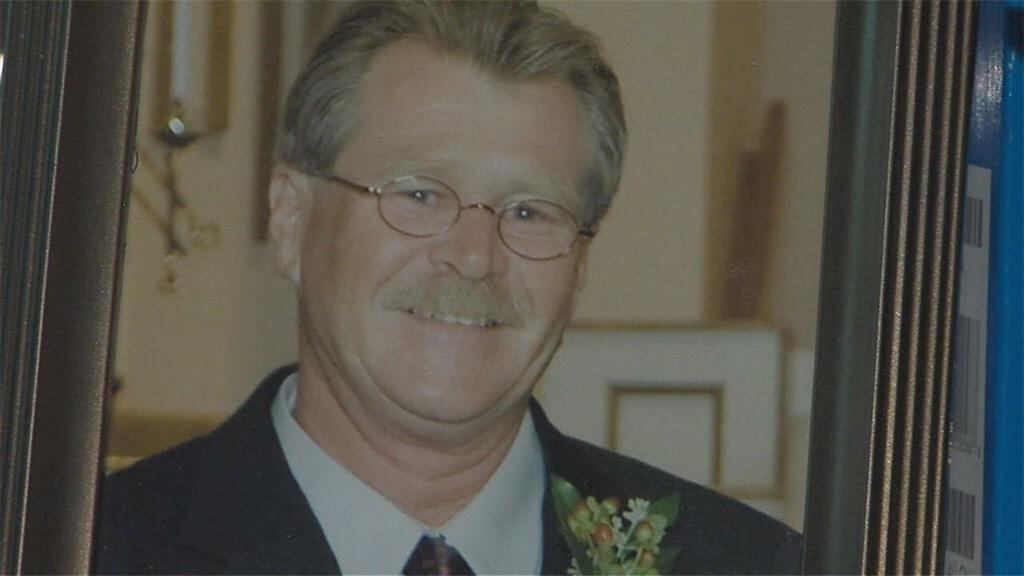
Clifford Backmann Murdered at Construction Site in Jacksonville Florida
The murder of Clifford T. Backmann remains one of the most heartbreaking unsolved killings tied to Jacksonville, Florida. On October 10, 2009, what should have been a routine workday instead turned into a devastating act of violence that stole the life of a man who had spent years building a career, supporting a family, and living the kind of steady, hardworking life that so many people recognize immediately. He was 56 years old, and by every public account, he was simply doing his job when he was robbed and shot. That basic reality is what gives the case so much emotional force. This was not a man seeking danger. This was a working man in the middle of an ordinary day, and that ordinary day never ended the way it should have.
Some murder cases stay in public memory because of their complexity. Others remain painful because of how brutally simple they are. Clifford Backmann’s case belongs to that second category. A man was alone at a job site. Someone saw an opportunity. Violence followed. In a few moments, a life was cut short, a family was shattered, and a community was left with the kind of question that lingers for years. How could something so cruel happen to someone just trying to work? That question has made the case resonate far beyond the first reports and early investigation. It continues to stand as a reminder that violence often strikes not in dramatic settings, but in the most ordinary corners of daily life.
What makes the murder especially difficult to absorb is that Clifford was still able to call 911 after being shot. That detail alone changes the emotional shape of the case. It means this was not just a killing discovered after the fact. It was a moment in which the victim himself was able to reach out for help, to speak in the aftermath of the violence, and to leave behind some account of what had happened. That fact is both powerful and deeply painful. It suggests struggle, awareness, and a final effort to survive that makes the case feel even more personal and immediate.
Who Clifford T. Backmann Was
Before his name became attached to an unsolved homicide case, Clifford T. Backmann was a man known through work, family, and the ordinary responsibilities of adult life. He was a construction superintendent, someone whose profession centered on building, planning, supervising, and helping shape physical spaces where other people would eventually live or do business. That kind of work is not abstract. It is grounded, practical, and demanding. It reflects a life built around responsibility.
That matters because violent crime can too easily flatten a person into the worst thing that happened to them. But Clifford was not simply a victim at a crime scene. He was a man with experience, loved ones, and a life that had already been built through years of effort. At 56, he was not in the uncertain early stage of adulthood. He was in the part of life where people are relied on. They have stories, routines, coworkers, and a place in the lives of the people around them that has been formed over time. When someone like that is killed, the loss does not only strike at the individual. It tears through a whole structure of relationships that depended on his presence.
The emotional pain of his murder comes partly from that contrast. Clifford was not a reckless young man drifting into chaos. He was a working adult doing something constructive, useful, and familiar. He represented a form of daily dignity that many people understand instinctively. That is one reason the case has remained so painful. It feels like an attack not only on one man, but on the idea that a person should be able to go to work, finish the day, and return home safely.
The Construction Site on Bonneval Road
The setting of the crime is central to understanding why the case still resonates. Clifford was working alone at a construction site at 6960 Bonneval Road in Jacksonville, near Philips Highway and J. Turner Butler Boulevard. On paper, that may sound like a simple location detail. In reality, it means everything. A construction site is a place associated with work, progress, and productivity. It is where materials turn into buildings, where plans become real structures, and where people spend long hours creating something that will outlast the workday itself. It is not a place people expect to become the scene of a murder.
That is what makes the case so chilling. Violence entered a place that should have been defined by labor and routine. The victim was not walking into some clearly dangerous situation. He was standing inside the familiar structure of his professional life. Many people know what it means to be alone on a job site, finishing tasks, moving through a shift, thinking about work rather than personal danger. That ordinary quality is exactly what makes the crime feel so cruel. It broke into a setting that should have been safe enough for an experienced worker to do his job without fear.
The location also adds another level of sorrow because it suggests how random and predatory the violence may have been. Public reporting around the case has long reflected the theory that someone may have seen Clifford working alone and seized the moment. If that is true, it means the murder may have grown out of nothing more than a criminal noticing vulnerability. That possibility is painful because of how cold it feels. A man doing honest work became a target simply because he was there and alone.
October 10, 2009
October 10, 2009, became the day that permanently changed the lives of Clifford Backmann’s loved ones. That is true in every homicide, but dates like this carry a special weight in unsolved cases because they return year after year without the full sense of closure people need. They become anniversaries of grief, markers in time that remind family members not only of what was lost, but of what has still not been fully answered.
The murder happened on a Saturday, in the middle of the day. There is something especially unsettling about daytime violence, because daylight is usually associated with visibility and a degree of safety. People assume that public places and working hours offer some protection simply because the world is awake and moving. But this case disrupted that assumption in the harshest possible way. The attack did not happen in the middle of the night in a hidden place. It happened while a man was working in daylight, in the middle of a normal weekend shift.
That detail widens the emotional effect of the case. It makes the crime feel less like some distant nightmare and more like the kind of event that can intrude into the structure of ordinary life without warning. For family members, coworkers, and everyone who followed the case, the date became attached not only to loss, but to a frightening awareness of how quickly normalcy can collapse.
A Robbery That Became a Homicide
The public facts of the case show that Clifford Backmann was robbed and shot. That sequence matters because it points to a kind of violence that is at once simple in motive and devastating in consequence. This was not a complicated personal feud publicly laid out in court. It was a robbery that became murder. That makes the crime feel even more senseless. A man’s life was taken not because of some larger drama that had been building around him, but during a predatory act likely driven by greed and opportunity.
Robbery killings often create a particular kind of anger because they reduce a human life to whatever valuables happened to be on hand in that moment. In Clifford’s case, public accounts have reflected the belief that the attacker took his wallet. If that is true, then the contrast is almost unbearable. A whole life, with all its years of labor and meaning, was measured against the contents of a wallet and a few moments of criminal impulse. That is one of the ugliest truths about robbery murders. They expose how cheaply some offenders are willing to treat another person’s existence.
The brutality of the shooting also changes the emotional character of the case. Theft alone is already a violation. But once the weapon is fired, the act becomes something much darker. The robber did not simply take from Clifford. He ended his life. That decision created a second and far more permanent kind of theft, taking not only property, but time, family, future, and every ordinary moment that should have followed.
The 911 Call
Perhaps the most haunting part of the case is that Clifford Backmann was able to call 911 after being shot. This detail is one of the reasons his murder continues to hit so hard emotionally. It means there was a moment after the violence when he was still conscious enough to reach out, still trying to live, still fighting against the outcome that would soon define the case. That is difficult to hear and even more difficult to imagine. It suggests a final stretch of pain, effort, and awareness that makes the loss feel intensely personal.
There is something especially heartbreaking about a victim managing to speak after a fatal attack. It means the person was not simply erased in silence. He was still present, still bearing witness to what had been done to him, and still trying to give investigators and responders something they could use. In Clifford’s case, that detail has likely stayed with his family for years because it underscores both his humanity and his determination. Even after being robbed and shot, he was still trying to survive and still trying to help the people who would later search for answers.
That detail also deepens the tragedy of the case remaining unsolved. The victim fought to communicate, the system received his call, and yet the person responsible still appears not to have been publicly brought to justice. That gap between effort and outcome gives the case a particularly painful unfinished quality.
The Family’s Long Burden
The murder of Clifford T. Backmann did not end with the crime scene. Like every homicide, it continued into the lives of the people left behind. In this case, the family’s response became part of the story itself. His son Ryan Backmann has spoken publicly over the years and later founded Project: Cold Case, turning personal loss into an effort to support other families living through the same torment of unresolved murder. That fact says a great deal about the weight of this crime. It did not only cause grief. It reshaped the life of a family member so deeply that it became the foundation for broader advocacy.
That kind of response reflects one of the hardest truths about unsolved homicide. Families cannot simply grieve in private and move on. They often become advocates because the normal channels of closure have failed them. They speak, push, organize, and remember in public because memory becomes one of the only forms of power still available to them. In that sense, the murder continues to demand labor from the people who loved the victim, long after the violence itself has ended.
For the Backmann family, the years since October 10, 2009, have not simply been years since a death. They have also been years of unanswered questions. That is a different kind of burden. It means carrying grief and uncertainty together. It means reliving the case through every news feature, every anniversary, and every hope that a new lead might finally break the silence.
The Pain of an Unsolved Case
As far as the strongest public sources show, Clifford Backmann’s murder remains unsolved. That fact changes everything about how the case is experienced emotionally. In a solved case, even when grief remains immense, there is at least a sense that the world has formally recognized the wrong and assigned responsibility. In an unsolved case, that moral order never fully returns. The death remains open, unfinished, and unresolved in the deepest sense.
Families of unsolved homicide victims live with two losses at once. The first is the person. The second is the absence of accountability. That second loss can be invisible to outsiders, but it is often one of the hardest parts to carry. It means wondering who still knows something, wondering whether the killer has moved through life untouched, and wondering whether justice will ever arrive or whether memory will have to do all the work alone.
This is why Clifford’s case has remained emotionally powerful in Jacksonville. It is not only that a man was robbed and killed while working. It is also that the answer to who did it has not been publicly finished. That absence leaves a hole in the story that time does not fill. If anything, time can make the wound deeper, because every passing year adds another reminder that the family has been made to wait.
Why the Case Still Matters
The murder of Clifford T. Backmann still matters because it stands at the intersection of ordinary life and sudden violence. It is a case about a working man, in daylight, on a job site, being robbed and shot in the middle of doing exactly what society asks responsible adults to do. That alone gives the story lasting force. It disrupts the sense that work, routine, and decency provide any guarantee of safety.
It also matters because of what followed. The victim’s own 911 call, the years without a public resolution, and the advocacy that grew out of the family’s loss all make this more than just another old cold case. It became part of a larger conversation about what unsolved homicide does to families and how they are forced to keep the dead visible when the system has not yet delivered full justice.
And finally, it matters because Clifford Backmann was not a statistic. He was a man with a profession, a family, and a life that had value. The more time passes, the more important that becomes to say clearly. Cases can harden into timelines and summaries. But the truth at the center remains human. A man went to work on October 10, 2009, in Jacksonville, Florida, and never came home.
Remembering Clifford T. Backmann
To remember Clifford T. Backmann is to remember more than the violence that ended his life. It is to remember a 56 year old construction superintendent, a family man, and a worker whose life was cut short while doing a job in the middle of an ordinary day. The cruelty of his murder lies not only in the robbery and shooting, but in how completely unnecessary it was. Nothing about his life should have ended there. Nothing about that day should have become a permanent wound.
His story remains painful because it is easy to understand. People know what it means to work alone, to trust the structure of a routine, to expect to finish a shift and head home. Clifford was doing something honest and productive when violence found him. That makes the loss feel immediate, even years later.
And because the case still appears unsolved, the story remains unfinished. It still asks for memory. It still asks for justice. It still asks people to look at a life taken in daylight and refuse to let the passage of time turn that life into a forgotten file. Clifford Backmann deserves to be remembered not only as a victim, but as a man whose life had weight, whose loss was real, and whose murder still matters.
Discover more from City Towner
Subscribe to get the latest posts sent to your email.