The Public Art Walk in Modesto California
Modesto, California, is often recognized for its agricultural roots, classic car culture, historic downtown, and connection to American Graffiti, but the city also has a creative side that can be experienced through its public art. A public art walk in Modesto offers a different way to see the city. Instead of only moving from restaurant to restaurant or attraction to attraction, visitors can slow down, look closely at the walls, sidewalks, plazas, storefronts, alleys, and civic spaces that help tell Modesto’s story.
Public art gives a city texture. It turns ordinary streets into places of memory, expression, and identity. In Modesto, murals, sculptures, painted utility boxes, community installations, historic markers, and creative storefront designs reflect the city’s personality. They speak to agriculture, music, cars, family, local history, culture, diversity, and the everyday lives of people who call the Central Valley home.
A public art walk is also one of the most accessible ways to explore Modesto. You do not need a ticket, a reservation, or a complicated plan. You can walk through downtown, take photos, stop for coffee, visit nearby restaurants, and notice details that might be missed from a car window. The experience is casual, flexible, and deeply connected to the city’s street-level character.
Why Public Art Matters in Modesto
Public art matters because it helps a city recognize itself. Modesto has a practical, working-class, agricultural identity, but it is also a place full of imagination, memory, and creativity. Public art allows those qualities to appear in visible form.
Murals can honor local history. Sculptures can create gathering points. Painted boxes can bring color to intersections. Art on buildings can make downtown feel more alive. Community projects can give residents a voice in shaping how their neighborhoods look and feel. Public art can also help visitors understand what locals value.
In Modesto, public art often reflects the city’s Central Valley roots. The area’s agricultural identity appears through images of crops, farmland, water, workers, and harvest culture. The city’s classic car legacy appears through artwork connected to cruising, vintage vehicles, and American Graffiti nostalgia. Local pride appears through images of the Modesto Arch, downtown streets, music, and cultural symbols.
Public art also creates a sense of belonging. When people see their culture, history, and community reflected in public spaces, the city feels more personal. It becomes more than concrete, traffic, and storefronts. It becomes a shared canvas.
Downtown Modesto as an Outdoor Gallery
Downtown Modesto is the natural starting point for a public art walk. The area has history, walkability, restaurants, cafes, entertainment venues, and civic landmarks. It also contains many of the visual details that make the city interesting.
Walking downtown allows visitors to experience Modesto at a slower pace. From a car, murals and small art pieces can flash by unnoticed. On foot, the city opens up. A painted wall becomes a stopping point. A historic sign becomes part of the story. A sculpture becomes a place to pause. Even the architecture begins to feel like part of the public art experience.
Downtown is also where Modesto’s past and present meet. The city began as a railroad town, grew through agriculture and irrigation, and later became known for its car culture. Public art in the downtown area often reflects those layers. It can show pride in the old city while also supporting the creativity of new generations.
A good art walk downtown can be paired with other activities. Visitors can stop at the Modesto Arch, visit the McHenry Museum, attend a show at the Gallo Center for the Arts, watch a film at the State Theatre, enjoy a meal, or explore local shops. Public art becomes the thread that connects the day.
The Modesto Arch And Civic Identity
No public art walk in Modesto feels complete without noticing the Modesto Arch. Although it is often treated as a landmark more than an artwork, it functions as one of the city’s most important public symbols. Its famous motto, “Water Wealth Contentment Health,” captures the hopes and values of early Modesto.
The arch reflects the importance of water in the Central Valley. Without irrigation, the region’s agricultural success would have been impossible. It also reflects the belief that farming, community, prosperity, and well-being were connected. The words may sound old-fashioned today, but they remain deeply tied to Modesto’s identity.
As part of an art walk, the arch is more than a photo opportunity. It is a reminder that public design can become part of a city’s memory. Generations of residents have passed under it, photographed it, used it in local branding, and recognized it as a visual shorthand for home.
Public art does not always have to be a mural or statue. Sometimes it is a sign, an arch, a phrase, or a design that becomes inseparable from the city itself.
Murals And Painted Walls
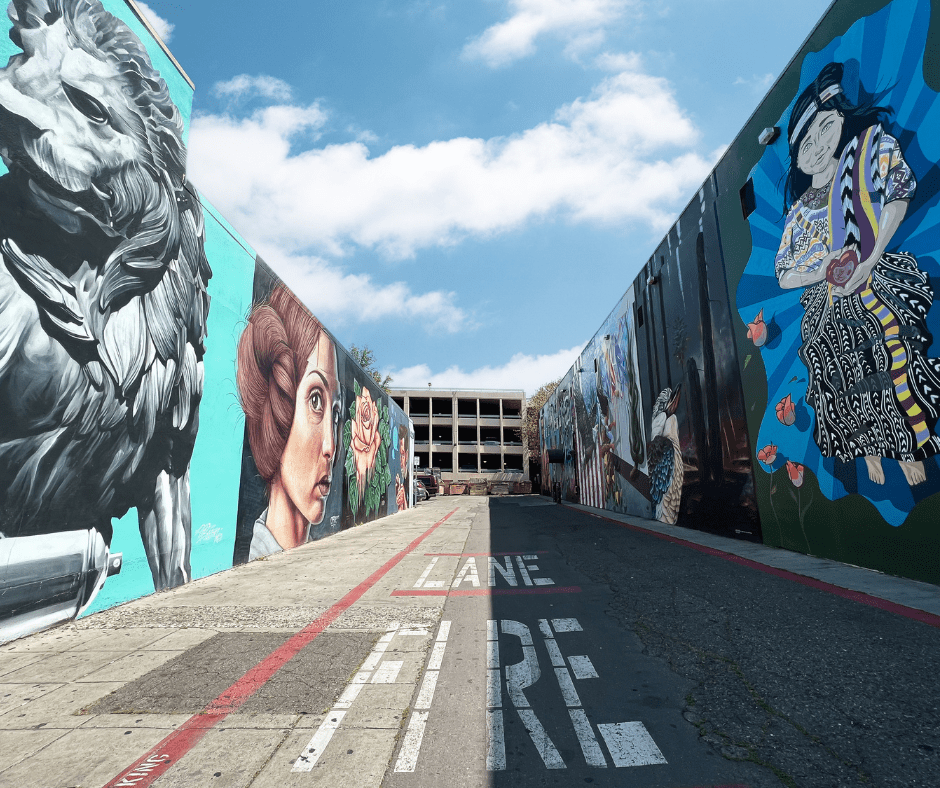
Murals are often the most noticeable form of public art on a walk through Modesto. They bring color, scale, and storytelling to the city’s walls. A mural can transform a blank building side into a celebration of history, culture, or imagination.
In Modesto, murals may reflect local themes such as agriculture, music, classic cars, family, community pride, and the Central Valley landscape. Some murals may be bold and modern, while others may feel nostalgic or historical. Together, they add personality to streets that might otherwise feel ordinary.
Murals also invite people to stop and look. They slow down movement and encourage observation. A person walking through downtown might notice faces, symbols, colors, and details that say something about the city’s values. A mural can become a neighborhood marker, a selfie spot, or a point of pride for local businesses and residents.
The best way to experience murals is to let the walk unfold naturally. Look around corners. Check side streets. Pay attention to alleyways and building walls. Some of the most interesting pieces may not be on the main route. They may be tucked into spaces where local creativity appears unexpectedly.
Sculptures And Public Installations
Sculptures and public installations add another layer to Modesto’s art walk. While murals are tied to walls, sculptures occupy space. They shape how people move through plazas, sidewalks, parks, and civic areas. They can be touched, walked around, photographed, and experienced from different angles.
Public sculptures can represent local history, abstract ideas, cultural pride, or community themes. In a city like Modesto, they may help mark important gathering spaces or add visual interest to downtown. They can also make public areas feel more intentional and welcoming.
Installations may be permanent or temporary. Some may be part of organized public art programs, while others may appear through community projects, events, or partnerships. Temporary art can be especially valuable because it keeps public spaces changing. It gives people a reason to return and see what is new.
For visitors, sculptures and installations help break up a walk. They create natural pauses and give the city a more layered feeling. Instead of simply passing through, you begin interacting with the environment.
Painted Utility Boxes And Everyday Creativity
One of the most underrated forms of public art is the painted utility box. These small works can be found in many cities, and they turn necessary infrastructure into creative street art. Instead of plain metal boxes sitting at intersections, painted utility boxes add color, humor, history, and local flavor.
In Modesto, painted utility boxes can make a public art walk more interesting because they appear in everyday places. They remind people that art does not have to be confined to galleries or museums. It can exist on a street corner, near a crosswalk, beside a parking lot, or outside a business.
These pieces often reflect the personality of local artists. Some may feature animals, plants, patterns, city landmarks, cultural images, or abstract designs. Because they are smaller than murals, they encourage close looking. A person walking by might discover details that are easy to miss from a distance.
Painted utility boxes are also a smart way for cities to reduce visual dullness. They make routine spaces feel cared for, and they give local artists a chance to leave a mark on the community.
Public Art And Modesto’s Car Culture
Modesto’s public art is closely connected to its car culture. The city’s identity is tied to cruising, classic cars, and the legacy of American Graffiti. Artwork that celebrates vintage vehicles, neon nostalgia, diners, music, and warm summer nights fits naturally into Modesto’s story.
Car-themed public art helps preserve the feeling of a time when cruising was a central part of youth culture. In the 1950s and early 1960s, young people gathered in cars, drove through town, listened to music, and used the streets as social spaces. George Lucas drew from that world when creating American Graffiti, and Modesto continues to celebrate it.
A public art walk may reveal murals or images that honor classic cars, hot rods, lowriders, and the feeling of motion. These works are not just decorative. They connect the city to a shared memory. They remind residents and visitors that cars helped shape Modesto’s popular image.
For people who enjoy automotive history, public art adds another way to experience that culture beyond car shows and cruises. The walls and streets themselves become part of the story.
Agriculture And The Central Valley Landscape
Agriculture is another major theme that often appears in Modesto’s public art. The city sits in the heart of the Central Valley, surrounded by farmland, orchards, dairies, vineyards, and food production. That landscape has shaped Modesto’s economy, culture, and sense of place.
Public art can capture the beauty and labor of that agricultural world. Images of crops, irrigation, farmworkers, barns, animals, fruit, nuts, and open fields can all reflect the region’s identity. These themes remind people that Modesto is connected to the land in a direct way.
Agricultural art can also honor workers whose labor made the region successful. The Central Valley’s food system depends on people who plant, harvest, pack, transport, and process what the land produces. Public art can make that labor visible and respected.
In a city where development and farmland meet, art can also encourage reflection. It can ask people to think about water, growth, sustainability, and the future of the valley. The beauty of public art is that it can celebrate a place while also inviting deeper thought.
A Walk Through Local History
A public art walk in Modesto is also a walk through local history. Even when pieces are modern, they often point back to the forces that shaped the city. Railroads, irrigation, agriculture, migration, downtown growth, car culture, and civic pride all appear in visual form.
Historic markers, plaques, murals, and preserved buildings can work together to create a layered experience. You might begin with the Modesto Arch, then notice a mural connected to classic cars, then pass a historic building, then stop near a theater or museum. Each piece adds another layer to the city’s story.
This kind of walking experience is valuable because it makes history feel less distant. Instead of reading about Modesto only in a book, visitors can see history embedded in the streets. The city becomes a living timeline.
For longtime residents, public art can also renew familiar places. A mural on a building they have passed for years may make them see that corner differently. Public art can turn memory into something visible.
Public Art as a Family-Friendly Activity
One of the best things about a Modesto public art walk is that it can be family-friendly. Children often respond naturally to color, shapes, animals, cars, faces, and large-scale images. A mural walk can turn downtown into a visual scavenger hunt.
Families can look for specific themes, count murals, take photos, ask children what they notice, or talk about what each artwork might mean. This makes the experience more interactive than simply walking from place to place.
Because the activity is flexible, families can adjust the walk to fit their time and energy. They can make it a short outing after lunch or a longer afternoon that includes a museum, park, or dessert stop. Public art does not require sitting still or staying quiet, which makes it especially good for younger visitors.
It also gives children a chance to see creativity in public life. They learn that art is not only something in classrooms or museums. It can belong to streets, neighborhoods, and communities.
Photography And Social Media Appeal
Public art naturally attracts photography. Murals, sculptures, painted boxes, and the Modesto Arch all offer strong visual backdrops. For visitors, an art walk can become a photo tour of the city. For locals, it can be a way to show pride in their hometown.
Photo-friendly public art also helps cities gain attention online. When people share images of murals or landmarks, they help spread awareness of the city’s creative side. A single colorful wall can become a recognizable stop. Over time, these images help shape how people outside the city see Modesto.
The best photos often come from slowing down. Look for angles, details, shadows, reflections, and nearby architecture. A mural may look different from across the street than it does up close. A sculpture may change as you move around it. A painted box may have small details on each side.
Public art rewards attention. The more carefully you look, the more you find.
Pairing The Art Walk With Food And Local Stops
A public art walk in Modesto pairs naturally with food. Downtown and surrounding areas offer coffee shops, restaurants, bakeries, bars, and casual dining. Visitors can begin with coffee, walk through public art locations, stop for lunch, continue exploring, and finish with dessert or dinner.
This kind of experience makes the walk feel less like a formal tour and more like a day in the city. It also supports local businesses. Public art can bring people into commercial areas, while restaurants and shops give walkers reasons to stay longer.
Modesto’s food scene adds to the experience. Mexican food, diners, burgers, barbecue, Italian restaurants, Asian food, bakeries, and cafes all reflect the city’s diversity. Pairing art with food helps visitors experience both visual culture and local flavor.
A relaxed itinerary might include the Modesto Arch, nearby murals, a museum stop, lunch downtown, more art along side streets, and an evening show or movie. That kind of day captures the best of Modesto’s public life.
Public Art And Community Pride
Public art is strongest when the community feels connected to it. In Modesto, art can help residents see their city with pride. It can brighten neglected spaces, honor local stories, and create shared landmarks. It can also encourage people to spend more time outdoors and engage with their surroundings.
Community pride matters in a city like Modesto because the city is sometimes overlooked compared with larger California destinations. Public art reminds people that creativity is not limited to coastal cities or famous arts districts. The Central Valley has its own artists, stories, and cultural energy.
When residents see their city investing in beauty and expression, it can change how they feel about public spaces. A wall becomes more than a wall. A street becomes more than a route. A downtown becomes more than a place to pass through. It becomes a place to experience.
Public art can also invite collaboration. Artists, businesses, city leaders, nonprofits, schools, and residents can all play a role in shaping the visual identity of Modesto.
How to Enjoy a Public Art Walk in Modesto
The best way to enjoy a public art walk in Modesto is to move slowly and stay curious. Start downtown, especially near the Modesto Arch and nearby cultural landmarks. Walk side streets instead of only staying on the busiest roads. Look at building walls, alleys, intersections, storefronts, utility boxes, plazas, and public spaces.
Wear comfortable shoes, bring water during warm months, and plan for the Central Valley heat if visiting in summer. Morning and late afternoon are often better times for walking because the light is softer and the temperatures are more comfortable. If you enjoy photography, bring a phone or camera with enough storage.
Do not rush the experience. Public art is about noticing. Some pieces will stand out immediately, while others may reveal themselves slowly. Read plaques when they are available. Think about how each artwork connects to Modesto’s history, people, and landscape.
The walk can be short or long depending on your schedule. Even 30 minutes downtown can reveal interesting pieces, while a longer visit can include museums, food, parks, and performances.
A Creative Way to See The City
The public art walk in Modesto, California, is more than a casual stroll. It is a creative way to understand the city’s identity. Through murals, sculptures, painted utility boxes, landmarks, and visual details, Modesto tells stories about water, agriculture, cars, music, history, family, culture, and community pride.
The experience shows that Modesto is not only a place of farms, freeways, and practical living. It is also a place of imagination. Artists have helped turn public spaces into reflections of the city’s past and present. Their work gives visitors something to discover and gives residents new ways to see familiar streets.
A public art walk is simple, affordable, and memorable. It can be enjoyed alone, with family, with friends, or as part of a larger day downtown. It invites people to slow down and look closely at a city that is often moving with work, traffic, and daily routines.
Modesto may be modest in name, but its public art shows a city with color, character, and stories worth seeing.
Discover more from City Towner
Subscribe to get the latest posts sent to your email.