Homeless Couple Lindsay McCollum and Eddie Tate Murdered in San Francisco California
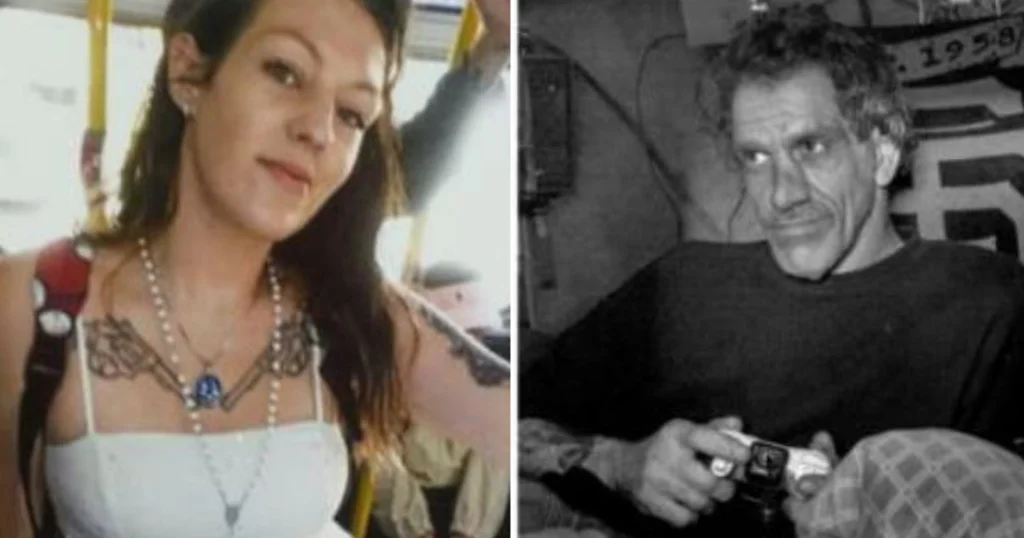
The murder of 27-year-old Lindsay Elaine McCollum and 51-year-old Eddie Wayne Tate on December 18, 2016, in San Francisco, California, remains a painful and unresolved case that exposed both the violence faced by vulnerable people and the human stories often hidden behind homelessness. Lindsay and Eddie were killed in the Mission District, near 16th Street and South Van Ness Avenue, while living in or around a wooden box that served as shelter. Their deaths shocked those who knew them and left their families, friends, and community members searching for answers.
Lindsay and Eddie were both unhoused at the time of their deaths, but that word alone does not tell the story of who they were. Lindsay was a daughter, an animal lover, and a woman remembered by her family as someone whose life had meaning beyond her struggles. Eddie, also known by the nickname Tennessee, was remembered by some in the area as a helpful man who could fix things and who had become familiar to people living on the streets nearby. Their lives were difficult, but they were not disposable. Their deaths mattered, and the fact that their case remains unsolved has only deepened the grief surrounding it.
The shooting happened at night in one of San Francisco’s most active neighborhoods. The Mission District is known for its restaurants, bars, murals, shops, transit lines, and heavy foot traffic. Yet even in a place where people are constantly moving through, Lindsay and Eddie were attacked and killed. The location was public, but the answers have remained hidden.
Years later, the case continues to stand as a reminder that violence against unhoused people can be overlooked, misunderstood, or forgotten unless families, advocates, police, and the public continue to push for justice.
Who Lindsay Elaine McCollum Was
Lindsay Elaine McCollum was 27 years old when she was killed. She was young, still loved by her family, and still remembered as a person with interests, memories, humor, and a life that stretched far beyond the circumstances of her death. Public accounts about Lindsay have described her as someone who loved animals and had a strong attachment to her pit bull, Lily. That detail has become one of the most emotional parts of her story because Lily was reportedly with Lindsay when the shooting happened.
Lindsay’s life had been marked by struggles, including addiction and mental health challenges. Those difficulties contributed to her time living on the streets, but they did not define her entire identity. People who loved her remembered the person behind the hardship. They remembered the child she had been, the music she enjoyed, the books she read, and the bond she had with animals.
It is important to tell Lindsay’s story with care because many victims who are unhoused or dealing with addiction are often reduced to labels. They become described only by their problems, not by their humanity. Lindsay was not simply a homeless woman killed in San Francisco. She was a daughter whose family grieved her loss. She was a woman with a name, a past, and people who wanted her life to be remembered with dignity.
Her mother became one of the voices keeping Lindsay’s memory alive. Families of murder victims often carry the burden of making sure the world does not move on too easily. In Lindsay’s case, that meant reminding people that her life mattered before the night she was killed, and that her death still deserves justice.
Who Eddie Wayne Tate Was
Eddie Wayne Tate was 51 years old when he was killed. He was known by the nickname Tennessee, a name that connected him to his roots and helped distinguish him among people who knew him in the Mission District. Like Lindsay, Eddie was unhoused at the time of the shooting. He lived in a makeshift shelter or wooden box near the area where the attack happened.
Those familiar with Eddie described him as someone who was resourceful and useful with his hands. He was remembered as a man who could fix things and who sometimes helped people around him. In a street community, those kinds of skills matter. They can make someone known, respected, and relied upon by others who are also surviving in difficult conditions.
Eddie’s life also should not be reduced only to where he slept or how he died. He was a person who had lived decades before that night in San Francisco. He had relationships, memories, and a story that existed before the public learned his name because of a homicide investigation. His killing left behind questions not only about who pulled the trigger, but why someone would target two vulnerable people in such a brutal way.
In the aftermath, Eddie’s name was often paired with Lindsay’s because they were killed together. But he was also an individual victim. He had his own history and his own people who cared about what happened to him. His death deserves the same attention and seriousness as any homicide victim.
The Night of the Shooting
On December 18, 2016, Lindsay Elaine McCollum and Eddie Wayne Tate were in San Francisco’s Mission District near 16th Street and South Van Ness Avenue. They were reportedly inside or near a wooden box they used as living quarters when gunfire broke out around 8:46 p.m. The attack happened in an area where unhoused people had been living near tents, shelters, and street encampments.
The details that followed were heartbreaking. Lindsay was shot and emerged badly wounded. Emergency responders were called, but she died at the scene. Eddie was also shot and was transported for medical care, but he later died from his injuries. Within minutes, two lives were taken, and a section of the Mission District became the scene of a double homicide.
The circumstances were especially disturbing because Lindsay and Eddie were attacked while they were in the place they used for shelter. For people without stable housing, a box, tent, doorway, or sidewalk space can become the closest thing they have to a home. That space may be unsafe, exposed, and temporary, but it can still hold a person’s belongings, routines, and sense of survival. To be killed there added another layer of cruelty to the crime.
The shooting did not appear to be a random noise in the city that quickly disappeared into the night. It left behind witnesses, emergency calls, grief, and a homicide investigation that would stretch on for years. Yet despite public attention and police efforts, the people responsible were not immediately brought to justice.
The Location in San Francisco’s Mission District
The murders happened in San Francisco, California, in the Mission District, near the northwest corner of 16th Street and South Van Ness Avenue. This part of the city is busy, urban, and layered with different realities. There are restaurants, nightlife spots, homes, businesses, commuters, longtime residents, and people living outside. It is a neighborhood where wealth, poverty, culture, survival, and city pressure exist side by side.
The area around 16th Street is also a major corridor. People pass through on foot, by car, by bicycle, and by public transit. That makes the lack of resolution in the case even more frustrating. In a place with so much movement, it is possible that someone saw something, heard something, or knew something that could help investigators. The challenge is turning those fragments into evidence strong enough to solve the case.
For Lindsay and Eddie, the Mission District was not just the place where they were killed. It was part of their daily survival. Their shelter, their routines, and their interactions with others were tied to the area. That means the investigation likely depended not only on formal evidence, but also on street knowledge, community memory, and the willingness of people to speak.
In cases involving unhoused victims, witnesses may also be vulnerable. Some may fear police contact, retaliation, deportation, losing belongings, or being drawn into court proceedings. Others may struggle with addiction, trauma, or instability that makes participation difficult. These realities can complicate investigations and contribute to cases remaining unsolved.
The Person or People Responsible
The case remains unsolved, and no one has been publicly convicted for the murders of Lindsay Elaine McCollum and Eddie Wayne Tate. Police have released information over the years, including a composite sketch of a person of interest. Reports have also described possible suspects as men armed with handguns. However, the full truth about who killed Lindsay and Eddie has not been publicly established.
The possibility of more than one attacker has made the case even more unsettling. If multiple people were involved, then there may be more than one person who knows what happened that night. There may also be people who heard about the crime afterward, saw the suspects before or after the shooting, or know why Lindsay and Eddie were targeted.
The motive remains unclear. Publicly available information does not establish whether the murders were connected to a dispute, robbery, retaliation, personal conflict, street violence, or another reason. Without a clear motive, the case becomes harder for the public to understand, but not less important.
What is clear is that Lindsay and Eddie were vulnerable. They were living outside, exposed to danger, and without the protection that stable housing can provide. Whoever attacked them did so in a way that left two people dead and a community shaken.
The Reward And Continued Search For Justice
Over the years, the reward for information in the case increased, showing that law enforcement and city officials continued trying to generate leads. The reward eventually reached $250,000 for information leading to the identification, arrest, and conviction of the person or people responsible. That amount reflects the seriousness of the case and the ongoing need for public help.
Rewards in cold cases can be important because they may encourage someone to come forward after years of silence. People who were afraid at first may feel differently later. Relationships change. Loyalties fade. Guilt grows. Someone who once protected a suspect may eventually decide that the truth matters more.
The release of a person-of-interest sketch was another attempt to move the case forward. A sketch can help jog memories, especially in a neighborhood where people may recognize faces even if they do not know names. Someone may have seen a person near the scene, heard them talk about the shooting, or noticed unusual behavior afterward.
Still, rewards and sketches only work if people respond. The case depends on someone choosing to share information. Even a small detail could matter. A name, a nickname, a vehicle, a conversation, or a memory from that night could help investigators connect pieces that have remained separate for years.
Why This Case Matters
The murders of Lindsay McCollum and Eddie Tate matter because every victim deserves justice, no matter where they lived or what struggles they faced. Their case forces people to confront the way society sees unhoused victims. Too often, violence against people living on the streets receives less attention than violence against people with stable homes, careers, or public status. That imbalance is painful and dangerous.
Lindsay and Eddie were killed in a major American city, in a public neighborhood, while living in extreme vulnerability. Their deaths should not be seen as inevitable or less shocking because they were unhoused. They were human beings. Their fear, pain, and loss were real. Their families and friends were left with grief that did not disappear when the headlines faded.
The case also matters because it speaks to the larger risks faced by people living outside. Without secure shelter, people are more exposed to assault, theft, exploitation, harassment, and murder. They sleep in places where danger can approach at any hour. They often have limited ability to protect themselves or report threats safely.
Lindsay and Eddie’s deaths are part of that larger reality, but they are also specific. They were not symbols only. They were two people with names, ages, stories, and loved ones. Their murders deserve to be solved not only because the public needs safety, but because they deserve justice as individuals.
The Pain Left Behind
For Lindsay’s family, the murder created a permanent wound. Her mother had to grieve not only the loss of her daughter, but also the painful public reality of how Lindsay died. Losing a child to violence is devastating. Losing a child whose life had already involved hardship can bring additional layers of sorrow, regret, anger, and longing.
Families often remember what the public never sees. They remember childhood moments, birthdays, favorite songs, laughter, habits, and old dreams. For Lindsay’s family, the person they lost was not defined by a street corner or a police report. She was someone they loved before addiction, homelessness, and violence became part of the story.
Eddie’s death also left grief behind. He was known in the area and remembered by people who saw more in him than his housing status. For those who knew him as Tennessee, his death was the loss of a familiar presence in the street community. People who live outside often build their own networks of support, and the killing of one person can ripple through many others who shared space with them.
The fact that both victims were killed together made the tragedy even heavier. Two people died from the same act of violence. Two lives ended in the same place. Two families and communities were left waiting for answers.
The Unanswered Questions
Many questions remain in the murders of Lindsay Elaine McCollum and Eddie Wayne Tate. Who approached them that night? Was the killer or killers known to them? Was there an argument before the shooting? Did someone target their shelter specifically? Were there witnesses who never came forward? Did fear keep people silent?
The question of motive remains especially important. Understanding why the murders happened could help identify who was responsible. If the shooting was connected to a dispute, someone may know what that dispute involved. If it was random violence, then the danger may have extended beyond Lindsay and Eddie. If it was connected to street conflict, robbery, or retaliation, someone in the area may have heard details before or after the attack.
There is also the question of why the case has remained unsolved for so long. Cold cases can stall for many reasons. Witnesses may be afraid. Evidence may be limited. Suspects may leave the area. People may give partial information but not enough to support charges. Investigators may have theories they cannot publicly prove.
Even so, unsolved does not mean forgotten. The continued reward and public attention show that the case remains open to movement. One person with the right information could change everything.
Remembering Lindsay And Eddie
Lindsay Elaine McCollum and Eddie Wayne Tate were murdered on December 18, 2016, in San Francisco, California. Lindsay was 27. Eddie was 51. Their lives ended violently in the Mission District, but their stories should not end only with the crime.
Lindsay should be remembered as a daughter and an animal lover, a woman who had family fighting to keep her memory alive. Eddie should be remembered as Tennessee, a man known by people around him and remembered for his ability to help and fix things. Both were people whose lives had value before the night they were killed.
The case remains a call for justice. It asks the public not to look away because the victims were unhoused. It asks anyone with information to understand that silence protects the people responsible and prolongs the pain of those left behind. It asks the city to remember that violence against vulnerable people is not less serious. It is often more urgent because those victims are already living close to danger.
Years have passed since Lindsay and Eddie were shot near 16th Street and South Van Ness Avenue, but the need for answers remains. Their families deserve to know who killed them. Their community deserves accountability. Their names deserve to be spoken with dignity.
Until the case is solved, the murders of Lindsay Elaine McCollum and Eddie Wayne Tate remain an open wound in San Francisco’s Mission District, a reminder of two lives taken and a truth still waiting to be uncovered.
Discover more from City Towner
Subscribe to get the latest posts sent to your email.