
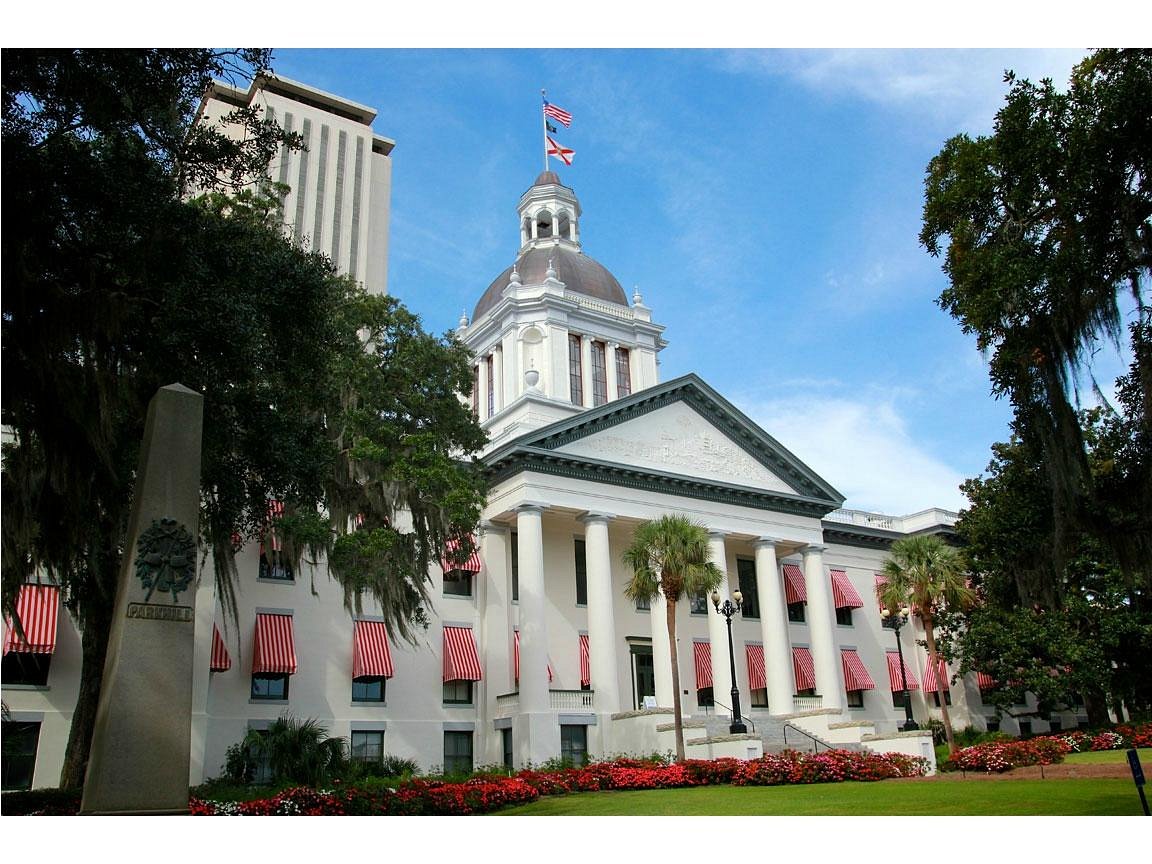
Florida Historic Capital Museum in Tallahassee Florida
The Florida Historic Capitol Museum in Tallahassee, Florida, is one of the most important landmarks in the state’s political and architectural history. Standing at the center of Florida’s capital city, the museum preserves the story of state government, public debate, elections, leadership, lawmaking, and civic life. It is more than an old building. It is a place where Florida’s past can be seen through restored chambers, exhibits, photographs, campaign materials, historic rooms, and the changing story of democracy in the state.
The museum sits beside the modern Florida Capitol, creating a striking contrast between old and new. The historic Capitol represents an earlier Florida, one shaped by territorial growth, statehood, Reconstruction, segregation, reform, political campaigns, and decades of legislative decisions. The modern Capitol represents the larger and more complex government Florida became in the twentieth century. Together, they tell a powerful story about a state that grew from a frontier territory into one of the most populous and influential states in the country.
For visitors, the Florida Historic Capitol Museum offers a meaningful way to understand Tallahassee’s role as the seat of Florida government. The building has witnessed political speeches, legislative battles, court decisions, public ceremonies, protests, campaigns, and major moments in the state’s development. Walking through the museum is a chance to step into rooms where decisions once shaped the lives of Floridians across generations.
Tallahassee as Florida’s Capital City
To understand the Florida Historic Capitol Museum, it is important to understand why Tallahassee became the capital. After Florida became a United States territory in 1821, leaders needed a central location for government. At the time, the territory’s two main population centers were Pensacola in the west and St. Augustine in the east. Travel between them was difficult, slow, and inconvenient.
Tallahassee was selected as the territorial capital in 1824 because it was located between those two distant cities. The decision helped define the future of North Florida. Tallahassee was not a large city at the time, but becoming the capital gave it political importance and a reason to grow. Government offices, public buildings, lawmakers, lawyers, newspapers, hotels, merchants, and citizens began to gather around the center of political life.
The Capitol became the symbol of that role. It represented order, authority, law, and the future of Florida. As the territory moved toward statehood, the need for a permanent and dignified government building became more important. Tallahassee’s identity as a capital city grew around the Capitol, and that identity remains central to the city today.
The Evolution of the Capitol Building
The Florida Historic Capitol did not appear all at once in the form visitors see today. Like Florida itself, it changed over time. Early government meetings were held in simpler structures, reflecting the young territory’s limited resources and developing political institutions. As Florida grew, the Capitol had to grow with it.
Florida became a state on March 03, 1845, and the Capitol became the center of state government. Over the years, the building was expanded, remodeled, and updated to meet the needs of a growing state. Wings were added, rooms were changed, and the structure took on new architectural features. Each change reflected a different period in Florida’s history.
The building’s familiar dome, classical style, and formal presence helped give Florida government a visible identity. It became the place where governors worked, legislators debated, courts met, and citizens brought their concerns. The Capitol was both a working government building and a symbol of the state’s authority.
By the twentieth century, Florida’s rapid population growth made the old Capitol too small for modern government. A new Capitol tower was constructed nearby, and the historic building was nearly lost. Preservation efforts saved it, allowing the old Capitol to become a museum dedicated to Florida’s political history.
Preserving the Old Capitol
The preservation of the Florida Historic Capitol was a major moment in the state’s historic preservation story. As the modern Capitol was built, there were debates over what should happen to the old building. Some believed it should be removed to make way for the new government complex. Others argued that the old Capitol was too important to destroy.
Preservation supporters saw the building as a physical link to Florida’s past. It had survived major political eras and represented generations of public life. Removing it would have erased one of the most visible symbols of state history. The effort to save it reflected a growing awareness that historic buildings are not just old structures. They are places where memory, identity, and civic meaning are preserved.
The building was restored and transformed into the Florida Historic Capitol Museum. This allowed the old Capitol to continue serving the public, not as the active center of government, but as a place of education and reflection. Today, visitors can walk through restored rooms and learn about the people, issues, and institutions that shaped Florida.
The museum’s existence is a reminder that progress and preservation can exist side by side. The modern Capitol handles the current business of government, while the historic Capitol protects the memory of how that government developed.
Architecture and Visual Character
The Florida Historic Capitol Museum is one of Tallahassee’s most recognizable buildings. Its white walls, red and white striped awnings, dome, columns, and classical details give it a distinctive appearance. The building stands with dignity at the center of the Capitol complex, offering a strong visual connection to Florida’s past.
The architecture reflects the desire to present government as formal, stable, and respected. The dome draws the eye upward, while the symmetrical design and classical features suggest order and tradition. These elements were common in public buildings because they communicated authority and civic importance.
Inside, the restored spaces help visitors imagine how government functioned in earlier eras. Legislative chambers, offices, court spaces, and exhibit rooms show the building as both a workplace and a stage for public life. The design of the rooms reflects the formality of government proceedings, but also the human activity that took place there.
The building’s visual contrast with the modern Capitol is especially powerful. The old Capitol feels historic, intimate, and traditional. The modern Capitol feels tall, efficient, and administrative. Seeing them together helps visitors understand Florida’s transformation over time.
Exhibits That Tell Florida’s Political Story
The museum’s exhibits explore Florida’s political history through objects, photographs, documents, campaign materials, videos, and reconstructed spaces. Visitors can learn about elections, governors, legislative debates, constitutional changes, civil rights issues, public policy, and the development of state government.
One of the strengths of the museum is that it makes politics accessible. Government history can sometimes feel distant or complicated, but the exhibits show how political decisions affect real people. Laws passed in Tallahassee shaped schools, roads, taxes, voting rights, public health, land use, criminal justice, civil rights, and the environment.
Campaign materials are especially interesting because they show how politicians communicated with voters over time. Posters, buttons, signs, advertisements, speeches, and photographs reveal changing styles of public persuasion. They also show how Florida’s population and political concerns changed across generations.
The exhibits help visitors see that democracy is not only about election days or famous leaders. It is also about public participation, debate, conflict, compromise, and the continuing effort to define what government should do.
The Restored Legislative Chambers
Among the most memorable parts of the Florida Historic Capitol Museum are the restored legislative chambers. These rooms allow visitors to imagine lawmakers meeting, debating, voting, and shaping the future of the state. The chambers are designed to reflect earlier periods of Florida government, giving people a sense of how political work once looked and felt.
The House and Senate chambers were central to the building’s purpose. They were places where representatives from different parts of Florida gathered to argue over policies and priorities. The issues changed over time, but the basic function remained the same: making laws for the state.
Standing in these rooms can make history feel immediate. Visitors can picture the sounds of speeches, conversations, disagreements, and formal procedures. The desks, seating arrangements, galleries, and architectural details help bring the legislative process to life.
These chambers also remind visitors that government is made by people. Every law begins with human debate, persuasion, pressure, and choice. The rooms preserve the setting where many of those choices were made.
The Governor’s Suite and Executive Power
The museum also helps tell the story of Florida’s governors and executive leadership. The governor’s office was one of the most important spaces in the Capitol, serving as a place where decisions were made, visitors were received, and state leadership was carried out.
The governor’s role changed as Florida grew. Early governors led a smaller and more rural state, while later governors managed the challenges of population growth, urban development, education, transportation, hurricanes, civil rights, tourism, environmental protection, and economic change. The office itself became a symbol of responsibility and public authority.
Exhibits connected to governors often show the personalities, campaigns, priorities, and controversies of Florida’s executive leaders. They help visitors understand how leadership styles and political concerns changed over time.
The governor’s suite is important because it connects the museum to the human side of power. Behind public speeches and official portraits were individuals making decisions under pressure, responding to crises, and shaping the direction of the state.
Courts, Law, and Justice
The historic Capitol also has connections to Florida’s judicial history. Government is not only about lawmakers and governors. Courts play a major role in interpreting laws, resolving disputes, and defining rights. The museum helps visitors understand the relationship between different branches of government.
Florida’s legal history includes complicated and often painful chapters. Court decisions and laws affected voting, education, property, segregation, civil rights, labor, criminal justice, and personal freedom. The historic Capitol provides a setting for exploring how law and justice developed in the state.
The museum encourages visitors to think about the meaning of citizenship and the rule of law. It shows that laws are not abstract ideas. They shape daily life, determine opportunities, and reflect the values and conflicts of their time.
By including judicial history, the museum gives a fuller picture of Florida government. It reminds visitors that democracy depends on more than elections. It also depends on institutions, accountability, rights, and public trust.
Florida’s Changing Political Landscape
One of the most interesting stories told through the Florida Historic Capitol Museum is the changing political landscape of the state. Florida has changed dramatically since the nineteenth century. It moved from a sparsely populated frontier territory to a major state with large cities, diverse communities, national political importance, and a powerful economy.
The old Capitol witnessed many of these changes. It saw Florida during statehood, the Civil War, Reconstruction, the Jim Crow era, the Great Depression, World War II, the civil rights movement, population booms, and modern political realignment. Each period brought new debates and new challenges.
Florida’s population growth changed political power. As more people moved to the state, especially in Central and South Florida, the concerns of the Legislature expanded. Issues such as tourism, highways, schools, housing, water, immigration, agriculture, hurricanes, and environmental protection became increasingly important.
The museum helps visitors understand that Florida politics has never been static. It has always reflected the state’s changing people, economy, geography, and identity.
Civil Rights and Civic Struggle
The Florida Historic Capitol Museum also invites reflection on civil rights and the long struggle for equal citizenship. Tallahassee was an important civil rights city, and the Capitol was a place where laws and policies affected segregation, voting rights, education, and public access.
For many years, Florida government supported systems that denied equal rights to African Americans and other marginalized groups. Segregation shaped schools, transportation, housing, public spaces, employment, and political participation. The Capitol was part of that history because laws passed there helped maintain inequality.
At the same time, the Capitol also became a place where change was demanded. Activists, students, clergy, lawyers, and community leaders challenged unjust laws and pushed for reform. Tallahassee’s civil rights movement, including student activism and the bus boycott that began in 1956, is part of the larger story of democracy in Florida.
The museum’s political history is strongest when it acknowledges that government can both deny rights and protect them. The building stands as a reminder that civic progress often comes through struggle, pressure, courage, and public action.
Tallahassee’s Downtown Landmark
The Florida Historic Capitol Museum is one of the anchors of downtown Tallahassee. Its location places it near other government buildings, museums, parks, churches, offices, restaurants, and historic sites. For visitors exploring the city, it is a natural starting point.
The building helps define the look and meaning of downtown. It reminds people that Tallahassee is not only a college town or regional city. It is the seat of Florida government. The Capitol complex gives downtown a civic identity that few Florida cities have.
Visitors can combine a museum visit with other nearby stops, such as the modern Capitol, the Museum of Florida History, Cascades Park, or historic neighborhoods. This makes the area especially useful for people who want to understand the city in a short amount of time.
The historic Capitol also adds beauty and character to the urban landscape. Its preserved architecture gives downtown Tallahassee a sense of history and continuity.
A Museum for Students and Families
The Florida Historic Capitol Museum is especially valuable for students and families. It gives young visitors a chance to learn how government works in a setting that is visual and memorable. Instead of only reading about laws, elections, or branches of government, students can stand inside a real historic Capitol building.
The museum helps explain concepts such as representation, voting, leadership, public debate, and citizenship. It also introduces visitors to the idea that government is shaped by people and that civic participation matters.
For families, the museum offers an educational experience that can appeal to different ages. Adults may appreciate the history and architecture, while children may enjoy the rooms, displays, and stories about elections and leadership.
The museum’s value goes beyond tourism. It supports civic education, helping people understand the responsibilities and possibilities of democracy.
Why the Museum Matters
The Florida Historic Capitol Museum matters because it preserves the memory of public life in Florida. Many decisions that shaped the state were debated in or connected to this building. Its rooms hold stories of leadership, conflict, compromise, injustice, reform, and progress.
Historic buildings help people understand time in a physical way. They allow visitors to stand where earlier generations stood and imagine the choices they faced. The Capitol Museum does this especially well because it connects architecture to civic responsibility.
The museum also matters because Florida is a state that has changed quickly. Rapid growth can sometimes make history feel easy to overlook. By preserving the old Capitol, Tallahassee gives residents and visitors a place to remember where the state came from.
In a modern political world often shaped by speed and division, the museum offers a slower and deeper view of government. It encourages people to think about institutions, citizenship, and the long process of building a state.
Visiting the Florida Historic Capitol Museum
A visit to the Florida Historic Capitol Museum is useful for anyone interested in history, architecture, politics, education, or Tallahassee itself. The museum can be enjoyed at a relaxed pace, with time to explore exhibits, restored rooms, and the building’s design.
Visitors should pay attention to the contrast between the old Capitol and the modern Capitol. That contrast is one of the most meaningful parts of the experience. It shows how Florida grew while still preserving a visible connection to its past.
The museum is also a good stop for people traveling through Tallahassee who want to understand why the city exists as it does. Tallahassee’s history is deeply tied to government, and the historic Capitol is one of the clearest expressions of that identity.
For photographers, history lovers, students, and curious travelers, the museum offers both beauty and substance. It is one of the essential places to visit in Florida’s capital city.
The Lasting Legacy of the Historic Capitol
The lasting legacy of the Florida Historic Capitol Museum is its ability to connect Floridians with their government’s past. The building has survived political change, population growth, architectural debate, and the construction of a much larger modern Capitol. Its preservation shows that history still matters in the middle of active government.
The museum tells a story that is larger than one building. It tells the story of Florida becoming a territory, becoming a state, struggling through war and Reconstruction, enforcing and then challenging segregation, expanding education, growing rapidly, and becoming a national political force. The historic Capitol stood at the center of many of those changes.
For Tallahassee, the museum is a symbol of identity. It reminds people why the city became important and why it remains central to Florida’s public life. For the state, it is a civic landmark that helps preserve the memory of democracy in action.
The Florida Historic Capitol Museum remains one of Tallahassee’s most meaningful attractions. It is beautiful, educational, and historically powerful. It allows visitors to step inside the story of Florida government and leave with a better understanding of the people, debates, and decisions that shaped the state.
Discover more from City Towner
Subscribe to get the latest posts sent to your email.