
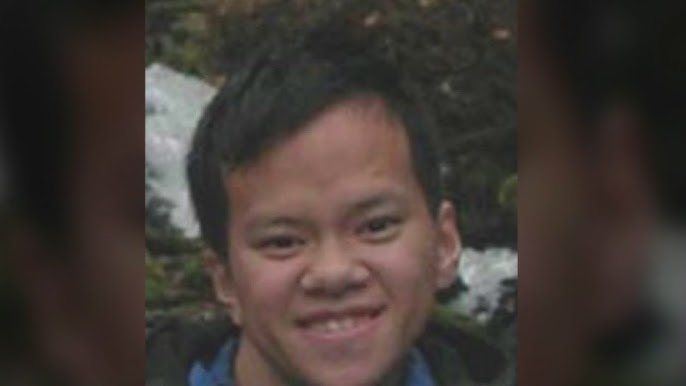
Khoi Dang Vu Disappearance in Vancouver Washington
The Disappearance of Khoi Dang Vu
Khoi Dang Vu was a vulnerable 25 year old man who disappeared from his family’s home in the Vancouver, Washington, area during the early morning hours of April 7, 2007. His disappearance initially appeared to be a case involving a young man who may have wandered away, but the investigation eventually took a far more troubling direction. Authorities now believe Khoi was likely the victim of homicide and that his remains may have been discarded in a dumpster before being transported to a landfill near Boardman, Oregon.
Khoi was deaf from birth, unable to speak and intellectually disabled. Although he could perform certain everyday activities and had some independence, his disabilities made him especially vulnerable. He relied on familiar surroundings, family members and established routines. His disappearance during a night of heavy rain, without his bicycle or favorite jacket, was immediately unusual.
Despite searches, media coverage and years of investigation, Khoi has never been found. No person has been arrested or publicly identified as responsible for his presumed death. The case remains an unresolved cold case, leaving his family without answers and investigators searching for the information needed to determine exactly what happened inside the critical hours before he vanished.
Khoi’s Life Before His Disappearance
Khoi Dang Vu was born on July 26, 1981, in Vietnam. He later became an American citizen and lived with members of his family in the Orchards area of Clark County, near Vancouver, Washington.
Khoi had been deaf since birth and could not speak. He understood written English and could communicate through writing, gestures and a limited amount of American Sign Language. He did not understand Vietnamese, even though he had been born in Vietnam.
His intellectual disability reportedly caused him to function at approximately the level of a 10 year old child. That description did not mean he was completely dependent or incapable of navigating his surroundings. He could perform basic transactions, point to items he wanted and travel to familiar nearby places. However, he could have difficulty understanding danger, explaining an emergency or recognizing when someone intended to harm or deceive him.
Khoi was approximately 5 feet 5 inches tall and weighed between 105 and 118 pounds. He had black hair and brown eyes. His right hand and arm were slightly deformed, providing another identifiable physical characteristic.
Those who knew him described him as outgoing and approachable. He enjoyed basketball, video games and visiting familiar neighborhood businesses. He sometimes went to a nearby Albertsons grocery store and was known to interact with people despite his communication limitations.
Khoi’s friendly nature made him well known in the area, but it also increased his vulnerability. He might approach or trust someone who appeared helpful. If he became lost, frightened or injured, he could not shout for assistance or verbally tell a stranger where he lived.
The Family’s Planned Trip to Seattle
Khoi lived with his family in the 13110 block of Northeast 92nd Street in the Orchards area. On April 7, 2007, the family planned to travel to Seattle to celebrate his mother’s birthday.
The trip was scheduled to begin at approximately 8:00 a.m. Khoi was reportedly excited about going. Nothing publicly known indicates that he wanted to avoid the trip or had made plans to leave home for an extended period.
The planned family outing is an important part of the timeline because it makes a voluntary disappearance seem less likely. Khoi knew that his family would be awake early and preparing to leave. If he intended only to walk around the neighborhood, he would have risked missing an event he had been anticipating.
His excitement about the trip also conflicts with the idea that he wanted to abandon his family or begin a new life elsewhere. There is no known evidence that he packed clothing, gathered money, arranged transportation or told anyone he intended to leave.
The Last Known Hours
Khoi was last seen at the family residence sometime between midnight and 1:00 a.m. on April 7, 2007. When family members awakened later that morning to prepare for the Seattle trip, he was gone.
His bed reportedly did not appear to have been slept in. That observation suggested that Khoi may have disappeared before settling down for the night, although the exact circumstances inside the residence have not been publicly detailed.
There were no publicly confirmed signs that Khoi had planned his departure. He left behind his bicycle, which was his primary method of transportation. He also left behind his favorite jacket.
The weather made those details particularly alarming. Heavy rain was falling during the night, and Khoi had never been known to take long nighttime trips on foot. Leaving without a jacket or bicycle would have placed him in uncomfortable and potentially dangerous conditions.
Khoi had previously left the home for short periods, but those incidents were reportedly limited. He generally returned within one or two hours and had never remained missing for an extended period. He was also not known to leave alone in the middle of the night.
When Khoi failed to appear that morning, his absence was not consistent with his normal behavior. The family’s planned departure for Seattle made it unlikely that he had simply forgotten the time or decided to stay away without explanation.
The Initial Missing Person Investigation
The first possibility considered was that Khoi had wandered away. Because he had some independence and occasionally visited nearby locations, investigators had to consider whether he had become confused, taken the wrong route or attempted to reach a familiar business.
Khoi’s limited communication skills made the situation urgent. Even if someone encountered him, that person might not understand that he was missing. Khoi could write in English, but he would need access to paper or another writing surface and someone patient enough to communicate with him.
Authorities also considered whether Khoi had mistaken another Albertsons store for the location near his home. If he attempted to travel farther than usual, he could have entered an unfamiliar neighborhood and become unable to find his way back.
Searchers examined the surrounding area, and information about Khoi was distributed to the public. Hospitals, shelters, businesses and other possible destinations were considered. Investigators looked for anyone who might have seen him walking through the neighborhood during the early morning.
No confirmed sighting emerged.
Khoi did not appear at the stores he knew. He did not contact his family or seek help from law enforcement. There was no publicly confirmed evidence that he traveled to another city or successfully established himself somewhere else.
As hours became days and days became weeks, the wandering theory became increasingly difficult to accept. The neighborhood was populated, and Khoi was recognizable. His disabilities, physical description and unusual circumstances should have made him memorable to anyone who encountered him.
The Importance of the Items Left Behind
Khoi’s bicycle was one of the most significant items left at the residence. It was his primary method of getting around, and he used it to reach familiar places. If he voluntarily decided to travel any meaningful distance, taking the bicycle would have been the most practical choice.
His jacket was equally important. The weather was stormy, making it unlikely that he would choose to walk far without protection from the rain. The fact that it was reportedly his favorite jacket made its presence at home even more unusual.
Together, the bicycle and jacket suggested that Khoi did not expect to be outside for long, did not leave under ordinary circumstances or may not have had the opportunity to gather the items he normally used.
The condition of his bed added another troubling element. If it had not been slept in, Khoi may have disappeared shortly after family members last saw him. That possibility narrows the known timeline but does not reveal whether he left by choice, was persuaded to go somewhere or was harmed before leaving the property.
There is no publicly confirmed evidence that he took luggage, significant money, identification or supplies. There is also no evidence that he had planned to meet someone.
The Investigation Takes a Criminal Direction
As searches failed to locate Khoi, investigators began considering the possibility that his disappearance involved foul play. Within weeks, the case moved beyond the theory that he was simply lost.
The Clark County Sheriff’s Office eventually classified the investigation as a suspected homicide. Detectives came to believe that Khoi had likely been killed and that his body had been placed in a dumpster.
Authorities further concluded that the waste containing his remains may have been transported to a landfill near Boardman, Oregon. Boardman is located approximately 150 miles east of the Vancouver area.
This theory is one of the most important and disturbing developments in the case. It suggests investigators obtained information connecting Khoi’s disappearance to a specific waste collection route or disposal process. However, authorities have not publicly released all the evidence supporting that conclusion.
Law enforcement agencies often withhold critical details in an active homicide investigation. Information known only to investigators and the person responsible can be used to evaluate tips, statements and possible confessions. Releasing too much could also allow a suspect to alter an account or destroy remaining evidence.
The lack of publicly disclosed evidence does not mean investigators reached the landfill theory without a basis. It means the public does not know which interviews, records or observations led detectives to believe Khoi’s body entered the commercial waste system.
The Landfill Near Boardman
A landfill presents one of the most difficult environments for recovering human remains. Commercial waste is compacted, transported and buried beneath enormous quantities of additional material. The precise location of an object can become nearly impossible to determine after only a short period.
If Khoi’s body was placed in a dumpster, it could have been mixed with waste from multiple homes or businesses. The contents may have passed through a collection truck, transfer facility or compactor before reaching the landfill.
The pressure from compacting equipment can damage physical evidence. Weather, chemicals, machinery and the weight of additional waste can further destroy or scatter remains and personal belongings.
A successful landfill search usually requires investigators to identify a narrow disposal window, the specific truck involved and the section where that truck unloaded. Even with those details, the search can require extensive labor, specialized equipment and substantial funding.
The Boardman theory may explain why searches near Khoi’s neighborhood failed to locate him. If his remains were transported out of Clark County within hours or days, local search teams would have been looking in the wrong geographical area.
It also created a devastating obstacle for his family. Without a recovery, they could not hold a funeral, receive forensic confirmation or learn what injuries Khoi may have suffered.
What May Have Happened
The earliest explanation was that Khoi left the residence voluntarily and became lost. That possibility was reasonable during the initial hours because he sometimes traveled to nearby locations and could navigate portions of his neighborhood.
However, several facts weakened that theory. Khoi left during heavy rain, did not take his bicycle or jacket, disappeared before a family trip he wanted to attend and was never seen in the surrounding area.
Another possibility was that he left the home and encountered someone who harmed him. His friendly personality and disabilities could have made him vulnerable to an opportunistic offender. Someone could have offered him a ride or convinced him to go to another location.
The dumpster theory raises the possibility that the crime occurred near the residence or somewhere connected to the local waste collection system. It does not establish where Khoi died or who placed his body in the trash.
Authorities have not publicly stated whether they believe he was killed inside the home, outside in the neighborhood or at a different location. They have also not publicly identified a motive.
No particular person has been charged or officially named as Khoi’s killer. Accusations against relatives, neighbors or strangers remain speculation unless supported by verified evidence.
The Challenges of Khoi’s Communication Limitations
Khoi’s inability to speak would have made it difficult for him to call for help. He could not verbally explain his address, describe a threatening person or tell a dispatcher what was happening.
Although he could read and write English, written communication requires time and cooperation. In a dangerous encounter, Khoi may not have been able to obtain paper, access a telephone or persuade another person to stop and understand him.
His intellectual disability could also have affected his perception of risk. He may have trusted someone who offered assistance or failed to recognize behavior that would alarm another adult.
If Khoi became confused or frightened, strangers might have misunderstood his gestures. They may have assumed he was unwilling to communicate rather than recognizing that he was deaf and nonverbal.
These vulnerabilities made it critical to locate him quickly. They also support the conclusion that a long term voluntary disappearance would have been extremely difficult. Khoi would have needed housing, food, transportation and assistance while remaining completely disconnected from every person who knew him.
The Absence of Confirmed Sightings
Missing person cases often produce numerous reported sightings. Some are honest mistakes, while others come from people seeking attention or attempting to interfere with an investigation.
In Khoi’s case, no sighting has been publicly confirmed as genuine. No surveillance image, witness account or transaction has established that he was alive after leaving the residence.
The lack of sightings is particularly significant because Khoi had recognizable characteristics. His communication style, physical build and right arm and hand would likely have stood out to someone who interacted with him.
If he wandered through Vancouver for an extended period, entered businesses or used public transportation, there should have been opportunities for someone to notice him. The complete absence of a reliable trail supports the belief that something happened to him soon after he was last seen.
No Publicly Named Suspect
Despite the homicide classification, investigators have not publicly named a suspect. No person has been arrested or charged in connection with Khoi’s disappearance.
It is possible that detectives have considered one or more persons of interest without having enough evidence to pursue criminal charges. It is also possible that the identity of the responsible person remains unknown.
A homicide prosecution normally requires evidence establishing that a death occurred and connecting a specific person to the crime. A case without a body can still be prosecuted, but the absence of remains often makes the process more difficult.
Without Khoi’s body, investigators may lack forensic evidence showing how he died. They may also be unable to prove when and where the killing occurred. If witnesses are unwilling to cooperate or available evidence is circumstantial, prosecutors may not believe they can prove guilt beyond a reasonable doubt.
The decision not to publicly name a suspect protects the integrity of the investigation and prevents unsupported accusations. Until authorities release evidence or file charges, responsibility for Khoi’s presumed death remains legally unresolved.
A Family Left Without Answers
Khoi’s disappearance caused a form of grief that does not offer closure. His family has been forced to live with the belief that he may have been killed while still lacking confirmation of his death or a place to mourn him.
Families of missing people often experience uncertainty that continues for decades. They may understand that survival is unlikely but still hope for a discovery, identification or confession.
Khoi’s family prepared for a birthday trip on April 7, 2007. Instead of traveling to Seattle together, they began searching for him. An ordinary family celebration became permanently associated with one of the most painful events of their lives.
The passage of time does not erase the need for answers. Locating Khoi’s remains would allow his family to bring him home and honor him properly. Identifying the person responsible would provide accountability and may reveal why he was targeted.
The Continuing Cold Case Investigation
Khoi remains listed as missing, while his case is also treated as an unsolved homicide. Investigators continue to seek information from anyone who knew what happened during the early morning hours of April 7, 2007.
Cold cases can be solved years later when a witness finally speaks, a relationship changes or new technology identifies evidence that previously could not be analyzed.
A person may have seen unusual activity near the home, noticed someone using a dumpster, observed a vehicle at an unexpected time or heard statements about Khoi’s disappearance. Even a detail that once seemed minor could help establish a timeline.
Investigators may also review waste collection records, old interviews, telephone information, photographs and statements for inconsistencies. Advances in digital analysis and forensic science can sometimes reveal connections that were not recognized during the original investigation.
The greatest challenge remains the absence of Khoi’s body. If his remains are buried in a landfill near Boardman, recovering them after so many years would be extremely difficult. A precise location provided by someone with direct knowledge may be the only realistic path to finding him.
Remembering Khoi as a Person
Khoi should not be remembered only as the subject of a missing person poster or cold case file. He was a son, brother and member of his community. He enjoyed basketball, video games and familiar routines. He had a personality, interests and relationships that extended beyond his disabilities.
Descriptions of Khoi’s vulnerabilities are necessary to understand the case, but they should not define his entire life. He had abilities, preferences and a recognizable presence in his neighborhood.
His outgoing nature helped him connect with people despite communication barriers. He could read and write, make purchases and travel to familiar locations. He participated in life around him and looked forward to spending time with his family.
The person responsible for his disappearance, if investigators are correct that he was murdered, took advantage of someone who may not have been able to protect himself or clearly report danger.
Khoi deserves to be found. His family deserves to know what happened, and the person responsible deserves to be held accountable.
An Unresolved Disappearance and Presumed Homicide
The disappearance of Khoi Dang Vu remains one of Clark County’s most troubling unresolved cases. He vanished from his family’s home near Vancouver during the early morning of April 7, 2007, only hours before a planned family trip.
He left behind his bicycle and favorite jacket during heavy rain. His bed reportedly had not been slept in, and there was no evidence that he prepared to leave permanently. No confirmed sighting placed him anywhere after that night.
The investigation gradually changed from a search for a vulnerable missing adult into a suspected homicide case. Detectives now believe Khoi’s body was likely placed in a dumpster and transported to a landfill near Boardman, Oregon.
That conclusion provides a possible explanation for why he was never found, but it does not answer the most important questions. The public still does not know who killed Khoi, where the crime occurred, why he was harmed or what evidence led investigators to the landfill theory.
No one has been arrested, and his remains have not been recovered. The investigation now depends on new evidence or someone finally revealing information that has remained hidden.
Until that happens, Khoi’s case remains suspended between disappearance and presumed death. His family continues to wait for the truth, while investigators continue searching for the detail that could finally explain what happened during the rainy night of April 7, 2007.
Discover more from City Towner
Subscribe to get the latest posts sent to your email.