Sherry Wounded Foot Beaten to Death in Whiteclay Nebraska
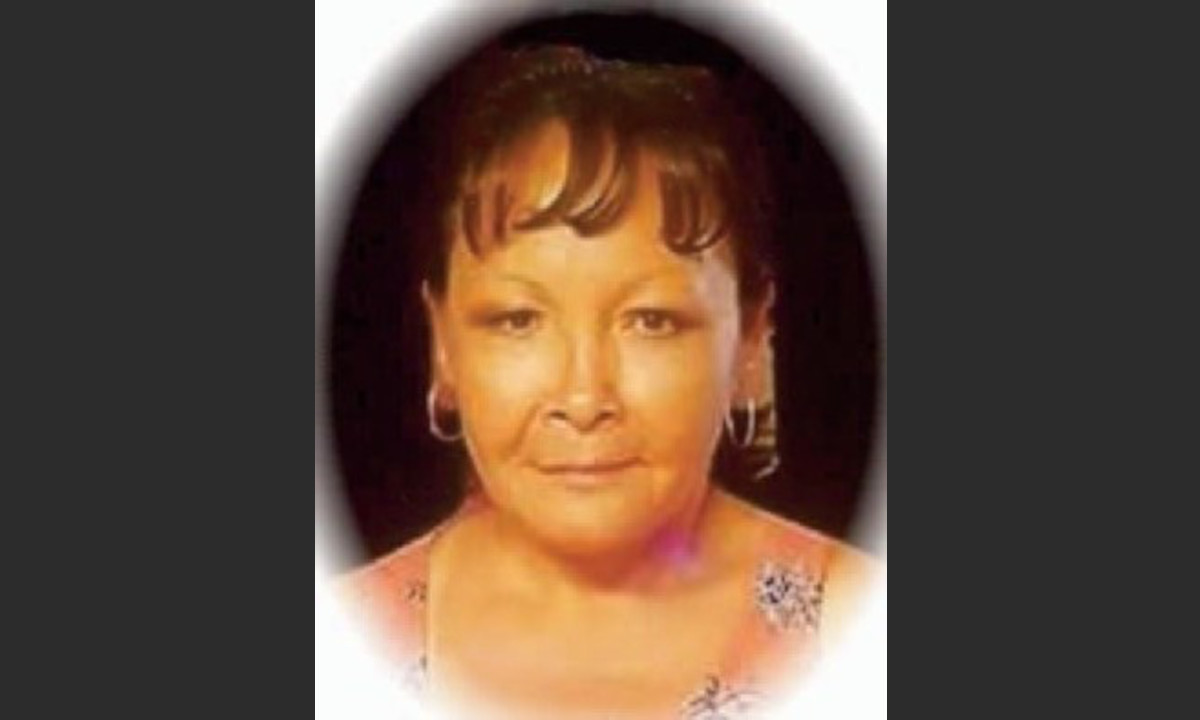
Sherry Wounded Foot was a 50-year-old Oglala Sioux woman, mother and grandmother whose death followed a brutal and still unexplained assault in Whiteclay, Nebraska. She was found unconscious and severely injured behind the Lakota HOPE Ministry building on August 5, 2016. She never regained consciousness and died on August 17, 2016.
Doctors determined that Sherry had suffered devastating blunt force trauma to her head. She also had fractured ribs, facial bruising and signs of internal bleeding. Her injuries were consistent with a violent attack rather than an accidental fall or ordinary medical emergency.
Although Sherry survived for 12 days after she was discovered, the attack had caused irreversible damage. Her family ultimately faced the painful decision to remove her from life support after doctors advised them that meaningful recovery was not expected.
Her death was investigated as a homicide, but no one has been arrested or charged. The person or people responsible for inflicting her fatal injuries have never been publicly identified.
Sherry’s killing became more than one family’s tragedy. Her case drew attention to violence against Indigenous women, concerns about medical treatment on and near the Pine Ridge Indian Reservation and the complicated law enforcement jurisdictions surrounding Whiteclay.
Who Sherry Wounded Foot Was
Sherry Wounded Foot was born on July 13, 1966, in Rapid City, South Dakota. She was a member of the Oglala Sioux Tribe and lived in the Porcupine community on the Pine Ridge Indian Reservation.
Her family remembered her as a strong, generous and spirited woman. She was someone who had experienced hardship but continued showing love to the people around her.
Sherry enjoyed cooking for relatives and spending time with her children and grandchildren. Her family described her as affectionate, giving and protective. She could be tough when circumstances required it, but those closest to her also knew her warmth and humor.
Her son, Logan Lafferty, later spoke publicly about the pain of losing his mother and the lack of justice in her case. Family members wanted the public to understand that Sherry was not merely another statistic connected to Whiteclay. She was a real person with relationships, memories and a family that expected her to return home.
Like many people whose lives become associated with an unresolved crime, Sherry risked being defined only by the circumstances of her death. Her relatives continued working to keep attention focused on who she was and why the violence committed against her deserved a complete investigation.
The Community of Whiteclay
Whiteclay is a small Nebraska community located immediately south of the Pine Ridge Indian Reservation. Although its permanent population was extremely small, the town became widely known for beer stores that sold large quantities of alcohol near a reservation where alcohol sales were prohibited for many years.
For decades, activists argued that the alcohol trade contributed to addiction, homelessness, exploitation, violence and preventable deaths among Native people who traveled between Pine Ridge and Whiteclay.
The community became the center of repeated protests and political disputes. Tribal members and advocates said the conditions in Whiteclay created an environment where vulnerable people could be harmed without receiving adequate attention from authorities.
Sherry was found in this environment, behind the Lakota HOPE Ministry building. The ministry worked with people experiencing poverty, homelessness and substance abuse in the border community.
Her death intensified existing criticism of Whiteclay. Advocates asked why violent incidents involving Indigenous people seemed to produce so few arrests and why families were often left to demand answers without clear communication from institutions responsible for public safety.
The location also created jurisdictional complications. Whiteclay was in Nebraska, while the Pine Ridge Reservation and its medical facilities were immediately across the border in South Dakota. Sherry’s case involved Nebraska law enforcement, a tribal ambulance service, the Indian Health Service and medical providers in South Dakota.
The Morning Sherry Was Found
At approximately 9:40 a.m. on August 5, 2016, emergency services received a call concerning Sherry. Her boyfriend, identified in later legal filings as Greeley White, reportedly called for assistance after she became unresponsive behind the Lakota HOPE Ministry building.
An ambulance operated by the Oglala Sioux Tribe arrived within minutes. Responders found Sherry unconscious.
According to allegations later made by her family, blood and bruising were visible on her body. Despite those warning signs, the full severity of her condition was not immediately recognized.
Sherry was transported approximately two miles north to the Pine Ridge Indian Health Service hospital. She arrived shortly after 10:00 a.m.
Her condition should have raised immediate concern about serious head trauma. An unconscious person with visible injuries may be experiencing bleeding inside the skull, a condition that can worsen rapidly and become fatal without emergency treatment.
The delay in recognizing that possibility later became a major issue for Sherry’s family. They believed the responders and hospital personnel should have treated her as a trauma patient from the moment she was found.
A Medical Emergency Becomes Clear
After arriving at the Pine Ridge hospital, Sherry suffered a seizure. That development provided another sign that something was seriously wrong inside her brain.
Hospital personnel contacted Rapid City Regional Hospital about transferring her to a facility capable of providing specialized treatment. Before accepting the transfer, the receiving hospital requested a CT scan.
The scan was performed at approximately 12:09 p.m., nearly two hours after Sherry arrived at Pine Ridge. It revealed severe bleeding inside her skull.
The condition required immediate neurosurgery. A medical helicopter arrived at approximately 1:25 p.m. to transport her to Rapid City.
Doctors in Rapid City documented extensive injuries. In addition to the bleeding in her brain, Sherry had facial bruising, broken ribs and fluid inside her abdomen believed to be blood.
The collection of injuries indicated that Sherry had suffered force in more than one area of her body. The head trauma was the most immediately life threatening, but the fractured ribs and internal injuries further supported the conclusion that she had endured a severe beating.
Emergency brain surgery began at approximately 4:42 p.m. Doctors attempted to relieve the pressure and address the bleeding, but the damage had already become catastrophic.
The Lost Hours After the Assault
The time between Sherry being found and receiving surgery became one of the most troubling elements of the case.
Brain bleeding can place increasing pressure on delicate tissue. As the pressure rises, blood flow and oxygen may be reduced, causing permanent injury. Rapid diagnosis and treatment can be critical.
Sherry’s family later argued that the delay reduced her chance of survival. They believed responders should have recognized the evidence of trauma, stabilized her and arranged an immediate transfer to a hospital equipped to perform brain surgery.
The delay also affected the criminal investigation. Medical responders reportedly did not immediately notify law enforcement that Sherry’s condition might have resulted from an assault.
Her family contacted the Sheridan County Sheriff’s Office on August 6, 2016, after learning the extent of her injuries. By then, more than a day had passed since she had been found.
An outdoor scene can change quickly. Weather, foot traffic, vehicles and ordinary activity may disturb blood, clothing fibers, footprints or discarded objects.
If law enforcement had secured the area immediately, investigators might have had a better opportunity to preserve evidence. The delayed recognition of a possible crime meant the location behind the ministry building may no longer have reflected its condition at the time Sherry was injured.
The Discovery of the Possible Assault
When Sherry’s family contacted the Sheridan County Sheriff’s Office, investigators began seeking information about her condition and how she had been injured.
Authorities contacted Pine Ridge Hospital and learned that Sherry had already been transferred to Rapid City. Medical personnel there confirmed that her injuries were consistent with a possible assault.
The available public record does not describe every step investigators took after receiving that information. It is unclear when the area behind the Lakota HOPE Ministry was formally treated as a crime scene or what evidence remained available.
No detailed public inventory of physical evidence has been released. Authorities have not announced whether blood patterns, DNA, fingerprints, surveillance recordings or possible weapons were collected.
Investigators also have not publicly established whether Sherry was attacked exactly where she was found. She could have been assaulted behind the building, injured somewhere else and later taken there, or moved after becoming unconscious.
Establishing the original assault location would be essential because it could reveal witnesses, physical evidence and the route used by the attacker.
Sherry’s Final Days
Sherry survived the emergency surgery but remained unconscious. She did not regain the ability to communicate with her family or tell investigators what had happened.
Doctors eventually advised her relatives that the damage to her brain was too severe for a meaningful recovery. She was expected either to remain in a coma or die if artificial support was withdrawn.
Her family decided to bring her back to Pine Ridge for end of life care. She was surrounded by relatives during her final days.
Sherry died on August 17, 2016, 12 days after she was found in Whiteclay.
The cause of death was blunt force trauma to the head. The injuries were treated as the result of a suspected criminal assault.
Her death meant that investigators lost the most important potential witness. Sherry could not describe who had been with her, where the attack happened or what events led to her injuries.
Her family was left to reconstruct those answers from incomplete records, witness statements and the physical evidence that may have survived.
Questions About the Last Known Hours
The public timeline does not fully explain Sherry’s activities before she became unresponsive.
Investigators needed to determine when she was last seen conscious, who was with her and whether anyone heard an argument or witnessed violence near the ministry building.
Her boyfriend called for medical assistance, but publicly available accounts do not explain everything he said about the hours before the call. It is unclear how long he had been with Sherry, when he first noticed her injuries or whether he saw anyone else near the building.
There has been no public announcement naming him or anyone else as a suspect. A person’s presence near an injured victim does not by itself establish responsibility.
Investigators would also have needed to speak with ministry workers, Whiteclay residents, beer store employees, visitors and anyone traveling through the area on the morning of August 5.
Whiteclay’s small size could have made unusual activity noticeable. At the same time, the regular movement of people between the town and Pine Ridge may have made it difficult to identify everyone who was present.
The Injuries and Their Meaning
Sherry’s injuries provided important evidence about the force used against her.
The blunt force trauma to her head caused massive intracranial bleeding. Such an injury could result from being struck with an object, repeatedly hit, kicked or violently slammed against a hard surface.
Her fractured ribs indicated additional trauma to her torso. The internal fluid believed to be blood suggested damage inside the abdomen.
Facial bruising provided further evidence of a physical attack.
The combination of injuries made an innocent explanation increasingly unlikely. A simple fall might cause a head injury, but it would not easily explain the full pattern of trauma across Sherry’s body.
The precise number of blows and the weapon or object involved have not been publicly disclosed. Investigators may be withholding those details because they could help distinguish a genuine confession from a false claim.
Information known only to police and the offender can be extremely valuable in an unsolved homicide investigation.
The Death of Sanford Wounded Foot
Sherry’s family had already experienced another disturbing death connected to Whiteclay.
Her brother, Sanford Wounded Foot, was found dead there in December 2012. Relatives believed he had been beaten and left in the street.
Authorities reportedly did not classify Sanford’s death as the result of foul play. No one was arrested or charged.
The family questioned that conclusion and saw similarities between the deaths of the siblings. Both were Oglala Sioux people found in Whiteclay under troubling circumstances, and neither case resulted in a prosecution.
There has been no official evidence connecting the deaths or proving that the same person was responsible.
However, Sanford’s case shaped how the family responded when Sherry was found injured. They already distrusted the ability or willingness of local institutions to fully investigate violence against Native people in Whiteclay.
Sherry’s death reinforced their belief that Indigenous victims were not receiving the same urgency or public attention that other victims might receive.
Allegations of Medical Negligence
In March 2019, Sherry’s daughter, Sandra Wounded Foot Graham, filed a federal civil lawsuit against the United States.
The lawsuit accused the Indian Health Service and other medical providers of negligence in the treatment Sherry received after she was found.
According to the allegations, ambulance personnel failed to properly evaluate her condition despite the fact that she was unconscious and showed visible signs of trauma.
The lawsuit argued that Pine Ridge hospital staff also failed to respond quickly enough. The delay in performing the CT scan and transferring Sherry to a trauma center allegedly prevented her from receiving treatment during a critical period.
The family maintained that earlier surgery might have improved her chance of surviving or reduced the extent of the brain damage.
These allegations concerned the medical response after Sherry was injured. They did not determine who attacked her.
The person who caused the original trauma remained criminally responsible for the violence, regardless of whether later medical failures worsened the outcome.
The lawsuit demonstrated how Sherry’s case involved two separate but connected questions: who inflicted the injuries, and whether the institutions responsible for treating her responded appropriately.
Jurisdictional Challenges
Sherry’s case crossed multiple geographic and institutional boundaries.
She was found in Nebraska, meaning the initial crime investigation fell within Nebraska law enforcement jurisdiction. She was transported across the state border to an Indian Health Service facility in South Dakota.
The ambulance service was connected to the Oglala Sioux Tribe. The hospital involved federal health services, while the later surgical treatment occurred at another hospital in Rapid City.
Jurisdictional complexity can create communication problems. Agencies may disagree about who should secure a scene, request records, interview witnesses or lead an investigation.
Information can be delayed as reports move among tribal, local, state and federal institutions. Each organization may maintain separate procedures and records.
In Sherry’s case, the most damaging delay appears to have begun when her injuries were initially treated as a medical problem rather than evidence of a possible assault.
By the time law enforcement became directly involved, the opportunity to immediately investigate the scene had passed.
Violence Against Indigenous Women
Sherry’s murder became associated with the broader crisis of missing and murdered Indigenous women.
Native women experience extremely high rates of violence, including assault, domestic abuse, sexual violence and homicide. Their cases may involve jurisdictional barriers that make investigation and prosecution more difficult.
Families often report that authorities respond slowly, communicate poorly or assume that victims placed themselves in danger because of substance abuse, poverty or other vulnerabilities.
Those assumptions can cause investigators and institutions to overlook evidence during the earliest and most important hours.
Sherry’s family believed her treatment reflected a pattern in which violence against Native people was not given sufficient urgency.
Her background or presence in Whiteclay did not make her injuries less deserving of immediate attention. An unconscious woman with visible trauma required both emergency medical care and a prompt law enforcement response.
Advocates used Sherry’s story to demand better coordination, more accountability and equal treatment for Indigenous victims.
Whiteclay Under Increased Scrutiny
Sherry’s death intensified calls to address the conditions in Whiteclay.
Activists argued that the town’s beer stores profited from alcohol sales while the social consequences were carried by families on the Pine Ridge Reservation.
Public intoxication, exposure, traffic accidents and violence had become recurring concerns. Advocates said deaths involving Indigenous people were too often treated as inevitable rather than preventable.
The Nebraska Liquor Control Commission later denied the renewal of licenses for the town’s beer stores, and alcohol sales there were halted in 2017.
The closure of the stores did not solve Sherry’s murder, but it marked a major change in the community where she was found.
Her death remained part of the argument that Whiteclay’s conditions had become dangerous and morally unacceptable.
The Search for Witnesses
Investigators and advocates appealed for information from anyone who knew what happened to Sherry.
Someone may have seen her shortly before she was injured, heard an argument or observed a person leaving the area behind the ministry building.
A witness may have noticed blood on someone’s clothing, unexplained injuries or unusual behavior after August 5, 2016.
People sometimes remain silent because they fear retaliation, distrust law enforcement or believe their information is unimportant. Others may be protecting a friend, relative or partner.
A reward was promoted through crime prevention organizations to encourage someone to come forward.
Even information that does not identify the attacker directly could help investigators establish Sherry’s final movements. Knowing where she had been, who she spoke with and when she was last conscious could narrow the timeline.
The passage of time may also change a witness’s willingness to cooperate. Relationships end, loyalties shift and fear can decrease.
Renewed Attention Through Journalism
Sherry’s story continued receiving attention through articles, podcasts, advocacy projects and documentary work.
Journalism students at the University of Nebraska produced an investigative documentary titled “On the Border: Sherry Wounded Foot’s Story.” The project examined her death, the response she received and the larger conditions surrounding Whiteclay.
The documentary helped introduce the case to audiences who may not have known Sherry’s name.
Renewed reporting can be important in an unsolved homicide. It reminds potential witnesses that investigators and family members are still seeking information.
Publicity can also pressure institutions to review records, explain their decisions and preserve evidence.
However, attention alone cannot replace the physical evidence and testimony needed to make an arrest. Despite renewed interest, no publicly announced suspect or criminal charge emerged.
A Family’s Search for Accountability
Sherry’s relatives have spent years seeking answers from medical providers, law enforcement and the community.
They wanted to know why her injuries were not immediately recognized as evidence of a violent assault. They also wanted to understand why law enforcement was not contacted sooner.
Most importantly, they wanted the identity of the person who beat her.
Their grief was complicated by uncertainty. They knew how Sherry died but did not know who attacked her, why she was targeted or whether the assault was witnessed.
The family had to make an agonizing decision about life support while also confronting the possibility that evidence was disappearing from the place where she had been found.
Without an arrest, they have not had a trial where the facts could be presented and tested. There has been no sentencing hearing and no official account explaining Sherry’s final conscious moments.
Unanswered Questions
Many questions remain unresolved.
Investigators have not publicly established where the assault began or whether Sherry was moved before she was found.
The identity of the last person to see her conscious has not been confirmed.
Authorities have not disclosed whether any biological evidence was recovered or whether DNA testing produced a profile.
It is unknown whether nearby buildings had surveillance cameras or whether recordings were collected before they were erased.
No weapon has been publicly identified.
The motive also remains unclear. Sherry may have been attacked during an argument, targeted by someone she knew or assaulted by a person who encountered her in Whiteclay.
The possibility that more than one person participated has not been publicly ruled in or out.
These unanswered questions make it difficult to reconstruct the crime with certainty. They also show how much may still depend on a witness deciding to speak.
Remembering Sherry Beyond Her Death
Sherry Wounded Foot should be remembered as more than the victim of an unsolved murder.
She was a mother, grandmother, sister and member of the Oglala Sioux community. She cooked for people she loved, welcomed relatives and brought energy to family gatherings.
Her life included struggles, but those struggles did not reduce her value or excuse the violence committed against her.
The circumstances surrounding her injuries exposed serious failures in the systems expected to protect and treat vulnerable people.
Remembering Sherry requires acknowledging both the warmth she gave her family and the injustice that followed her final days.
Her relatives continue carrying her memory while asking the public not to forget that someone knows what happened behind the Lakota HOPE Ministry building.
The Continuing Search for Justice
The murder of Sherry Wounded Foot remains unsolved.
The known timeline begins on August 5, 2016, when she was found unconscious behind the Lakota HOPE Ministry building in Whiteclay. She was taken to Pine Ridge Hospital, suffered a seizure and underwent a delayed CT scan that revealed severe bleeding inside her skull.
Sherry was flown to Rapid City for emergency brain surgery. Doctors also found broken ribs, facial injuries and evidence of internal bleeding.
She never regained consciousness. Her family later returned her to Pine Ridge for end of life care, and she died on August 17, 2016.
Blunt force trauma to the head caused her death. The evidence showed that she had been violently injured, but no one has been publicly charged.
The case may still be solved through a witness, preserved forensic evidence or information that has never been shared with investigators.
Until that happens, Sherry’s family will continue waiting for the person responsible to be identified and held accountable.
Discover more from City Towner
Subscribe to get the latest posts sent to your email.