Pappajohn Sculpture Park in Des Moines Iowa
Pappajohn Sculpture Park is one of the most recognizable cultural landmarks in Des Moines, Iowa. Located in the city’s Western Gateway area, the park turns a stretch of downtown green space into an open air museum where visitors can walk among large scale works by internationally known artists. It is not tucked away behind museum walls or hidden inside a formal gallery. Instead, the artwork sits in the middle of the city, surrounded by streets, offices, restaurants, hotels, sidewalks and the steady movement of downtown life.
The park is named for John and Mary Pappajohn, two major Iowa philanthropists and art collectors whose gift helped transform Des Moines into a stronger destination for public art. Their donation gave the city access to a sculpture collection that would normally be found only in major museums or private collections. By placing the works outdoors and making the park free to visit, the project changed how residents and visitors experience contemporary art.
Pappajohn Sculpture Park is more than a place to look at statues. It is a space where art, city planning, philanthropy and community identity come together. It gives Des Moines a bold visual centerpiece and helps define the city as a place that values creativity, public access and cultural investment.
The Vision Behind the Park
The story of Pappajohn Sculpture Park begins with the vision of John and Mary Pappajohn. The couple spent decades building a respected private collection of modern and contemporary art. Instead of keeping that collection fully private, they wanted to share a major portion of it with the public in a setting where people could experience it freely.
Their idea was not simply to place sculptures on grass. The larger goal was to create a park that felt intentional, elegant and connected to the urban fabric of Des Moines. The park would serve as both a cultural attraction and a civic space. It would invite people to slow down, walk, think, take photos, sit on the grass and see downtown Des Moines from a different point of view.
When the park opened in September 2009, it immediately gave the city a signature attraction. The opening marked a major moment in the redevelopment of the Western Gateway area, which had been reshaped into a more walkable and visually appealing district. The sculpture park helped give that redevelopment a lasting cultural anchor.
The Pappajohns’ gift also reflected a belief that great art should not be limited to people who already visit museums. By putting sculptures in a public park, they made contemporary art visible to office workers on lunch breaks, families walking through downtown, tourists exploring the city and residents who might never step inside a formal art institution.
A Public Art Landmark in Western Gateway Park
Pappajohn Sculpture Park sits within Western Gateway Park, an area that helped connect downtown Des Moines with a more modern civic identity. The park covers about 4.4 acres, which gives the sculptures enough room to breathe while still keeping the collection easy to explore on foot.
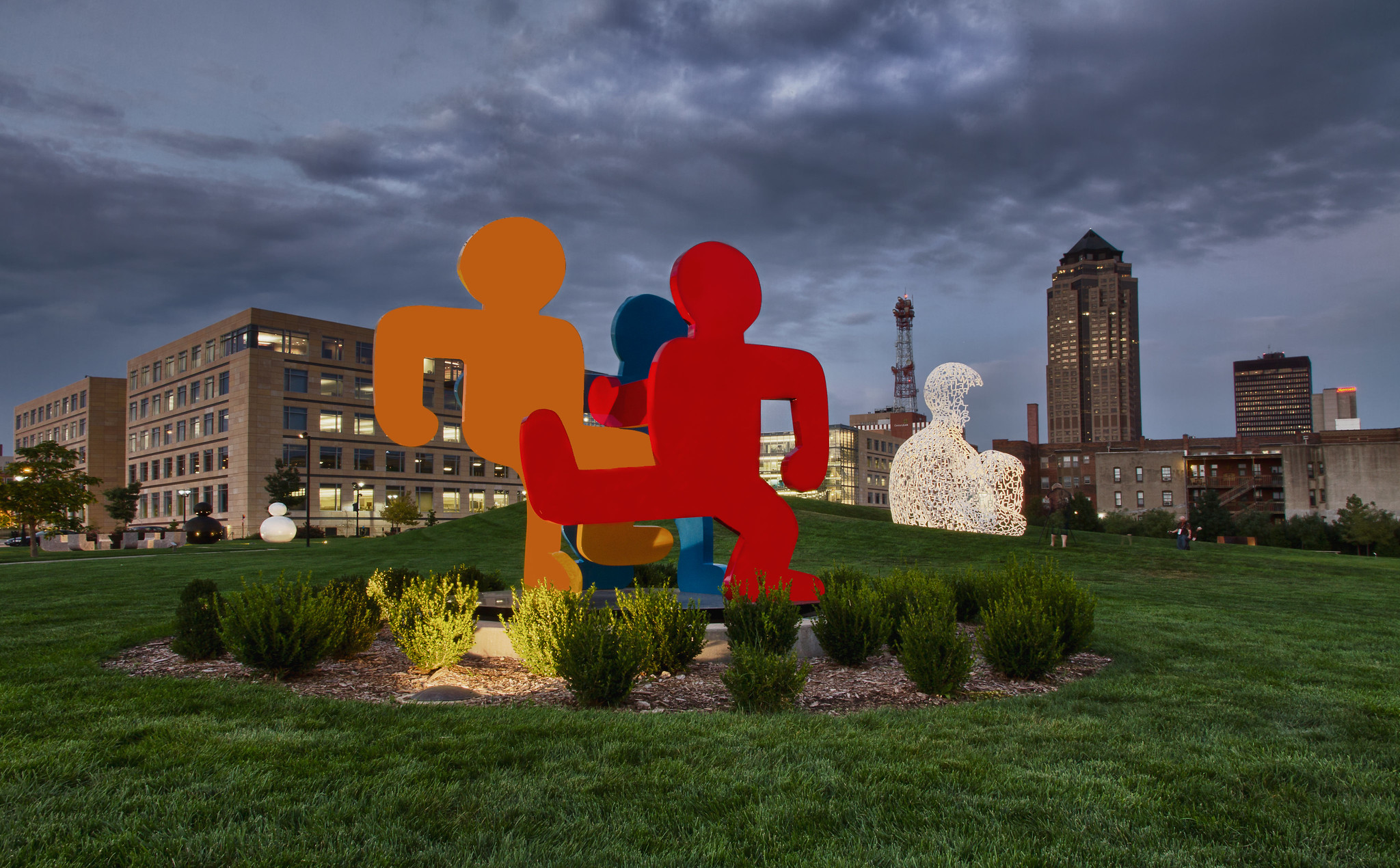
The setting is one of the park’s strongest features. Downtown buildings rise around the green space, creating a contrast between architecture, lawn, sky and sculpture. Some works appear playful from a distance, while others feel monumental and serious. As visitors move through the park, the city itself becomes part of the experience. Traffic sounds, changing light, shadows, weather and seasonal color all affect how the sculptures are seen.
Unlike a traditional museum gallery, the park changes constantly. A sculpture may look different at sunrise than it does near sunset. Snow can soften the lines of a dark bronze work. Summer grass can make bright pieces feel even more vivid. A cloudy day can bring out details that might be missed in harsh sunlight. This changing environment gives the park a living quality.
The design also encourages casual discovery. Visitors do not have to follow one strict route. They can approach the sculptures from different angles, move across open lawns or pause near individual works. That freedom is part of what makes the park approachable. It allows each person to create a personal experience with the art.
The Role of the Des Moines Art Center
Pappajohn Sculpture Park is closely connected to the Des Moines Art Center, one of Iowa’s leading cultural institutions. The Art Center helps care for, interpret and present the collection, giving the park a strong educational and curatorial foundation.
This connection matters because the sculptures are not random decorative objects. They are works by major artists with important places in modern and contemporary art history. The Des Moines Art Center gives visitors ways to understand the artists, materials, themes and artistic movements represented in the park.
The park also extends the Art Center’s presence beyond its main building. Instead of requiring people to visit a museum campus, the sculpture park places part of that artistic mission directly in the city. It makes the Art Center’s influence more visible in daily life and strengthens Des Moines as a public art destination.
Through guides, tours and educational resources, visitors can learn more about the meaning behind individual pieces. Some people may come only to enjoy the scenery, while others may want to study the collection more deeply. The park works well for both kinds of visitors.
A Collection Filled With Major Artists
One of the most impressive things about Pappajohn Sculpture Park is the level of artists represented there. The collection includes works by many influential names in modern and contemporary art, including Louise Bourgeois, Jaume Plensa, Keith Haring, Robert Indiana, Richard Serra, Willem de Kooning, Deborah Butterfield, Tony Cragg, Barry Flanagan, Ugo Rondinone and others.
For a city the size of Des Moines, having this kind of public collection is significant. Many of these artists have works in major museums around the world. Seeing their pieces together in an outdoor public park gives Des Moines a cultural asset that stands out nationally.
The variety of the collection is also important. Some sculptures are abstract and geometric. Others are humanlike, animal inspired or symbolic. Some works feel heavy and industrial, while others feel playful, mysterious or emotional. This variety helps the park appeal to a wide audience. Visitors do not need a background in art history to enjoy the experience.
A person might be drawn to the giant seated figure made from letters, while another might prefer a bold red pop art form or a more subtle abstract shape. The park gives people permission to respond naturally. Some pieces invite quiet reflection. Others practically demand photographs.
Nomade and the Power of Recognition
Among the most famous works in the park is Jaume Plensa’s “Nomade.” The sculpture is a towering human form made from letters, creating a figure that feels both solid and open at the same time. It has become one of the park’s signature images and one of the most photographed pieces in Des Moines.
“Nomade” works so well in a public setting because it immediately catches the eye. From a distance, it looks like a seated figure. Up close, the viewer notices the lattice of letters and the open spaces between them. The sculpture suggests language, identity, thought and the human body all at once.
Its scale also makes it memorable. Visitors can walk near it and experience how the letters form a body while also allowing the city and sky to show through. That openness gives the piece a sense of lightness despite its size. It feels monumental without feeling closed off.
For many visitors, “Nomade” becomes the visual symbol of Pappajohn Sculpture Park. It represents the way the park combines accessibility with depth. A person can enjoy the sculpture simply because it looks striking, but it also rewards a longer look.
LOVE and the Appeal of Pop Art
Robert Indiana’s “LOVE” is another piece that draws attention. The word itself is instantly recognizable, and the design has become one of the most famous images in American pop art. Its presence in the park gives visitors a familiar visual entry point into the collection.
The sculpture’s bold letters and simple message make it easy to connect with. People often take photos near it because it communicates warmth, affection and optimism in a direct way. It also brings a strong graphic quality to the park, standing out against the landscape and surrounding cityscape.
“LOVE” shows how public art can become part of everyday memory. Visitors may not know the full background of the artist or the broader pop art movement, but they understand the emotional pull of the word. That immediate connection makes the piece especially powerful in an outdoor civic space.
Louise Bourgeois and the Presence of Spider
Louise Bourgeois’ “Spider” brings a different mood to the park. The sculpture is striking, intense and unforgettable. Bourgeois often used the spider as a symbol connected to memory, protection, labor and motherhood. In the park, the piece creates a dramatic presence that feels both delicate and unsettling.
The long legs and open structure invite viewers to move around it and consider it from multiple angles. It can feel elegant, strange, protective or haunting depending on the viewer’s perspective. That emotional complexity is part of what makes it such an important work.
“Spider” also adds contrast to the park’s collection. While some pieces are bright, playful or inviting, this sculpture carries a deeper psychological weight. It reminds visitors that public art does not have to be decorative or easy. It can challenge, provoke and stay in the mind long after someone leaves the park.
A Space for Walking, Photos and Reflection
Pappajohn Sculpture Park works beautifully as a walking destination. The layout allows visitors to move at their own pace, making it ideal for a short stop, a lunch break, a date, a family outing or a longer art focused visit. Because the park is outdoors and free, it feels open and welcoming.
Photography is a major part of the park’s appeal. The sculptures provide dramatic backgrounds for portraits, travel photos, engagement shoots and casual social media moments. The changing light throughout the day gives photographers many ways to capture the same work differently.
At the same time, the park is not only about taking pictures. It is also a place to sit quietly and observe. The open lawn, downtown views and scale of the artwork create a setting that encourages reflection. Visitors can think about the relationship between art and public space, or they can simply enjoy being outside in a beautiful part of the city.
The park is especially appealing because it does not demand formality. People can engage with it however they choose. That relaxed atmosphere makes contemporary art feel less intimidating and more connected to daily life.
How the Park Changed Downtown Des Moines
Pappajohn Sculpture Park helped reshape the image of downtown Des Moines. It gave the city a landmark that feels modern, creative and civic minded. For visitors, it is often one of the first places recommended when exploring downtown. For residents, it is a familiar symbol of the city’s growth and cultural ambition.
The park also supports surrounding businesses and attractions. People visiting the sculpture park may also stop at nearby restaurants, hotels, coffee shops, performance venues or other downtown destinations. In that sense, the park contributes not only to culture but also to the broader energy of the city center.
Its impact is also symbolic. Public art can tell people what a city values. By placing a major sculpture collection in an accessible downtown park, Des Moines sends a clear message that art belongs in public life. It shows that beauty, creativity and thoughtful design are part of the city’s identity.
Why Pappajohn Sculpture Park Stands Out
Many cities have parks, and many cities have public art, but Pappajohn Sculpture Park stands out because of the quality of its collection and the openness of its setting. The park combines museum level artwork with the ease of a public green space. That combination gives it a rare character.
It is also a place that can be appreciated by many different kinds of visitors. Art lovers can recognize major artists and study the collection closely. Families can enjoy the open space and bold shapes. Travelers can find a memorable downtown stop. Local residents can return again and again, noticing new details with each visit.
The park’s strongest quality may be its ability to make major art feel approachable. It removes the barrier between viewer and artwork. There is no ticket counter, no quiet gallery pressure and no sense that a visitor must know the right language to respond. The art is simply there, waiting in the middle of the city.
A Lasting Gift to Des Moines
Pappajohn Sculpture Park remains one of the most meaningful gifts to the cultural life of Des Moines. John and Mary Pappajohn’s vision created a place that continues to serve residents, visitors, students, artists and downtown workers. It is a reminder that philanthropy can shape a city in ways that last for generations.
The park also proves that public art can do more than decorate a space. It can change how people move through a city. It can create landmarks, spark conversations, attract visitors and give residents a stronger sense of pride. It can make a downtown feel more alive.
Today, Pappajohn Sculpture Park stands as a defining attraction in Des Moines. It is a place where world class art meets Iowa openness, where serious sculpture becomes part of an everyday walk, and where the city’s creative spirit is visible in a powerful and lasting way.
Discover more from City Towner
Subscribe to get the latest posts sent to your email.