Joseph Weber IV Goes Missing Near Golden Gate Bridge in San Francisco California
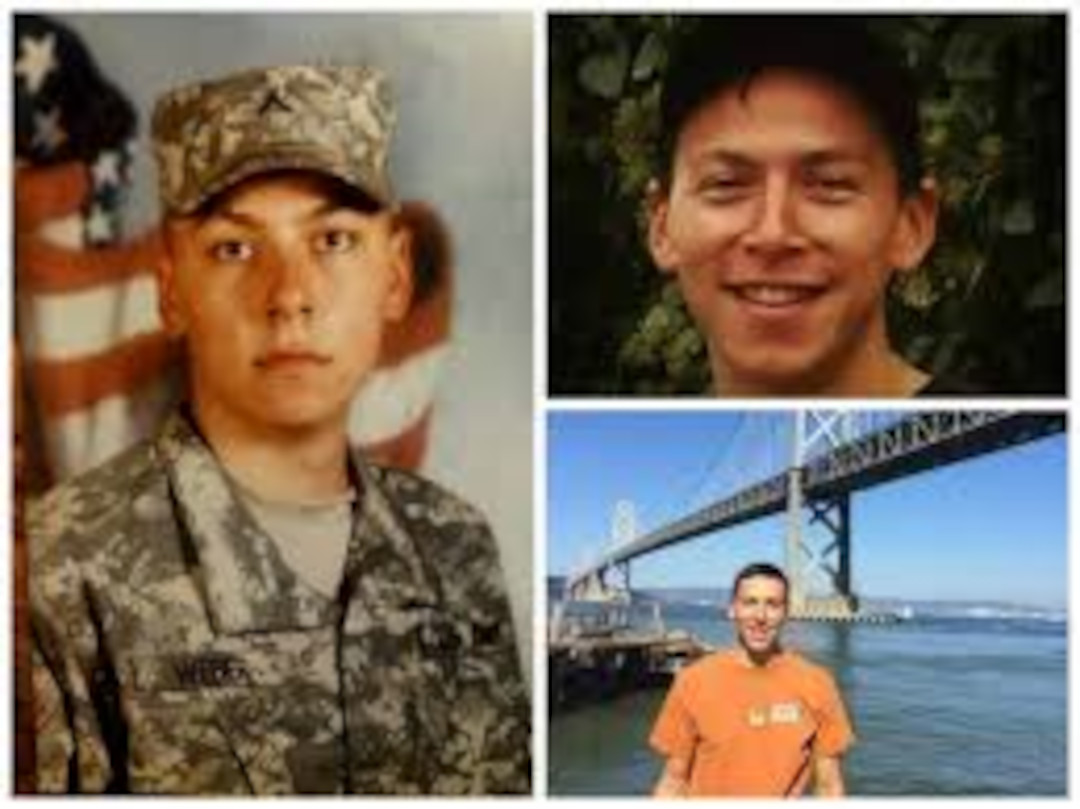
Joseph George Weber IV was a 28-year-old United States Army veteran and college student when he disappeared in San Francisco, California, on November 24, 2014. His vehicle was later found in a parking area associated with the Golden Gate Bridge, and surveillance footage reportedly showed him walking in the bridge area before his trail disappeared.
The circumstances immediately raised concerns about Joseph’s safety. He had served two tours in Iraq, suffered a traumatic brain injury during his military service, and reportedly experienced post-traumatic stress disorder, seizures, migraines, and other lasting effects of combat. He was also dealing with personal and academic pressures during the period leading up to his disappearance.
Investigators and family members searched for evidence that could reveal what happened after Joseph arrived at the Golden Gate Bridge. Cameras reportedly captured him among pedestrians, but the available footage did not provide a definitive explanation for his disappearance. Some accounts indicated that he was seen walking onto the bridge, while his family later said that footage may have shown him leaving it.
Joseph’s cellphone remained active for several hours after he was last seen, but no confirmed communication from him was reported. Three days later, authorities located his vehicle. Joseph was nowhere to be found, and no publicly confirmed evidence established that he had jumped from the bridge, left the area voluntarily, or encountered danger somewhere else.
More than a decade later, Joseph remains missing. His disappearance continues to leave his relatives, fellow veterans, investigators, and members of the public with difficult questions about the final hours of November 24, 2014.
Who Joseph George Weber IV Was
Joseph George Weber IV was born on September 7, 1986. He lived in Sunnyvale, California, and attended De Anza College at the time he disappeared.
Joseph had previously devoted several years of his life to military service. He joined the United States Army in 2006 and served as a military police officer. His duties took him to Baghdad, Iraq, where he completed two tours during a period of intense conflict.
Military police officers are responsible for maintaining security, enforcing military law, protecting personnel, and responding to dangerous situations. The position placed Joseph in an environment where violence, uncertainty, and traumatic events were part of daily life.
During his service, Joseph was reportedly injured in an explosion and suffered a traumatic brain injury. The injury had lasting consequences after he returned to civilian life.
Reports stated that Joseph experienced seizures, migraine headaches, post-traumatic stress disorder, and emotional difficulties connected to his combat experiences. These health concerns made his disappearance particularly urgent because he could have become medically vulnerable without treatment or assistance.
Joseph was trying to build a new future through education. He enrolled at De Anza College and worked toward adjusting to civilian life after his military service.
Like many veterans returning from combat, he faced the challenge of balancing school, relationships, physical symptoms, and memories of war. His disappearance occurred during a period when he was reportedly under significant pressure.
The Pressures Joseph Faced
In the weeks before he vanished, Joseph was reportedly concerned about college midterm examinations. Academic stress can be difficult for any student, but it may be especially challenging for someone coping with a traumatic brain injury, migraines, seizures, and post-traumatic stress disorder.
Traumatic brain injuries can affect memory, concentration, emotional regulation, judgment, sleep, and the ability to manage stress. The symptoms may appear differently from one person to another, and their intensity can change over time.
Joseph was also reportedly going through a divorce. The loss or breakdown of an important relationship may have added to the emotional strain he was already experiencing.
These personal pressures became part of the discussion surrounding his disappearance, but they do not prove that Joseph intended to harm himself or disappear voluntarily. Stress may provide context for a person’s state of mind, but it cannot establish what happened without supporting evidence.
Joseph’s family understood that he was experiencing difficulties, which increased their concern when he stopped communicating and failed to return home. They wanted investigators and the public to recognize both his medical vulnerability and the possibility that he needed immediate help.
The Journey From Sunnyvale to San Francisco
On November 24, 2014, Joseph left Sunnyvale and traveled approximately 45 miles north toward San Francisco.
His destination was the Golden Gate Bridge, one of the most recognizable landmarks in the United States. The bridge connects San Francisco with Marin County and carries vehicle, bicycle, and pedestrian traffic across the entrance to San Francisco Bay.
The reason Joseph chose to travel to the bridge has never been publicly established. He may have gone there to walk, think, view the landscape, or spend time alone. It is also possible that he intended to meet someone or continue to another destination.
No publicly available account describes Joseph leaving behind a note explaining the trip. There was also no confirmed message telling relatives or friends why he planned to visit the bridge.
His decision to drive there became the most important known movement in the timeline. Once authorities located his vehicle and reviewed surveillance recordings, the bridge became the center of the investigation.
Joseph’s Last Known Appearance
Surveillance cameras reportedly recorded Joseph walking in the Golden Gate Bridge area on November 24, 2014.
Early reports stated that the footage showed him walking onto the bridge before he became difficult to follow among a crowd of pedestrians. He was reportedly last seen at approximately 3:00 p.m.
The presence of numerous pedestrians complicated efforts to track his movements. People crossed paths, blocked camera views, and moved through different areas of the bridge and surrounding facilities.
Later accounts suggested that Joseph’s family believed footage showed him walking off the bridge. That detail is important because it challenges the assumption that he necessarily entered the water.
The precise direction in which he left, if he did leave the bridge, has not been publicly clarified. It is unknown whether he returned toward San Francisco, continued toward Marin County, entered a parking area, boarded transportation, or walked into a nearby recreational area.
The surveillance evidence therefore confirmed that Joseph reached the bridge but did not establish what happened next.
The Cellphone Timeline
Joseph’s cellphone reportedly remained active until approximately 8:00 p.m. on November 24, 2014.
This meant that the phone continued connecting to the network for about five hours after his last reported appearance near the bridge. The extended activity created questions about whether Joseph remained in the area, traveled elsewhere, or simply left the phone powered on without using it.
Available reports do not describe any calls, messages, or online activity made during those hours. They also do not publicly identify the final location associated with the phone before it stopped connecting.
A phone can become inactive for several reasons. The battery may die, the device may be turned off, it may lose service, or it may be damaged or discarded.
If Joseph intentionally switched off the phone, investigators would need to determine why. If the phone became inactive because of an accident or medical emergency, its final signal could help narrow the search area.
No publicly released information confirms that the cellphone was recovered.
The Discovery of Joseph’s Vehicle
The California Highway Patrol located Joseph’s vehicle on November 27, 2014, three days after he disappeared.
The car was reportedly parked in an employee parking area associated with the Golden Gate Bridge. Its location confirmed that Joseph had driven himself to the bridge and had not returned to retrieve the vehicle.
Public reports do not describe obvious evidence of violence inside or around the car. There was no publicly announced discovery of blood, damage, signs of a struggle, or property belonging to an unknown person.
There was also no confirmed report that investigators found a farewell note inside the vehicle.
The absence of obvious evidence left the car as an important but inconclusive part of the case. It established where Joseph began his final known journey on foot, but it could not reveal his intentions or destination.
Investigators likely examined the vehicle for fingerprints, personal property, receipts, navigation information, medication, and other material that could help reconstruct his movements. The results of any detailed forensic examination have not been publicly released.
No Confirmed Evidence That Joseph Jumped
The Golden Gate Bridge is widely associated with deaths and suicide attempts. Because Joseph’s car was found nearby and cameras showed him in the area, many people feared that he may have gone over the railing.
However, no publicly confirmed evidence establishes that Joseph jumped.
Reports did not describe a witness seeing him climb the railing or fall into the water. Surveillance footage apparently did not capture such an event, and no remains identified as Joseph’s were recovered.
The possibility cannot be completely dismissed. Camera coverage may have had gaps, and the waters beneath the bridge contain strong tides and currents that can complicate recovery efforts.
Still, the claim that Joseph was seen walking away from the bridge creates another possibility. If he left the pedestrian area safely, then his disappearance may have occurred somewhere beyond the bridge itself.
Without direct evidence, the bridge should be understood as Joseph’s last known location rather than a confirmed site of death.
Medical Risks After His Disappearance
Joseph’s reported seizures and traumatic brain injury presented serious medical concerns.
A seizure could cause confusion, memory loss, injury, unconsciousness, or disorientation. If Joseph experienced one while walking alone, he may have become unable to communicate his identity or ask for help.
Migraine headaches can also cause severe pain, visual disturbances, nausea, sensitivity to light, and difficulty concentrating. Combined with fatigue or emotional stress, these symptoms might have affected his decisions.
Post-traumatic stress disorder can include anxiety, panic, depression, sleep problems, intrusive memories, emotional withdrawal, and feelings of hopelessness. These symptoms do not automatically mean that a person is suicidal, but they can increase vulnerability during a crisis.
It is not publicly known whether Joseph had medication with him. If he required regular treatment for seizures or other conditions, an extended period without medication could have placed him at additional risk.
His family’s concerns were therefore not based only on his absence. They understood that his health conditions could turn an already dangerous situation into a medical emergency.
The Possibility of a Voluntary Disappearance
One theory is that Joseph intentionally left his established life.
He was reportedly facing a divorce, academic stress, and health difficulties. He may have felt overwhelmed and wanted to escape the demands surrounding him.
A person can sometimes begin a voluntary disappearance with cash, temporary shelter, or help from someone not known to relatives. The lack of immediate financial activity does not completely rule out that possibility.
However, maintaining a new identity for many years is extremely difficult. A person needs housing, food, transportation, employment, medical care, and social connections. These needs usually create records or bring the individual into contact with other people.
Joseph’s medical conditions would have made a long-term disappearance even more challenging. Seizures and migraines may have required treatment, and his injuries could have limited his ability to live without support.
No confirmed bank transactions, telephone contacts, online activity, or sightings established that Joseph began a new life elsewhere.
A voluntary disappearance therefore remains possible but unproven.
The Possibility of an Accident
If Joseph walked away from the bridge, he may have entered one of the surrounding coastal or recreational areas.
The landscape around the Golden Gate includes cliffs, beaches, trails, rocky shorelines, wooded areas, and strong ocean currents. A person unfamiliar with certain paths could become injured, fall, or get lost.
A medical emergency could also have occurred while Joseph was away from the main pedestrian areas. A seizure near a cliff, roadway, or body of water could have had fatal consequences.
If he entered an isolated area after dark, search teams may have had difficulty finding him. Weather, vegetation, terrain, tides, and animal activity can all affect the discovery of evidence.
The accident theory could explain why Joseph did not communicate and why no financial activity followed. However, no personal property or physical evidence publicly linked him to a specific accident site.
The Possibility of Suicide
Joseph’s visit to the Golden Gate Bridge, combined with the stress and medical problems he reportedly faced, led to concern that he may have taken his own life.
This possibility must be treated carefully. The location and circumstances raised legitimate questions, but they did not provide proof.
There was no publicly confirmed farewell note, direct threat, eyewitness account, or surveillance recording showing Joseph going over the bridge.
His family’s belief that he may have been seen leaving the bridge is particularly significant. If verified, it would suggest that he survived his time on the bridge and continued elsewhere.
A person may visit a meaningful or dangerous place during an emotional crisis without ultimately harming himself. Joseph may have gone to the bridge to think and then walked away.
Without recovered remains or direct evidence, the theory remains only one of several possible explanations.
The Possibility of Foul Play
There is no publicly known evidence that Joseph was abducted or attacked, but foul play cannot be completely excluded.
If he left the bridge area, he could have encountered another person, accepted transportation, or entered a situation that became dangerous.
His medical condition could have made him vulnerable to exploitation. Someone may have encountered him while he was confused or distressed and taken advantage of the situation.
No suspect, suspicious vehicle, threatening message, or known confrontation has been publicly connected to the case. Investigators have not announced evidence showing that Joseph was targeted.
The lack of evidence makes foul play difficult to support, but the absence of a body or confirmed destination prevents investigators from ruling out every possibility.
Physical Description and Identifying Features
Joseph was approximately 6 feet 2 inches tall. His weight was reported between about 170 and 190 pounds.
He had brown or dark hair and brown eyes. He was described in some records as White and Native American or biracial.
When he disappeared, Joseph was reportedly wearing a black jacket, a San Francisco 49ers jacket, and black shoes. The name “Weber” was written on the tongue of the shoes.
He also wore a necklace with a hook shaped Hawaii charm.
Joseph had several distinctive tattoos that could assist with identification. His left arm included a moose and the Dr. Seuss characters Thing 1 and Thing 2.
The phrase “By any means necessary” was tattooed on his chest. He also had a Latin phrase on his abdomen that translates approximately to a message about enduring pain and recognizing its usefulness in the future.
These tattoos remain important because a person’s clothing, weight, hair, and overall appearance can change, while permanent markings may provide a reliable means of identification.
A Family Searching for Answers
Joseph’s disappearance left his family with uncertainty instead of closure.
They knew that he had gone to the Golden Gate Bridge and appeared on surveillance footage. They knew that his phone stopped connecting that evening and that his car remained behind.
What they did not know was where he went, why he did not return, or whether he was alive.
Families of missing adults often experience a complicated form of grief. There is no confirmed death to mourn, but there is also no communication to provide reassurance.
Every unidentified patient, reported sighting, discovered remains, or new lead can create hope and fear at the same time.
Joseph’s military background also connected his disappearance to the larger issue of veterans struggling after combat. His family wanted him recognized as a person who had served his country and returned home carrying injuries that were not always visible.
The passage of time has not answered the family’s most basic question. Joseph has not been confirmed alive, but he has not been confirmed dead.
The Challenges of the Investigation
The investigation began with a broad and difficult search area.
The Golden Gate Bridge connects two counties and sits near urban streets, parks, beaches, trails, coastal waters, and public transportation. A person leaving the bridge could travel in several directions.
Surveillance cameras provided only partial coverage. Even when footage shows a person clearly, crowds and camera gaps can interrupt the timeline.
Joseph’s phone offered another potential source of evidence, but public reports do not explain whether authorities obtained detailed location information. Cellular records in 2014 were useful but often less precise than modern location services.
The three day delay before the vehicle was located may also have complicated the search. By then, weather and pedestrian activity could have altered possible evidence.
Investigators also had to distinguish between verified facts, family interpretations, witness memories, and speculation. In a disappearance without a confirmed crime scene, nearly every theory remains open until evidence eliminates it.
Questions That Remain Unanswered
Why did Joseph travel from Sunnyvale to the Golden Gate Bridge on November 24, 2014?
Did he tell anyone about the trip before leaving home?
Was he seen walking off the bridge, and if so, in which direction did he travel?
What caused his cellphone to stop connecting at approximately 8:00 p.m.?
Was the phone ever recovered?
Did Joseph have cash, medication, identification, or other personal property with him?
Why was his vehicle parked in an employee area rather than a more typical visitor parking space?
Did he encounter anyone during the hours between his last reported sighting and the loss of his phone signal?
Could an unidentified person found elsewhere in California or another state be Joseph?
These questions continue to define the case. Each answer could narrow the possibilities and move investigators closer to understanding what happened.
The Continuing Mystery
Joseph George Weber IV disappeared on November 24, 2014, after traveling from Sunnyvale to the Golden Gate Bridge in San Francisco, California.
He was a 28-year-old Army veteran, former military police officer, and De Anza College student. He had completed two tours in Iraq and returned home with a traumatic brain injury, seizures, migraines, and post-traumatic stress disorder.
Surveillance footage placed him near the bridge at approximately 3:00 p.m. His cellphone reportedly remained active until approximately 8:00 p.m.
On November 27, 2014, authorities found his vehicle in an employee parking area associated with the bridge. No publicly confirmed evidence revealed where Joseph went after leaving the camera’s view.
No remains identified as his have been recovered. No confirmed sighting has established that he survived beyond the day he disappeared. No suspect has been named, and no theory has been proven.
Joseph remains listed as an endangered missing person. His case stands as an unresolved mystery involving a veteran who survived war, returned home with lasting injuries, and vanished during an unexplained visit to one of San Francisco’s most famous landmarks.
Until evidence reveals what occurred after Joseph reached the Golden Gate Bridge, his family will continue waiting for the truth about his disappearance.
Discover more from City Towner
Subscribe to get the latest posts sent to your email.