
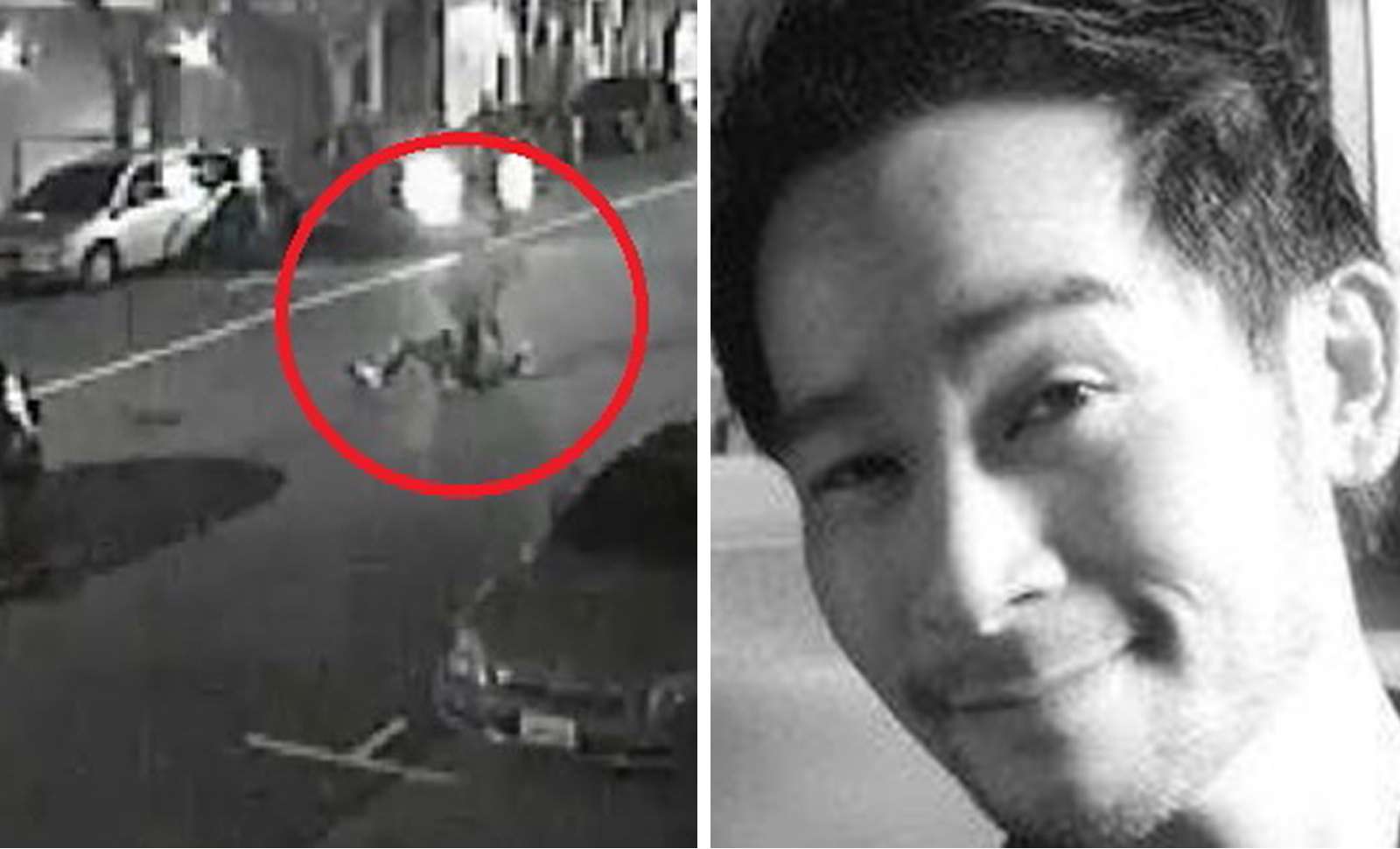
Paul Tam Violently Attacked and Killed in San Francisco California
Paul Tam was walking through San Francisco with his niece on the evening of February 18, 2016, when an attempted robbery became a deadly act of violence. What began as a struggle over a messenger bag lasted only seconds, but the injuries Tam suffered would prove fatal.
The attack occurred on the 1300 block of Post Street, between Franklin and Gough streets, near San Francisco’s Japantown neighborhood. A man and woman approached Tam and attempted to take the bag he was carrying. When he resisted and tried to escape, the male attacker pursued him into the street, knocked him to the ground, and struck or stabbed him in the head with a weapon.
The two suspects escaped with Tam’s bag, leaving him critically injured in the roadway. His niece witnessed the violent confrontation but was not physically harmed. Tam was transported to San Francisco General Hospital, where doctors worked to save his life.
He remained hospitalized for approximately five weeks before dying from his injuries on March 24, 2016. His death transformed the robbery investigation into a homicide case and left police searching for two suspects whose images had been captured by surveillance cameras.
Despite the existence of video footage, witness descriptions, police sketches, and public appeals, no publicly documented arrest has resolved the murder of Paul Tam.
Who Paul Tam Was
Paul Tam was a British national originally from Manchester, England. He had professional experience working with websites and had previously been employed as a website manager at the University of Manchester.
Reports about his age differed, with some identifying him as 44 and others describing him as 48. The discrepancy does not change the central facts of the case. Tam was a working adult with family connections in both the United Kingdom and the United States whose life was taken during a robbery in San Francisco.
Some early reports described him as a British tourist. Other accounts indicated that he had recently moved to California for employment and was living in Southern California. The most consistent understanding is that Tam was visiting San Francisco when he was attacked.
He was accompanied by his niece, who lived in California. Their evening walk through the city should have been an ordinary family outing. Instead, she became the primary witness to a sudden and brutal attack that would result in her uncle’s death.
Tam was carrying personal belongings inside a messenger bag. The contents reportedly included his passport, cellphone, money, bank cards, and other items. Those possessions appeared to be the reason the attackers selected him.
There was no public evidence that Tam knew either suspect. Investigators treated the crime as an opportunistic street robbery rather than a planned attack connected to his personal life, nationality, or employment.
The Evening of February 18, 2016
At approximately 8:30 p.m. on February 18, 2016, Tam and his niece were walking along Post Street. The area is close to Japantown and includes apartment buildings, businesses, hotels, restaurants, and streets carrying regular evening traffic.
As they walked through the 1300 block, a man and woman approached them. The pair focused on the messenger bag Tam was carrying.
The confrontation escalated quickly. Tam held onto the bag and attempted to prevent the suspects from taking it. Surveillance footage later showed him moving backward and trying to create distance between himself and the male robber.
Tam entered the street as he tried to escape. A vehicle had stopped nearby, and he attempted to move around it, apparently hoping to use the car as a barrier between himself and the attacker.
The male suspect refused to stop. He chased Tam around the vehicle and continued the pursuit as nearby motorists watched the confrontation unfold.
Tam was knocked or tackled to the pavement. While he was on the ground, the attacker used a weapon against him, inflicting a severe injury to his head. Reports described the wound as a stabbing or penetrating injury.
The attacker then seized Tam’s messenger bag. He and the female suspect fled the area on foot, leaving Tam gravely wounded.
The entire episode reportedly lasted approximately 20 seconds.
A Niece Witnessed the Attack
Tam’s niece was present throughout the robbery. She saw the suspects confront her uncle, watched him attempt to escape, and witnessed the male attacker bring him to the ground.
She was not physically injured, but the emotional impact of witnessing the attack was profound. She later had to provide investigators with information about the suspects, their movements, and what happened before they fled.
Her presence helped police reconstruct the crime, but the speed of the incident created serious challenges. The suspects approached, attacked Tam, took the bag, and disappeared within less than a minute.
The niece also remained with the reality that a normal walk through San Francisco had turned into a fatal confrontation. She had no opportunity to prevent the attack and could do little as the male robber continued pursuing Tam through the street.
Her account became part of the investigation as detectives compared what she remembered with the available surveillance footage.
The Surveillance Footage
Security cameras recorded important portions of the attack. The video showed Tam trying to retreat as the male suspect pursued him.
Tam could be seen moving into the roadway and circling a stopped vehicle. The footage demonstrated that he was attempting to escape rather than continue the confrontation.
The suspect followed him around the car, closed the distance, and forced him to the ground. The recording also captured the attacker leaving with Tam’s messenger bag.
The video gave investigators a general view of the suspect’s height, build, clothing, and behavior. It also established the basic sequence of events and confirmed that the robbery had been a coordinated act involving a man and woman.
However, the footage did not clearly reveal the suspects’ faces. The quality, lighting, camera position, and rapid movement made positive identification difficult.
Police released portions of the recording to the public, hoping that someone familiar with the pair would recognize their body shapes, clothing, hairstyles, or mannerisms.
The footage attracted widespread media attention in the United States and the United Kingdom. It also showed how quickly an attempted theft could become deadly.
Tam’s Critical Injuries
Emergency responders arrived after the attackers fled. Tam had suffered a devastating injury to his head and was transported to San Francisco General Hospital in critical condition.
Medical professionals treated him for more than a month. His extended hospitalization reflected the seriousness of the injury and the effort to keep him alive.
For approximately five weeks, Tam’s family faced uncertainty about whether he would recover. The violence had ended within seconds, but its consequences continued inside the hospital.
Shortly before 11:00 p.m. on March 24, 2016, Tam died from the injuries he sustained during the robbery. His death occurred 35 days after the attack.
Once Tam died, the legal and investigative nature of the case changed. Detectives were no longer investigating only an armed robbery and aggravated assault. They were searching for two people connected to a homicide.
The male suspect was believed to have inflicted the fatal injury. The female suspect was accused of participating in the attempted robbery and fleeing with him afterward.
Descriptions of the Suspects
Investigators released descriptions of both suspects based on witness statements and surveillance footage.
The male suspect was described as a Black man believed to be in his 30s or 40s. He was estimated to be approximately 5 feet 10 inches tall with a heavy, solid, or muscular build.
He was reportedly wearing blue jeans and a dark hooded sweatshirt at the time of the attack. He was the person seen chasing Tam, knocking him down, attacking him with a weapon, and taking the messenger bag.
The female suspect was described as a Black or mixed race woman believed to be in her late 20s. She was estimated to be approximately 5 feet 4 inches tall.
She reportedly had long dreadlocks or braids pulled into a ponytail. Police believed she participated in the initial robbery attempt and fled alongside the male attacker.
The descriptions were useful but broad. San Francisco is a large city, and clothing such as jeans and a dark sweatshirt was common. Without clear facial images, names, fingerprints, or other identifying evidence, investigators needed help from someone who personally recognized the pair.
The Release of Composite Sketches
On April 11, 2016, police released composite sketches depicting the two people wanted in connection with Tam’s murder.
The sketches were based on descriptions supplied to investigators. They presented more detailed images than the surveillance footage and were distributed through news reports and public appeals.
Police hoped the sketches would be recognized by relatives, friends, neighbors, coworkers, or people who had seen the suspects in the Post Street area.
The male suspect’s physical build and the female suspect’s distinctive hairstyle were considered potentially recognizable features. Investigators encouraged people to focus not only on the faces in the sketches but also on the couple’s appearance and the possibility that they were known to spend time together.
Composite sketches are not photographs, and they depend on memory. A witness may recall certain features accurately while struggling with others. Even so, the sketches represented one of the best available opportunities to identify the attackers.
No public announcement indicated that the sketches produced a confirmed identification or arrest.
The Stolen Messenger Bag
The messenger bag was at the center of the robbery. Tam appeared to resist because it contained important personal property.
Reports stated that the bag held his passport, cellphone, money, bank cards, and other possessions. Losing a passport would have been especially serious for a British national living or traveling in the United States.
Investigators may have examined whether the cellphone remained active after the robbery, whether the bank cards were used, or whether any property was recovered. However, no detailed public account established that those investigative efforts led to the suspects.
The attackers may have discarded the bag after removing cash and valuable items. They may also have sold, destroyed, or abandoned the cellphone to avoid being tracked.
The public record does not reveal whether the messenger bag or any of its contents were ever recovered.
If the suspects attempted to use Tam’s cards or sell his phone, those actions might have created evidence. The lack of a public resolution suggests that any such evidence was either unavailable, inconclusive, or insufficient to identify the attackers.
A Robbery That Became a Murder
The evidence suggested that the confrontation began as a robbery rather than an intentional plan to kill Tam.
The suspects appeared to want his bag. Tam resisted and attempted to flee, but the male attacker escalated the situation by chasing him into traffic and using a weapon while he was on the ground.
The decision to continue the pursuit was significant. The attacker had several opportunities to stop. Tam was moving away, and the struggle could have ended without further violence.
Instead, the suspect followed him around a vehicle, knocked him down, and inflicted an injury severe enough to cause his death weeks later.
The value of the stolen property could never compare with the loss of Tam’s life. A bag containing replaceable possessions became the focus of an attack that devastated a family and created an international homicide investigation.
The brutality of the crime also raised concern because it occurred in a populated section of the city while vehicles were nearby.
Public Appeals and Reward
Police repeatedly asked the public for assistance. Detectives wanted to speak with anyone who witnessed the attack, recognized the suspects, or knew someone matching the released descriptions.
The San Francisco Police Officers Association offered a reward of $5,000 for information leading to the suspects’ arrest.
Investigators hoped the financial reward, surveillance footage, and composite sketches would encourage someone to come forward.
The attackers may have spoken about the crime afterward. One or both may have returned home with Tam’s property, changed clothing, disposed of a weapon, or behaved unusually after the robbery.
Someone close to them might have recognized the attack from the surveillance footage. A person may also have known that the suspects were in the Japantown area on February 18, 2016.
Despite the appeals, the public record contains no announcement that the reward led to an arrest or prosecution.
Attention in the United Kingdom
Tam’s connection to Manchester caused the case to receive significant coverage in the United Kingdom.
British publications reported on the robbery, his hospitalization, his death, and the search for the two suspects. The attack drew attention as an example of a visitor or recent arrival becoming the victim of extreme violence abroad.
The surveillance footage was widely circulated, but its publication also caused controversy. Tam’s family objected to the use of video showing the attack, particularly so soon after his death.
For relatives, the footage was not simply evidence from a news story. It showed a loved one’s final struggle and the violent event that caused his death.
The family’s concerns highlighted the difficult balance between publicizing evidence to identify suspects and protecting the dignity of victims and their relatives.
Investigative Challenges
Although the crime was captured on video, recordings do not always guarantee that a case will be solved.
The surveillance cameras were positioned to monitor the street rather than obtain close facial images. Darkness, distance, movement, and image quality limited the details available to investigators.
The male suspect wore a hooded sweatshirt, which may have concealed portions of his head and face. The attack also happened quickly, giving witnesses little time to study the suspects.
No getaway vehicle was publicly associated with the pair. They fled on foot and could have entered a nearby building, boarded public transportation, met another person, or changed clothing within minutes.
The stolen phone and cards offered possible investigative leads, but experienced offenders may have understood the risks of using traceable property.
The neighborhood’s population and regular pedestrian traffic also made identification difficult. The suspects may not have lived near Post Street and could have traveled to the area from another part of San Francisco or the Bay Area.
Questions That Remain Unanswered
The largest unanswered question is the identity of the man who inflicted Tam’s fatal injury.
Investigators also need to identify the woman who accompanied him. Her participation may have included selecting Tam, helping initiate the robbery, encouraging the male suspect, acting as a lookout, or assisting in their escape.
It remains unclear whether the pair committed similar robberies before or after Tam’s attack. Comparable incidents might reveal a pattern involving the same descriptions, methods, or locations.
The weapon used against Tam has never been publicly identified in detail. Reports described a stabbing or penetrating injury to the head, but police did not release extensive information about the object.
It is also unknown whether the suspects knew the severity of Tam’s injury when they fled. They may have believed they had injured him without realizing he would later die, although their awareness would not reduce their responsibility for the attack.
Another question is what happened to Tam’s messenger bag and possessions. Recovering those items could have provided fingerprints, biological evidence, surveillance images from later locations, or connections to people who handled the stolen property.
The Case Remains Unsolved
No credible public record indicates that either suspect has been arrested, charged, convicted, or publicly identified.
The male and female shown in the surveillance footage remain the central figures in the investigation. Their faces may have been unclear, but the video preserved their actions and the final moments of the robbery.
Unsolved homicide cases can remain open for years. Detectives may continue reviewing evidence, comparing suspects to other crimes, and waiting for new information from the public.
Advances in forensic science can also create new possibilities. Evidence that produced no identification in 2016 may become useful when compared with expanded databases or examined through improved testing methods.
A case can also change when relationships shift. A friend, relative, or former partner who once protected a suspect may eventually decide to speak.
Remembering Paul Tam
Paul Tam should be remembered for more than the violent circumstances of his death.
He was a son, uncle, relative, colleague, and member of a family whose life extended far beyond the few seconds captured on surveillance video. He had built a career, moved between countries, and maintained close relationships with family members.
His niece was beside him during his final conscious moments before hospitalization. His relatives then endured weeks of hope and uncertainty before learning that he had died.
The murder affected people in San Francisco, Southern California, Manchester, and other communities connected to his life.
The unresolved status of the case means his family has not received the full measure of accountability they deserve. They know how the attack occurred, but they do not publicly know the names of the two people responsible.
The Continuing Search for Justice
Paul Tam was attacked at approximately 8:30 p.m. on February 18, 2016, on the 1300 block of Post Street in San Francisco, California.
A man and woman attempted to steal his messenger bag. When Tam resisted and tried to escape, the male suspect chased him into the street, knocked him down, and attacked him with a weapon.
The suspects fled with his belongings. Tam suffered a severe head injury and remained hospitalized until his death on March 24, 2016.
Surveillance footage, composite sketches, witness descriptions, media coverage, and a $5,000 reward have not produced a publicly announced arrest.
The murder remains a disturbing example of an ordinary robbery escalating into fatal violence. Tam lost his life over personal belongings, while the two people responsible disappeared into the city.
Justice depends on identifying both suspects and holding them accountable for the attack. Until that happens, the murder of Paul Tam remains an unsolved San Francisco homicide and an open wound for the family members who continue to remember him.
Discover more from City Towner
Subscribe to get the latest posts sent to your email.