
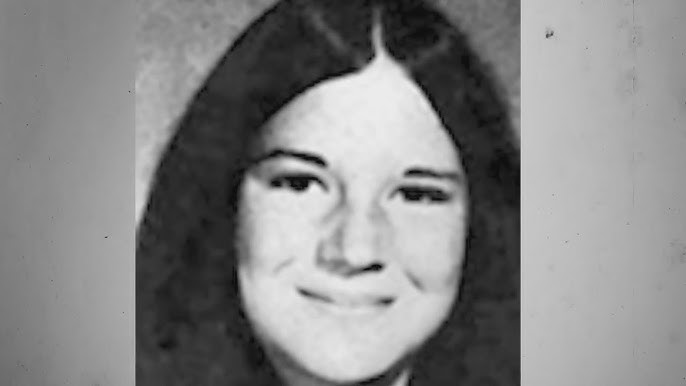
Rita Jolly Goes Missing After Leaving Home to Go on a Walk in West Linn Oregon
Rita Lorraine Jolly was a creative and academically gifted 17-year-old when she left her family’s home in West Linn, Oregon, on the evening of June 29, 1973. She told her family she was going for a walk, an activity that was familiar and ordinary for her. Rita enjoyed walking through the community and surrounding countryside, so there was no immediate reason to believe she was in danger or planning to leave permanently.
Rita never returned.
Reported sightings placed her in different parts of the West Linn area later that evening, including near Sunset Avenue, the Robinwood neighborhood, and possibly the bridge connecting West Linn with Oregon City. After those sightings, her trail disappeared.
Rita did not take money, luggage, extra clothing, or other possessions that would suggest she intended to run away. Her room was left as though she expected to come home soon. Despite searches, public appeals, possible sightings, and decades of investigation, no confirmed trace of her has ever been found.
Authorities now suspect that Rita was the victim of foul play. Her disappearance has been connected through speculation to several possible suspects, including serial killer Ted Bundy, but no one has been charged and no theory has been conclusively proven.
Who Rita Lorraine Jolly Was
Rita Lorraine Jolly was born on December 6, 1955. She was the youngest child of Donald and Mary Elizabeth Jolly and grew up in West Linn with two brothers and an older sister.
Those who knew Rita described her as intelligent, independent, sensitive, and highly creative. She had a strong interest in writing, poetry, visual art, animals, and the natural world. Her family preserved collections of her poems and artwork, reminders of her imagination and the future she might have had.
Rita owned a quarter horse named Sugar and enjoyed spending time outdoors. She was comfortable walking long distances and exploring the rural areas surrounding West Linn. Her willingness to walk alone was not considered unusual by those closest to her.
She was also known for being different from many of her classmates. Rita did not always fit easily into the social environment at school and was reportedly bullied by other students. Her sister later wondered whether Rita may have been on the autism spectrum, although she was never formally diagnosed.
Rather than allowing social difficulties to limit her, Rita focused heavily on her interests and education. She became a serious student and showed particular strength in writing and art.
An Academically Gifted Student
During what would normally have been her senior year at West Linn High School, Rita participated in a program that allowed academically advanced students to attend Clackamas Community College full time.
She studied creative writing and art and reportedly earned an almost perfect academic average. Her performance suggested that she had the talent and discipline to pursue higher education and possibly develop a career involving literature or visual art.
Although she attended college courses during the academic year, Rita still participated in the West Linn High School graduation ceremony shortly before she vanished.
Her disappearance occurred during a major transition in her life. She had recently completed an important stage of her education and appeared to have opportunities ahead of her.
There was no publicly known indication that she intended to abandon her studies, family, horse, artwork, or plans for the future.
The Evening of June 29, 1973
At approximately 7:15 p.m. on June 29, 1973, Rita left her family’s residence on Horton Road in West Linn.
She said she was going for a walk. The weather and daylight of an Oregon summer evening would have made walking a reasonable activity, and Rita was known to enjoy spending time outdoors.
Rita did not pack a bag. She did not take money, extra clothing, or personal documents. Nothing about her departure suggested that she expected to be gone for more than a short period.
Inside her bedroom, her heater and electric blanket were reportedly left turned on. Her family believed this was strong evidence that she planned to return that evening. A person intending to disappear permanently would be unlikely to leave those items operating in anticipation of coming back to bed.
When Rita failed to return, her family became alarmed. What had begun as an ordinary walk quickly became a missing-person investigation.
Rita’s Clothing and Appearance
Rita was approximately 5 feet 6 inches tall and weighed about 130 pounds. She had light brown hair and hazel eyes.
Descriptions of her clothing differ slightly among reports. She was believed to have been wearing a brown wool Pendleton shirt with either blue jeans or green Army fatigue pants. Some accounts also mention a red and blue checked flannel shirt.
She wore heavy socks and low cut blue sneakers with buckskin heels.
Rita had previously fractured the lower portion of her left leg. The injury did not heal properly, leaving her with an uneven or distinctive gait. Investigators believed the way she walked could help witnesses recognize her, even from a distance.
Her clothing, physical appearance, and manner of walking were shared with the public as her family and authorities searched for anyone who might have seen her that evening.
The Reported West Linn Sightings
Rita was reportedly seen between approximately 8:30 and 9:00 p.m. in the West Linn area.
Some accounts place her near Sunset Avenue, while others mention the Robinwood neighborhood. These locations may represent different sightings during her walk rather than conflicting accounts.
West Linn contained residential roads, wooded areas, hills, and routes leading toward the Willamette River. Rita was familiar with the community and could have traveled a considerable distance on foot.
The sightings suggested that she remained in the general area for at least an hour after leaving home. They did not reveal whether she had a particular destination or planned to meet someone.
No witness publicly reported that Rita appeared frightened or injured. There was also no confirmed report of someone following her or forcing her into a vehicle.
After the reported sightings in West Linn, investigators were unable to reconstruct her movements with certainty.
The Possible Bridge Sighting
Another reported sighting placed Rita near the Oregon City Arch Bridge at approximately 9:30 p.m.
The bridge crosses the Willamette River and connects Oregon City with West Linn. If the sighting was accurate, Rita may have walked toward Oregon City after leaving the residential areas of West Linn.
One account stated that she may have been seen walking near the bridge with an unidentified girl. The identity of that girl has never been publicly established.
The girl could have been a friend, a casual acquaintance, or a stranger who happened to be walking nearby. It is also possible that the witness was mistaken and saw someone who only resembled Rita.
No clear public description of the unidentified girl was released. Investigators have not announced whether they located or interviewed anyone who admitted being with Rita that night.
The uncertain bridge sighting remains one of the most intriguing elements of the case because it could represent Rita’s final known movement before she vanished.
A Girl Who Called Herself Mary
A separate report emerged after Rita disappeared involving two young men who believed they had encountered a girl resembling her in Portland.
The encounter reportedly occurred on the night after Rita vanished. The men offered the girl a ride, but she told them her name was Mary.
The men later contacted authorities but did not provide their names. Because investigators could not identify them, detectives were unable to conduct detailed follow up interviews or verify the circumstances of the encounter.
There was no way to determine whether the girl was Rita, someone who resembled her, or a person unrelated to the case.
If the sighting involved Rita, it would suggest that she survived at least one night after leaving home and traveled from West Linn to Portland. It might also indicate that she concealed her identity for an unknown reason.
However, without the witnesses or additional evidence, the report could not be confirmed and remains only a possible lead.
Why Rita’s Family Did Not Believe She Ran Away
Rita’s parents strongly rejected the idea that their daughter voluntarily ran away.
Her father described the family home as stable and harmonious. Although Rita experienced social difficulties at school, there was no known crisis inside the home that would explain a sudden decision to disappear.
She had completed a successful academic year and appeared to have a promising future. She was devoted to writing, art, animals, and her education.
Rita also left behind everything she would have needed to begin a new life. She had no luggage, extra clothing, money, or known transportation plan.
Her heater and electric blanket remained on, indicating that she expected to return to her bedroom later that night.
It was normal for Rita to walk alone, but it was not normal for her to leave without explanation and permanently cut off contact with her family.
Even if she initially chose to stay away for a few hours, something may have happened during the walk that prevented her from returning.
The Unexplained Telephone Calls
Rita’s family reportedly received several unusual telephone calls after she disappeared.
Most of the calls involved silence. The person on the other end did not identify themselves or provide information.
During one call, Rita’s father reportedly believed he heard a female voice say “Mom” and “Dad” before the connection ended.
The family could not determine whether the caller was Rita. The calls may have come from a prankster, someone emotionally affected by the case, or a person with genuine knowledge of her whereabouts.
During the 1970s, tracing brief telephone calls was more difficult than it is today. Caller identification was not commonly available, and a person could use a public telephone without creating an easily accessible record.
For Rita’s family, the calls created both hope and distress. If Rita was calling, she may have been alive but unable to speak freely. If the calls were cruel hoaxes, they prolonged the family’s suffering.
No call produced information that led investigators to Rita.
The Search for Rita
Authorities, relatives, and community members searched for Rita after she was reported missing.
Investigators examined locations along her possible walking routes, including neighborhoods, roads, river areas, wooded terrain, and places where witnesses claimed to have seen her.
Searchers faced difficult conditions. West Linn and the surrounding region included steep land, forests, waterways, and isolated areas. A person could leave a roadway and quickly become hidden from view.
The Willamette River also presented a possible danger. If Rita fell or entered the water, currents could have carried evidence away from the immediate area.
However, no clothing, personal possessions, or remains confirmed to belong to Rita were recovered.
Investigators also interviewed family members, friends, classmates, and anyone believed to have interacted with her before the disappearance.
The search failed to produce a confirmed crime scene, a verified abduction witness, or evidence showing where Rita went after the final reported sightings.
Authorities Suspect Foul Play
Rita continues to be listed in missing-person databases, but the Clackamas County Sheriff’s Office now treats her disappearance as a suspected murder.
The classification reflects the circumstances of the case and the length of time she has been gone. Rita vanished without money, preparation, or an apparent reason to abandon her life.
She never contacted her family, returned for her belongings, accessed known resources, or created any verified record under her identity.
Authorities have not publicly explained all the evidence that led them to suspect murder. Some information may have been withheld to protect the investigation or evaluate future tips.
The classification does not mean that investigators have proven in court that Rita was killed. Her body has never been recovered, and no one has been charged with causing her disappearance.
It does show that law enforcement considers foul play more likely than a long-term voluntary absence.
The Possible Ted Bundy Connection
Ted Bundy has frequently been mentioned as a possible suspect in Rita’s disappearance.
Bundy lived in the Pacific Northwest and abducted and murdered numerous young women during the 1970s. Many of his known victims were teenagers or young adults with long hair parted near the center.
Rita disappeared in Oregon during a period when Bundy was living in the region. Her age, appearance, and unexplained disappearance have led some researchers and crime writers to suggest that she may have been one of his early victims.
However, the theory remains unproven.
No publicly disclosed witness placed Bundy with Rita on June 29, 1973. No physical evidence connects him to her, and he never confessed to killing her.
Bundy was known to be manipulative and selective about the information he provided. He confessed to some killings before his execution but left many possible crimes unresolved.
It is possible that he committed additional murders he never admitted. It is also possible that Rita’s disappearance had nothing to do with him.
Calling Rita a confirmed Bundy victim would go beyond the available evidence. He remains only one possible suspect among several theories considered over the years.
Other Possible Suspects
Some summaries of Rita’s case state that investigators developed several possible suspects.
The names of those people and the evidence connecting them to Rita have not been publicly released in detail.
The suspects may have included people living in the area, individuals known to travel along her walking route, or offenders investigated in other crimes.
Authorities may have withheld names because the evidence was insufficient for charges. Publicly identifying a person without proof could harm the investigation and unfairly accuse someone who was never involved.
Some possible suspects may now be deceased, making direct questioning impossible. Others may have provided statements or alibis that investigators could not fully confirm.
Without access to the complete case file, the public cannot determine how seriously each person was considered.
Difficulties Investigating a 1973 Disappearance
Rita vanished before modern surveillance cameras, mobile phones, internet records, and widespread DNA testing.
There were few cameras recording residential roads, bridges, businesses, or public spaces. Investigators could not review digital footage to follow her movements minute by minute.
Rita did not carry a cellphone that could be tracked. There were no text messages, location records, or social media communications showing whom she contacted or where she planned to go.
Witness statements depended on memory. People who saw a girl matching Rita’s description may not have realized the importance of the sighting until days later.
Physical evidence may also have disappeared before authorities knew where to search. Rain, traffic, river currents, vegetation, and human activity could quickly disturb an outdoor scene.
Investigative standards in 1973 were also different. Missing teenagers were sometimes initially viewed as runaways, even when their families insisted they had no reason to leave.
Any delay in treating the disappearance as a serious emergency could have reduced the chance of finding witnesses, preserving evidence, or locating a suspicious vehicle.
The Importance of Rita’s Distinctive Gait
Rita’s improperly healed leg fracture gave her a recognizable way of walking.
This physical feature could help distinguish her from other young women with similar height, hair, and clothing.
A witness may forget a face but remember someone walking with an unusual stride. Investigators included the detail in public descriptions for that reason.
The gait could also help identify unidentified remains if skeletal evidence showed an old fracture in the lower left leg.
Dental records, bone structure, and evidence of the injury may still allow forensic specialists to identify Rita if remains are recovered.
As technology improves, investigators can compare missing-person records with unidentified remains from jurisdictions across the country.
Questions That Remain Unanswered
Where was Rita going when she left her home on June 29, 1973?
Did she plan only to walk through the neighborhood, or was she meeting someone?
Were the sightings near Sunset Avenue, Robinwood, and the Oregon City Arch Bridge accurate?
Who was the unidentified girl reportedly seen walking near her?
Was the young woman who called herself Mary actually Rita?
Who made the unexplained telephone calls to the Jolly family?
Did Rita accept a ride from someone she knew or trusted?
Was she approached by a stranger while walking?
Did she suffer an accident near the river, roadway, or wooded terrain?
Was Ted Bundy or another known offender in the area that evening?
These questions have remained unanswered for more than 50 years.
The Effect on Rita’s Family
Rita’s disappearance permanently changed the lives of her parents and siblings.
They were left without the certainty of knowing whether she was alive or dead. They could not celebrate her return, but they also had no remains to bury.
Her poems, artwork, photographs, and personal belongings became reminders of the person she was and the potential future that disappeared with her.
Families of missing people often live between hope and grief. A telephone call, reported sighting, or new investigative development can reopen emotions that never fully disappear.
Rita’s parents spent years waiting for answers. Her siblings carried the mystery into adulthood, preserving her memory while continuing to wonder what happened during her evening walk.
The passage of time did not make Rita less important. It only increased the urgency of finding the truth while witnesses and possible suspects were still alive.
Keeping Rita’s Case Alive
Rita’s name remains in national missing-person databases, cold case records, and public discussions of unresolved Oregon disappearances.
Age progression images have been used to show what she might have looked like as an adult. Although authorities suspect she was killed, investigators must also consider the possibility that she survived and lived under another identity.
Public awareness remains important because someone may still remember an unusual encounter, vehicle, conversation, or confession connected to June 29, 1973.
A person who was young at the time may now feel able to share information they once withheld because of fear or loyalty. Family relationships change, offenders die, and secrets can become more difficult to carry.
Advances in forensic genealogy and DNA analysis may also create new opportunities. Unidentified remains recovered years ago could potentially be compared with genetic material from Rita’s relatives.
Even a small piece of information could allow investigators to review an old suspect, search a new location, or connect Rita’s case with another crime.
The Enduring Mystery
Rita Lorraine Jolly left her family’s home on Horton Road in West Linn, Oregon, at approximately 7:15 p.m. on June 29, 1973.
She was a 17-year-old writer, artist, animal lover, and academically gifted student who had recently participated in her high school graduation ceremony.
Rita expected to return home. She left her heater and electric blanket on and took no money, luggage, or extra clothing.
She was reportedly seen in the West Linn area between approximately 8:30 and 9:00 p.m. Another possible sighting placed her near the Oregon City Arch Bridge at approximately 9:30 p.m.
After that evening, Rita was never heard from again.
No remains identified as hers have been recovered. No suspect has been charged, and no theory has been conclusively proven. Although Ted Bundy has been discussed as a possibility, there is no confirmed evidence linking him to Rita.
Authorities suspect that she was murdered, but the circumstances of her disappearance remain unknown.
Rita’s case endures because an ordinary evening walk ended without explanation. Somewhere between her home and her final reported location, something happened that prevented her from returning to the family, education, animals, and creative life she valued.
Until new evidence reveals the truth, the disappearance of Rita Jolly will remain one of Oregon’s most haunting unsolved mysteries.
Discover more from City Towner
Subscribe to get the latest posts sent to your email.