
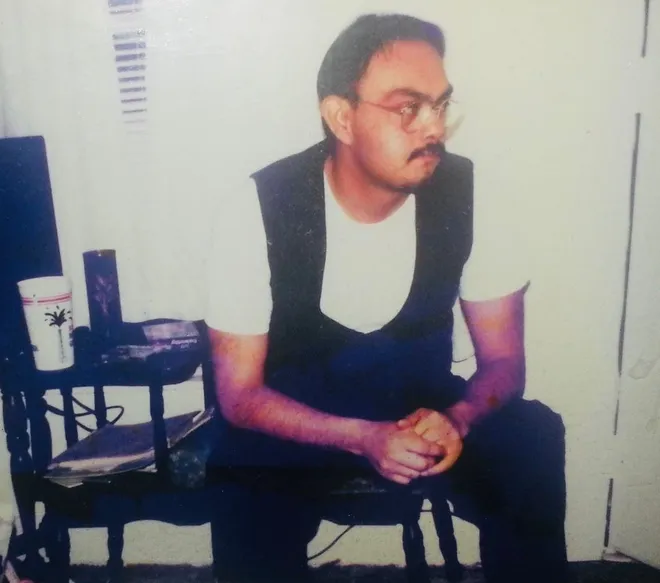
Juan Leon Laureles Shot & Killed Next to His Burning Car in Brownwood Texas
The murder of Juan Leon Laureles remains one of the most painful and troubling unsolved cases connected to Brownwood, Texas. More than a killing, his death became a symbol of unanswered questions, family grief, and the long fight for justice when a case grows cold but never disappears from the hearts of those left behind. Laureles, also known by loved ones as Leon, was only 30 years old when his life was taken on May 10, 1996. He was a son, brother, uncle, worker, and friend whose death left behind a silence that his family has spent decades trying to break.
The case is especially disturbing because of the circumstances surrounding his final hours. Laureles was reportedly on his way to work at Kroger for an overnight shift when something happened between the time his car was seen near the store and the moment authorities received a report of a vehicle on fire along a rural road. By the time responders arrived, his 1988 Ford Thunderbird was burning, and Laureles was found nearby. He had been shot in the back of the head.
The violent nature of the crime, the burning vehicle, and the lack of an arrest have made the case stand out as one filled with mystery and suspicion. His family has long questioned whether he was targeted, whether someone knew more than they admitted, and whether the investigation received the attention it deserved at the time. Nearly three decades later, the murder of Juan Leon Laureles remains unsolved.
Who Was Juan Leon Laureles?
Juan Leon Laureles was a 30-year-old man from the Brownwood and Bangs area of Texas. He was the youngest of nine children and was known by many simply as Leon. Those close to him have described him as kind, quiet, shy, loving, and deeply connected to his family. He was not remembered as someone who lived recklessly or carried himself in a way that would make people believe he had dangerous enemies. That is one reason his murder has remained so difficult for his loved ones to understand.
One of the most powerful voices keeping his memory alive has been his niece, Arlene Harbison. Although she was his niece, their age difference was not large, and their relationship was closer to that of siblings. She has described him as a major presence in her life, someone she loved deeply and still fights for years after his death. Through her advocacy, Leon’s case has reached a wider audience and has continued to receive attention from cold case advocates, podcasts, and people who believe his story deserves justice.
Leon was also a gay Hispanic man living in a small Texas community in the 1990s. That part of his identity has become important in discussions about possible motive. Some who have followed the case have wondered whether he may have been targeted because of who he was. At the same time, other theories have suggested he may have known something, seen something, or been connected to a situation that placed him in danger. No official conclusion has publicly answered those questions.
What remains clear is that Juan Leon Laureles was a real person with a life, personality, relationships, and future. His murder should not be remembered only as a mystery. It should also be remembered as the loss of a man whose family still wants the truth.
The Night of May 10, 1996
On May 10, 1996, Juan Leon Laureles was scheduled to work an overnight shift at Kroger in Brownwood, Texas. He reportedly left from his brother’s home and headed toward work in his 1988 Ford Thunderbird. The shift was supposed to begin around midnight, but Leon never made it inside.
Reports connected to the case state that his car was seen in the Kroger parking lot around 11:45 p.m. That detail has become a major part of the timeline. If his car was at or near the store shortly before midnight, then the critical events likely happened within a very short window. Something caused him to leave, be taken, or be forced away before he could begin his shift.
Around 30 minutes later, authorities received a 911 call about a burning vehicle on FM 2126, a rural road outside Brownwood. When responders arrived, they discovered Leon’s Thunderbird on fire. Nearby, they found Leon. He had been shot in the back of the head.
The timeline raises many questions. Did Leon willingly leave the Kroger parking lot with someone he knew? Was he followed there? Was someone waiting for him? Did another vehicle play a role? Was the burning of the car meant to destroy evidence, hide fingerprints, or send a message? These questions have lingered because the case has never resulted in a public arrest or final explanation.
The short period between the last known sighting of his car and the discovery of the fire suggests that the person or people responsible acted quickly. The burning vehicle also suggests an attempt to cover up the crime or complicate the investigation. Whoever killed Leon did not simply leave the scene. They took additional steps that made the case more disturbing.
Where the Murder Happened
The murder is connected to Brownwood, Texas, a city in Brown County. Leon was headed to work at Kroger in Brownwood, but his body was found near his burning vehicle off FM 2126, outside the city area. That rural setting matters because it suggests he was taken or led away from a public place to a more isolated location.
Rural roads often create challenges in criminal investigations. There may be fewer witnesses, less lighting, fewer nearby homes or businesses, and fewer chances that someone sees what happened. In Leon’s case, the isolation of the area where his vehicle was found may have worked in favor of the killer or killers. If someone wanted privacy, control, and time to burn the vehicle, a rural road would provide those advantages.
The location also deepens the mystery surrounding how Leon ended up there. He was supposed to be going to work, not traveling along a rural road outside Brownwood. That means either he was forced there, tricked into going there, followed there, or went there with someone he trusted. Each possibility leads to different questions about who had access to him, who knew his schedule, and who may have had a reason to harm him.
For his family, the place where Leon was found became more than a crime scene. It became a symbol of the unknown. It represents the moment where his normal life ended and decades of unanswered questions began.
The Condition of the Crime Scene
The discovery of Leon’s body near his burning 1988 Ford Thunderbird created a crime scene that was both violent and destructive. He had been shot in the back of the head, a detail often described as execution-style because of the direct and deliberate nature of the act. His car being set on fire added another layer to the crime.
A burning vehicle can destroy physical evidence. It can damage fingerprints, blood evidence, fibers, hair, documents, and any items that might connect a suspect to the victim. It can also make it harder to determine what happened inside the vehicle before the fire. If the killer or killers intended to erase evidence, the fire may have been part of that effort.
The fire may also suggest panic, planning, or personal rage. Someone may have set the car on fire to destroy evidence quickly after the shooting. Another possibility is that the fire was meant to make a statement or mislead investigators. Without a public resolution, the exact reason remains unknown.
The fact that Leon was found near the vehicle rather than simply inside it creates additional questions. Was he shot outside the car? Was he removed from the car? Did he attempt to escape? Was the body placed where it was found? These details matter because they could help reconstruct the final moments of his life. However, without full access to all investigative records and confirmed forensic findings, many of those questions remain unanswered publicly.
Possible Motives And Theories
Over the years, several possible motives have been discussed in connection with Juan Leon Laureles’s murder. One of the most common theories is that he may have been targeted because he was gay. In 1996, attitudes toward gay people in many small communities were often harsher than they are today. Bias, fear, and hostility could place people at risk, especially if they were living openly or were known within the community.
If Leon’s murder was motivated by hate, it would make the crime not only a homicide but also an act of targeted violence against someone because of his identity. That possibility has remained important to those who believe the case deserves closer attention. However, no public legal finding has confirmed that the murder was a hate crime.
Another theory is that Leon may have known something or seen something that put him in danger. Some discussions of the case suggest that he may have been afraid in the days before his death. If he expressed concern that someone wanted to hurt him, that could mean he sensed a threat but did not fully understand where it was coming from. It may also suggest that the murder was not random.
There have also been rumors and claims connected to local individuals, possible harassment, and possible investigative failures. However, rumors are not the same as evidence. In a case like this, it is important to separate confirmed facts from speculation. What is known is that Leon was killed, his car was burned, and no one has been held publicly accountable.
The lack of answers has allowed theories to grow, but it has also kept public attention alive. Every theory points back to the same central need: a complete and honest accounting of what happened to Juan Leon Laureles.
A Family Left Searching For Answers
For Leon’s family, the murder did not end on May 10, 1996. That date marked the beginning of a long and painful search for answers. Families of homicide victims often experience grief in waves, but unsolved murders create a special kind of suffering. There is no conviction, no full explanation, no final courtroom moment, and often no clear reason why their loved one was taken.
Arlene Harbison has been especially vocal in keeping Leon’s case alive. Her advocacy has helped introduce his story to people beyond Brown County. She has pushed for records, attention, accountability, and renewed investigation. Her work reflects the determination of a family member who refuses to let her uncle become just another forgotten cold case.
That kind of advocacy takes emotional strength. It means revisiting painful details over and over. It means speaking publicly about loss. It means asking difficult questions and sometimes facing silence. It also means challenging the idea that time makes a murder less important. For families like Leon’s, time does not erase the need for justice. It only makes the fight harder.
The family’s pain is also tied to the feeling that someone may know what happened. In many unsolved cases, relatives believe answers exist somewhere in the community. A person may have seen something, heard something, helped someone, or been told a secret. The hope is that someone with information will eventually come forward.
Why the Case Still Matters
The murder of Juan Leon Laureles still matters because justice has no expiration date. His life was taken violently, and his family has been forced to live without answers for decades. Cold cases are sometimes treated as old stories, but for the people who loved the victim, the wound remains fresh.
Leon’s case also matters because it raises larger questions about how crimes against marginalized people were handled in earlier decades. If bias played any role in his death or in the way the case was investigated, then his story becomes part of a broader conversation about fairness, visibility, and justice. Even if the motive was something else, the case still deserves full attention because every victim deserves the same urgency and care.
The passage of time can make investigations more difficult, but it can also create opportunities. People who were once afraid to talk may be more willing now. Relationships change. Loyalties fade. Technology improves. Evidence can sometimes be reexamined. Witnesses may remember details differently with age or may finally feel free to speak.
For Leon’s family and supporters, the goal is not simply to keep telling the story. The goal is to find the truth. The goal is for the person or people responsible to be identified. The goal is for Leon’s name to be connected not only to tragedy but also to accountability.
The Lasting Memory of Juan Leon Laureles
Juan Leon Laureles should be remembered as more than a victim. He was a loved member of a family, a man with a personality, a worker on his way to a normal shift, and someone whose life mattered. The violence of his death should not overshadow the value of his life.
Those who loved him have described him in warm and human terms. He was shy, kind, and close to his family. He had people who cared about him deeply. His niece’s continued fight shows the impact he had on those around him. Even after so many years, his memory remains strong because love does not disappear simply because a case goes cold.
The details of his murder are painful, but they are important because they keep attention on the case. On May 10, 1996, Leon left for work and never returned. His car was later found burning on a rural road outside Brownwood, Texas. He had been shot in the back of the head. Those facts remain at the center of a mystery that has lasted far too long.
Until someone is held responsible, the case remains unfinished. Every retelling of Leon’s story is a reminder that he has not been forgotten, that his family still wants justice, and that someone may still hold the missing piece needed to finally answer what happened that night.
A Case Still Waiting For Justice
The murder of Juan Leon Laureles is a haunting example of how one night can leave a family searching for answers for the rest of their lives. What began as an ordinary trip to work became a violent and unexplained killing. His body was found near a burning car, his life stolen in a way that suggested both cruelty and calculation.
Nearly 30 years later, the questions remain. Who intercepted Leon before he made it to work? Why was he taken to a rural area? Who shot him? Why was his car set on fire? Was he targeted because of his identity, because of something he knew, or because of another motive that has never been revealed? These questions continue to define the case.
For the people who loved him, the fight is not about curiosity. It is about justice. It is about dignity. It is about making sure Leon’s name is not buried beneath years of silence. Every unsolved murder represents a debt owed to the victim and to the family left behind. In the case of Juan Leon Laureles, that debt remains unpaid.
His story deserves to be remembered, shared, and taken seriously. The hope is that renewed attention may one day bring forward the information needed to solve the case. Until then, Juan Leon Laureles remains a man whose life was taken on May 10, 1996, in Brownwood, Texas, and whose loved ones continue to wait for the truth.
Discover more from City Towner
Subscribe to get the latest posts sent to your email.