Michael Masaoay Disappears On His Way To School in San Francisco California
The disappearance of 16-year-old Michael Omas Masaoay remains one of San Francisco’s enduring missing-person mysteries. On the morning of January 25, 1989, Michael left his family’s home carrying his schoolbooks and clarinet. He was apparently dressed for an ordinary school day, but he never arrived at Sacred Heart High School and never returned home.
Michael was reportedly seen at different locations in San Francisco later that day. Nearly one month after he vanished, a duffel bag containing some of his possessions was discovered hidden among rocks near Baker Beach. The troubling discovery raised fears that Michael had encountered danger, but it did not explain what happened to him.
No confirmed sighting has established Michael’s whereabouts after January 25, 1989. His family was left without an explanation, investigators had few solid leads, and the recovery of his belongings created more questions than answers.
Decades later, Michael remains missing. No person has been publicly identified as responsible for his disappearance, and no physical evidence has revealed whether he was abducted, suffered an accident, left voluntarily, or became the victim of another tragic circumstance.
Who Michael Omas Masaoay Was
Michael Omas Masaoay was born on June 25, 1972. He was 16 years old when he disappeared and lived with his family in San Francisco, California. He was a junior at Sacred Heart High School, where he was known as a good student and a member of the school band.
Music was an important part of Michael’s life. He played the clarinet and regularly carried the instrument with him to school. The clarinet would later become one of the most important details in the investigation because part of it was recovered with his belongings after he disappeared.
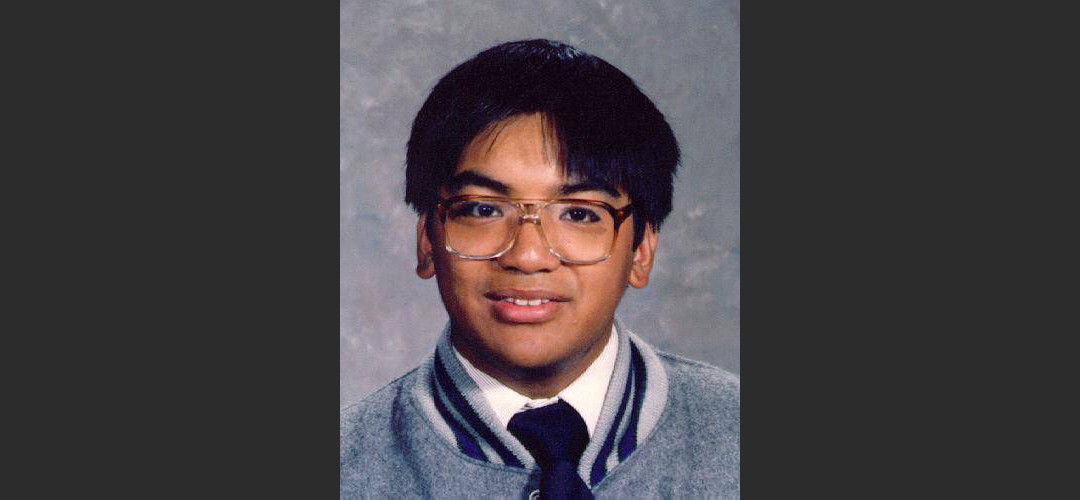
Michael was described as approximately 5 feet to 5 feet 1 inch tall and weighing between 150 and 160 pounds. He had brown eyes and thick black or dark brown hair. Some descriptions indicated that he wore eyeglasses.
On the morning he vanished, Michael was reportedly wearing a black Adidas jacket, a purple shirt, blue corduroy pants, and white leather high-top Converse shoes. He carried a dark blue duffel bag that contained his schoolbooks, clothing, and clarinet.
His parents did not describe him as a troubled teenager who had an established pattern of leaving home. There was no publicly documented history of serious conflict, criminal activity, or behavior suggesting that he intended to disappear permanently.
The Morning of January 25, 1989
Michael left his San Francisco home at approximately 7:30 a.m. on January 25, 1989. He appeared to be heading to Sacred Heart High School for the day.
However, the school was reportedly closed. It remains unclear whether Michael knew about the closure before he left home. That detail became one of the earliest mysteries in the case.
Michael may have missed an announcement or misunderstood the school schedule. In 1989, students and families depended on telephone calls, television announcements, radio reports, printed notices, and information distributed directly by school officials. A student could leave home unaware that classes had been canceled or that the building would not be open.
There is also the possibility that Michael knew the school was closed and used school as an explanation for leaving home. If that was the case, investigators have never publicly established where he actually intended to go or whom he might have planned to meet.
Whatever Michael’s intentions were that morning, he did not arrive at school. When he failed to return home, his family became concerned and the search for him began.
Reported Sightings in San Francisco
Michael was reportedly seen later on the day of his disappearance at two locations in San Francisco. One reported sighting placed him near Ninth and Harrison streets. Another placed him near Seventh and Market streets.
Both locations are in or near San Francisco’s South of Market area. The sightings suggested that Michael remained in the city for at least part of the day after leaving home.
Available accounts do not clearly identify the people who reported seeing him. They also do not establish precisely what time each sighting occurred, where Michael appeared to be going, or whether he spoke with anyone.
No publicly released information indicates that Michael appeared frightened, injured, or under another person’s control. He was reportedly alone, but there is no detailed description of his behavior.
The sightings extended the timeline of Michael’s movements, but they did not provide investigators with a clear direction. There was no confirmed account of Michael boarding a bus, entering a car, traveling toward the waterfront, or meeting another person.
After the reported sighting near Seventh and Market streets, Michael’s trail disappeared.
The Discovery at Baker Beach
A major development occurred on February 21, 1989, approximately four weeks after Michael vanished. A couple visiting the northern end of Baker Beach found a dark blue duffel bag lodged beneath or among rocks.
The location was near the cliffs and shoreline in the area below the Cliff House. It was reportedly a place where Michael and his family had gone fishing, meaning he may have been familiar with the surrounding coastline.
The couple initially had difficulty removing the bag from the rocks. Accounts indicate that they opened or examined it and found several items, including schoolbooks, clothing, a clarinet case, and other belongings.
The bag was not immediately reported to police. Some items were reportedly removed before authorities were contacted. After the couple learned through news coverage that Michael was missing, they recognized that the property might be connected to his case.
Police officers or park authorities eventually recovered the bag. By that time, only part of Michael’s clarinet reportedly remained inside.
The belongings were identified as Michael’s. The discovery confirmed that at least some of the possessions he carried when he left home had reached Baker Beach.
It did not confirm that Michael himself had been there.
Why the Duffel Bag Was So Important
The duffel bag became the most significant piece of publicly known physical evidence in the disappearance. It linked Michael’s final known morning to a location miles from the reported sightings in the South of Market area.
The position of the bag raised immediate concerns. It did not appear to have been casually left on an open section of beach. Instead, it was reportedly wedged or concealed beneath rocks.
That detail suggested several possible explanations. Michael could have placed the bag there himself. Another person could have hidden it after encountering him. The bag may also have been moved by waves, weather, or other visitors before it was discovered.
Investigators had to determine whether Michael traveled to Baker Beach voluntarily. Because the area was known to his family, it was possible that he went there for personal reasons.
However, the distance between his reported sightings and the beach also created the possibility that someone transported Michael or his belongings across the city. Without a confirmed witness placing him at Baker Beach, investigators could not determine whether the bag marked his final destination or had been left there to mislead the search.
The delay in reporting the discovery further complicated the investigation. Items had been removed, the bag had been handled, and the location may have been disturbed before authorities could properly examine it.
The Possibility of an Accident
The Baker Beach area includes steep cliffs, rocky terrain, strong currents, and cold ocean water. These conditions led to the possibility that Michael suffered an accidental fall or entered the water.
If Michael went to the beach alone, he could have climbed onto the rocks, approached the shoreline, or explored a dangerous section of the coast. A fall into the Pacific Ocean could have occurred without witnesses.
Strong currents near the entrance to the Golden Gate can carry objects and remains away from shore. This could explain why Michael was not immediately found if he entered the water.
There is no publicly confirmed evidence, however, that Michael fell, drowned, or deliberately entered the ocean. No witness reported seeing him at the beach, and no clothing or remains conclusively connected to him were recovered from the water.
The location of the bag supports the accident theory only indirectly. His belongings were found near the shoreline, but the evidence does not prove how they arrived there.
The Possibility That Michael Left Voluntarily
Investigators also considered whether Michael had run away. Teenagers sometimes leave home because of personal difficulties, conflicts, fear, or a desire for independence.
Michael’s decision to leave home on a day when his school was closed could suggest that he had another plan. He may have intended to spend the day somewhere else without telling his parents.
However, voluntarily skipping school or spending a day away from home is very different from permanently abandoning one’s family, education, identity, and belongings.
Michael left behind no publicly known note explaining that he planned to run away. There was no confirmed evidence that he withdrew money, packed for a long trip, arranged transportation out of San Francisco, or contacted friends about leaving.
His duffel bag contained school-related possessions and his clarinet, items that would have been important to him. The discovery of those belongings hidden near Baker Beach made a planned long-term disappearance appear less likely.
Even if Michael initially left voluntarily, he could have encountered danger later in the day. A voluntary departure does not eliminate the possibility of abduction, violence, exploitation, or an accident.
The Possibility of an Abduction
The suspicious circumstances also caused Michael’s disappearance to be treated as a possible nonfamily abduction.
Someone may have approached Michael while he was walking through San Francisco, waiting for transportation, or visiting a familiar location. The person could have been a stranger, an acquaintance, or someone Michael trusted enough to accompany.
No publicly released witness statement describes Michael being forced into a vehicle. Police have not announced a suspect description, a vehicle description, or the name of anyone known to have met him that day.
The location of his bag raised the possibility that someone attempted to dispose of evidence. A person responsible for harming Michael may have placed his belongings beneath rocks to delay their discovery or create the impression that he entered the ocean.
There is no public evidence proving that scenario. The absence of a confirmed suspect, crime scene, ransom demand, or recovered remains made it difficult for investigators to establish that a criminal act occurred.
Michael’s case therefore remained suspended between several possibilities. The circumstances appeared suspicious, but the evidence did not conclusively reveal whether another person was involved.
A Family’s Search for Michael
Michael’s disappearance devastated his parents, relatives, classmates, and friends. His family searched for him, distributed information, contacted authorities, and appealed to the public for assistance.
His parents continued hoping that someone would recognize his photograph or remember seeing him on January 25, 1989. They searched areas where teenagers gathered and participated in efforts to keep his name and face visible.
As Michael’s 17th birthday approached in June 1989, his family still had no answer about where he was. A birthday that should have marked another year of his life instead became a reminder that he had been missing for months.
The uncertainty surrounding a disappearance creates a unique form of grief. Michael’s loved ones could not mourn a confirmed death, but they also could not know whether he was safe. Every unverified sighting or telephone call could create new hope followed by disappointment.
As years passed, the possibility that Michael might return became more difficult to reconcile with the lack of communication. He never contacted his parents, friends, school, or known acquaintances in a way that could be verified.
Challenges Faced by the Investigation
Michael disappeared in 1989, long before modern surveillance systems, mobile phone tracking, social media, and widespread digital records became standard investigative tools.
There were fewer public cameras recording streets, buses, businesses, and intersections. Investigators could not examine a mobile phone for location data, search text messages, or review online activity to identify Michael’s contacts and plans.
Public transportation records would have been limited, and cash transactions left little evidence. Michael could have traveled across San Francisco without creating a detailed digital trail.
The delayed recovery of his duffel bag also reduced the possibility of preserving useful physical evidence. The bag had been exposed to outdoor conditions and handled by several people. Items were removed before law enforcement examined it.
Fingerprint, hair, fiber, and biological evidence collected in 1989 may not have been processed with the advanced techniques available today. It is not publicly known whether investigators preserved evidence that could now be tested using modern forensic methods.
Witness memories also fade over time. Someone who saw Michael may not have realized the importance of the encounter until days or weeks later. Others may have withheld information because of fear, confusion, or concern about becoming involved.
Questions That Remain Unanswered
One of the most important questions is whether Michael knew that Sacred Heart High School was closed. The answer could reveal whether he left home expecting to attend classes or had another destination in mind.
Investigators have never publicly explained why Michael was near Ninth and Harrison streets or Seventh and Market streets. It is unknown whether he was walking without a particular destination, visiting someone, waiting for a bus, or traveling toward another part of the city.
There is also no confirmed explanation for how his duffel bag reached Baker Beach. Michael may have taken it there, but another person could have transported it.
The condition and placement of the bag remain troubling. If Michael planned to discard it, why did he leave behind his books and clarinet? If another person hid it, what happened to Michael afterward?
It is also unknown whether the missing items removed from the bag contained evidence. Clothing, books, and the clarinet case may have held fingerprints, fibers, handwriting, or other information that could have assisted investigators.
The largest unanswered question is whether Michael survived beyond January 25, 1989. No confirmed sighting has established that he was alive after that date.
Age Progression and the Continuing Case
Because Michael disappeared as a teenager, his appearance would have changed considerably as he grew older. Age-progressed images were created to show how he might look as an adult.
These images allow the public to consider the possibility that Michael survived and lived under another name or in another location. They also help investigators compare him with unidentified people and possible sightings.
Michael would now be decades older than the teenager shown in his original missing-person photograph. His facial structure, hairstyle, weight, and other physical characteristics may have changed, but certain features could remain recognizable.
The case continues to be listed by missing-person organizations and law enforcement databases. He has not been legally or publicly identified as a confirmed homicide victim, even though the circumstances surrounding his disappearance are considered suspicious.
No arrest has been announced, no abductor has been identified, and no remains have been confirmed as Michael’s.
Remembering Michael Beyond the Mystery
Missing-person cases are often reduced to dates, locations, clothing descriptions, and investigative theories. Michael was more than the circumstances of his disappearance.
He was a 16-year-old student with a family, classmates, teachers, interests, and plans for the future. He played the clarinet and participated in his school’s music program. He was approaching adulthood and had many experiences ahead of him.
His disappearance interrupted all of those possibilities. It also permanently changed the lives of the people who loved him.
The recovery of his belongings offered proof that something unusual happened, but it did not provide closure. Instead, the hidden duffel bag became a lasting symbol of everything investigators and family members still did not know.
The Enduring Mystery
Michael Omas Masaoay left home at approximately 7:30 a.m. on January 25, 1989, in San Francisco, California. He carried his schoolbooks and clarinet and appeared to be heading to school, even though the school was closed.
He was reportedly seen near Ninth and Harrison streets and later near Seventh and Market streets. After those sightings, he vanished.
On February 21, 1989, his dark blue duffel bag and part of his clarinet were found among rocks near Baker Beach. The discovery created possible links to an accident, voluntary disappearance, abduction, or criminal act, but none of those explanations has been proven.
Michael’s disappearance remains unresolved. His family has waited for answers while investigators have continued to face the same fundamental questions: Where did Michael go after he was last seen, how did his belongings reach Baker Beach, and what happened to him?
Until reliable evidence provides those answers, the disappearance of Michael Omas Masaoay will remain one of San Francisco’s haunting unsolved cases.
Discover more from City Towner
Subscribe to get the latest posts sent to your email.