Gregory Hills and Lawrence Brown Shot and Killed in New Orleans Louisiana
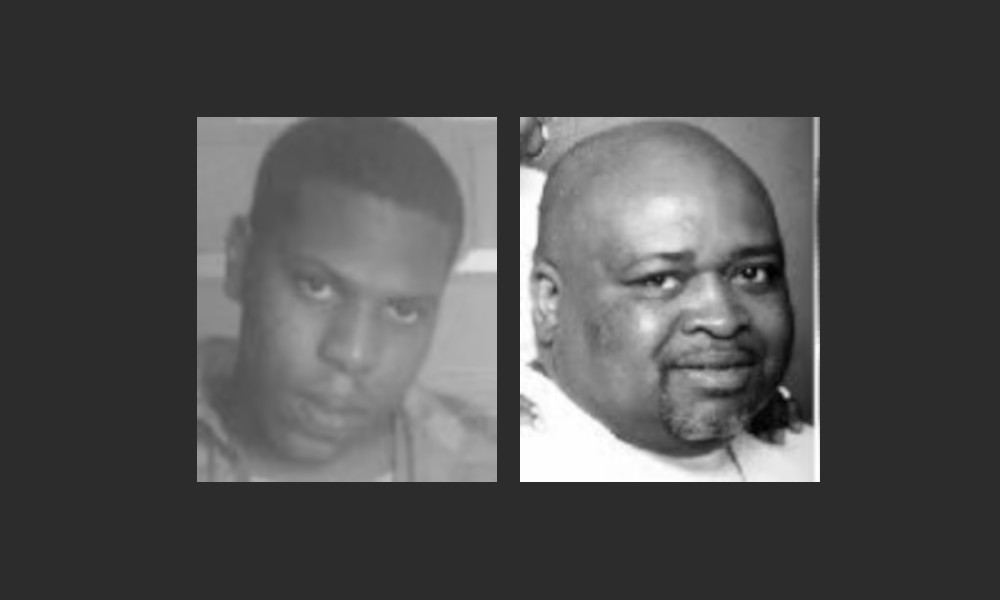
Gregory Charles “G-Man” Hills and his stepfather, Lawrence James “Son” Brown, were killed during a connected shooting in New Orleans, Louisiana, on March 24, 2013. Gregory was only 19 years old. Lawrence was 53.
Their bodies were found at separate locations in the Gert Town area, but the scenes were only a few blocks apart. Gregory was discovered lying in the street after being shot, while Lawrence was found inside or near a pickup truck that had crashed into a building after he suffered multiple gunshot wounds.
The close timing, short distance and family relationship between the victims led New Orleans police to treat the deaths as part of the same violent event. However, investigators never publicly released a complete account of what happened before the shooting, where the first shots were fired or why the two men were targeted.
No publicly confirmed arrest has resolved the murders. The identity of the shooter or shooters remains unknown, and the cases continue to appear in cold case records as unsolved homicides.
The absence of answers has left Gregory and Lawrence’s relatives with the painful knowledge that two members of the same family were taken on the same night without anyone being held accountable.
Who Gregory Charles Hills Was
Gregory Charles Hills was 19 years old and known by the nickname G-Man. He was a young man whose life was only beginning when he was killed.
Gregory was connected to a large family in New Orleans. His obituary identified Doris Hills-Brown as his mother and reflected the close family relationship he shared with Lawrence Brown.
Some records describe Lawrence as Gregory’s stepfather, while family notices place Gregory among the children associated with Lawrence’s household. Regardless of the exact wording used, Lawrence was an important parental figure in Gregory’s life.
At 19, Gregory had not yet had the opportunity to build the future that should have been ahead of him. His death removed him from his family before he could reach many of the ordinary milestones of adulthood.
The nickname G-Man suggests the familiar and personal way his relatives and friends knew him. To the public, he became one of two victims listed in a homicide report. To the people who loved him, he was a son, relative and young man whose absence changed the family permanently.
Who Lawrence James Brown Was
Lawrence James Brown was 53 years old and known by the nickname Son. He was married to Doris Hills-Brown and was part of an extended New Orleans family.
His obituary remembered him as a husband, father and relative surrounded by people who mourned his death. Gregory was listed among the children connected to his family, further demonstrating the bond between the two victims.
Lawrence had lived long enough to establish responsibilities and relationships that reached across generations. At 53, he was old enough to serve as a source of guidance for younger relatives, yet still had years of life ahead of him.
The circumstances of his death suggest that he may have remained conscious long enough to move his truck after being shot. Whether he was trying to escape the gunfire, reach safety or seek help has never been publicly established.
His vehicle eventually crashed into a business near Broadway Street and Washington Avenue. The final movement of the truck became one of the central clues in the investigation, but police did not release enough information to explain where Lawrence was initially wounded.
The Night of March 24, 2013
The shootings occurred on Sunday, March 24, 2013, at approximately 8:30 p.m.
New Orleans police received a report of a person lying in the street in the 3500 block of Audubon Court. When officers arrived, they found Gregory face down in the roadway.
He had suffered gunshot wounds and was pronounced dead at the scene.
Around the same time, another emergency was unfolding several blocks away. Lawrence had also been shot multiple times. His red pickup truck traveled a short distance before crashing into a nearby business at or near the intersection of Broadway Street and Washington Avenue.
Emergency personnel found Lawrence mortally wounded. He died as a result of the gunfire.
The discovery of the two men at separate locations initially created two crime scenes. Investigators had to determine whether the shootings began in one place, occurred at multiple points or involved a moving confrontation.
The family relationship between the victims and the timing of the gunfire strongly indicated that the deaths were connected. Police treated the incident as a double homicide rather than two unrelated killings.
The Discovery of Gregory on Audubon Court
Gregory was found in the 3500 block of Audubon Court in Gert Town.
The report of a man lying in the street brought officers to the location. Once there, they discovered that Gregory had been shot.
The public record does not explain whether he was attacked while walking, standing near a vehicle or speaking with someone. It is also unclear whether he had been traveling with Lawrence immediately before the shooting.
Investigators would have examined the street for shell casings, bullets, blood patterns and other evidence that could reveal where the shooter stood. They also would have looked for damage to buildings, vehicles or fences caused by gunfire.
The position of Gregory’s body may have helped police estimate the direction from which he was shot or determine whether he moved after being wounded.
However, authorities did not publicly release those details.
Audubon Court was located within a residential urban environment where people may have been inside homes, walking nearby or traveling through the area. The timing of the shooting meant that potential witnesses could have heard gunshots even if they did not see the attack.
No publicly identified eyewitness provided a description that led to an arrest.
Lawrence’s Pickup Truck Crashes Into a Business
Lawrence was found near Broadway Street and Washington Avenue after his pickup truck struck a building.
Reports indicated that he had been shot several times. The movement of his vehicle suggested that he may have attempted to drive after being wounded.
One possibility is that Lawrence was shot near the location where Gregory was found and tried to escape. Another is that the shooter confronted him at a separate point and he drove until his injuries caused him to lose control.
He may also have been trying to reach Gregory, leave the neighborhood or attract the attention of police and emergency personnel.
The truck could have provided investigators with valuable evidence. Bullet holes may have shown whether Lawrence was shot from outside the vehicle. Blood patterns could have indicated his position at the time of the attack.
Fingerprints, DNA or other material inside the truck might have revealed whether another person had recently been a passenger. Damage to the vehicle could have helped reconstruct its route before the crash.
No detailed forensic account of the pickup truck has been publicly released.
Two Scenes and One Connected Crime
The separation between Gregory’s body and Lawrence’s truck created questions about the sequence of events.
Police had to determine whether the men were together when the violence began. If so, one may have attempted to flee in the truck while the other remained on Audubon Court.
It is also possible that the attacker targeted the men one after the other at nearby locations.
The time between the shootings appears to have been short. The locations were close enough for investigators to believe the same person or group was responsible.
A connected double homicide usually creates multiple lines of inquiry. Detectives examine the victims’ relationships, recent disputes, communications and activities to determine whether one person was the intended target and the other was killed because he was present.
Police may also consider whether both victims were deliberately targeted for the same reason.
The public record does not establish whether Gregory or Lawrence had received threats. No confirmed motive involving robbery, revenge, a personal argument or mistaken identity was announced.
Without a known motive, identifying a suspect becomes more difficult because investigators cannot easily narrow the number of people who might have wanted to harm the victims.
What May Have Happened
The available evidence supports only a general reconstruction.
Gregory and Lawrence were in the Gert Town area on the evening of March 24, 2013. At some point around 8:30 p.m., gunfire erupted.
Gregory was shot and left in the roadway on Audubon Court. Lawrence was also struck several times but remained able to operate his pickup truck for at least a short distance.
The truck traveled toward Broadway Street and Washington Avenue before crashing into a business.
Whether Gregory and Lawrence were inside the truck together before the shooting is unknown. Gregory may have exited the vehicle before the attack, or the men may have arrived in separate vehicles.
The shooter could have approached on foot, fired from another automobile or confronted the victims during a conversation.
More than one attacker may have been involved, but police did not publicly confirm the number of shooters.
The sequence may have unfolded quickly, leaving witnesses confused about which direction the gunfire came from or how many vehicles were involved.
The Search for a Motive
No reliable public source has established why Gregory and Lawrence were killed.
Investigators likely examined robbery as one possibility. If money, jewelry or property was missing, the shootings could have occurred during an attempted theft.
A personal dispute would have required detectives to examine relationships involving both victims. Someone who knew the family may have been angry with Gregory, Lawrence or another relative.
Retaliation would have required evidence of an earlier conflict, threat or act that led someone to plan the attack.
Mistaken identity is another possibility in shootings where victims are attacked without an obvious known motive. A shooter may have confused the truck, the location or one of the men with another intended target.
There is no confirmed public evidence supporting any of these theories.
The lack of a released motive may reflect the limited information available to detectives. It may also mean police developed a theory but withheld it to protect witness interviews or prevent suspects from learning what investigators knew.
Witnesses in the Gert Town Area
A shooting involving two victims and a moving pickup truck would likely have produced noticeable sound and activity.
Residents may have heard multiple gunshots, tires moving rapidly, the crash of the truck or people shouting.
Someone may have seen Gregory and Lawrence shortly before the violence. A witness could have noticed another vehicle following the pickup truck or parked near Audubon Court.
Businesses and homes in the area may have had surveillance systems, although camera coverage in 2013 was less widespread and lower in quality than it is today.
Even a partial description of a vehicle could have helped police. The color, body style, direction of travel or number of people inside might have narrowed the investigation.
Witnesses in violent crime cases sometimes hesitate to cooperate because they fear retaliation. Others may believe they did not see enough to help or may have been involved in unrelated activity they did not want to disclose.
As years pass, changing relationships may cause someone who once remained silent to reconsider.
Questions About the Reported Locations
Most contemporary descriptions place Gregory in the 3500 block of Audubon Court and Lawrence near Broadway Street and Washington Avenue.
Some later database entries list a different address on Edinburgh Street for both victims. That conflicting entry may reflect a coding error, a related address from the police file or another location connected to the investigation.
The more detailed reports created immediately after the shootings provide the clearest reconstruction of where the men were found.
Understanding the exact locations is important because distance and street direction could reveal Lawrence’s path after he was shot.
A reconstruction of the truck’s route might show whether he traveled away from Gregory’s location or toward it. That difference could help determine whether both men were together when the attack began.
Police have not publicly released a complete map of the crime scenes or explained how the locations were connected.
Reports Concerning Possible Arrests
Some secondary online records have referenced arrests by New Orleans police around the period of the murders.
However, no accessible official record clearly connects named defendants or homicide charges to the deaths of Gregory and Lawrence.
Cold case databases continue listing both men’s murders as unsolved and the suspects as unknown.
An arrest in another investigation should not be confused with a resolution in this case. New Orleans police handled numerous violent crimes during the same period, and general headlines about arrests may refer to unrelated incidents.
Without an official announcement, indictment or court record naming Gregory and Lawrence as the victims, claims that the murders were solved remain unsupported.
The continued cold case classification is the strongest indication that no prosecution resolved the double homicide.
The Challenges of an Unsolved Double Homicide
A case involving two victims can create additional evidence, but it can also produce a more complicated investigation.
Detectives must study two personal histories, two groups of acquaintances and every possible connection between the victims.
If one man was the intended target, investigators must determine why the other was present. If both were targeted, the motive may involve a shared relationship or event.
The two locations create separate sets of physical evidence that must be compared. Ballistics can determine whether the same weapon fired bullets recovered from both scenes.
If multiple firearms were used, police must consider whether there was more than one shooter.
The truck’s movement could spread evidence across several blocks, including shell casings, broken glass or blood. Locating all of those points quickly would have been important.
Heavy traffic, emergency response activity and weather can disturb street evidence. The longer investigators take to identify the full boundaries of a scene, the greater the risk that important material will be lost.
A Family Buries Two Loved Ones
Gregory and Lawrence died on the same night and were mourned by the same family.
Their funeral services were held on April 3, 2013, in New Orleans. The shared timing of the services reflected the scale of the family’s loss.
Relatives were forced to grieve a 19-year-old whose adult life had barely begun and a 53-year-old husband and father figure who had helped shape the family.
The emotional impact of losing two relatives at once can be overwhelming. Family members must manage funeral arrangements, support one another and respond to police questions while still trying to understand what happened.
The absence of an arrest adds another burden. There is no courtroom where relatives can hear evidence, no verdict assigning responsibility and no sentence marking the end of the legal process.
Each anniversary of March 24 brings back the unanswered questions about why the men were in Gert Town, who approached them and what caused the shooting.
Remembering Gregory and Lawrence Beyond the Crime
Gregory Hills and Lawrence Brown should not be remembered only as two men found at separate crime scenes.
Gregory was a young family member known as G-Man. His future was taken before he could fully establish his path in life.
Lawrence was a husband and parental figure known as Son. His death removed a mature and established member of the family at the same moment Gregory was killed.
Their nicknames reflect how personally they were known within their community. Police reports may list ages, locations and causes of death, but relatives remember voices, habits, conversations and family gatherings.
An unsolved homicide can cause the circumstances of death to overshadow the life that came before it. Remembering both men requires keeping their identities at the center of the story.
The Continuing Search for Answers
The murders of Gregory Charles “G-Man” Hills and Lawrence James “Son” Brown remain unresolved in publicly available records.
The known facts establish that both men were fatally shot in the Gert Town area of New Orleans on March 24, 2013.
Gregory was found face down in the street in the 3500 block of Audubon Court. Lawrence was found after his red pickup truck crashed near Broadway Street and Washington Avenue.
Police considered the deaths connected, but no confirmed motive or suspect was publicly identified.
Someone may know what brought the men to the area, who they expected to meet or which vehicle left after the shooting.
A person may have heard an admission, seen the pickup truck being followed or observed someone disposing of a weapon.
Ballistic evidence, old surveillance recordings, witness statements or information developed in another case could still create a breakthrough.
Until the shooter is identified and held accountable, the Hills and Brown family will continue waiting for an explanation of the violence that took two loved ones on the same New Orleans night.
Discover more from City Towner
Subscribe to get the latest posts sent to your email.