Ernesto Acosta Murdered While Walk to a Friend’s House in San Francisco California
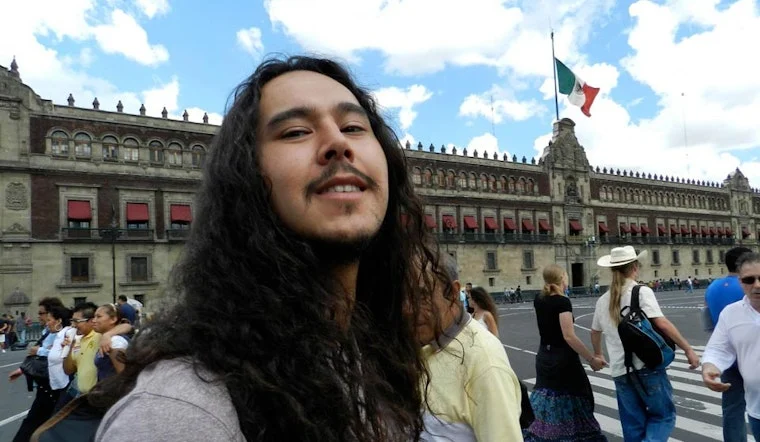
Ernesto “Xe” Gonzalez Acosta was a 23-year-old student, employee, traveler, and active member of San Francisco’s cultural community when his life was suddenly taken during the early morning hours of February 10, 2013. Acosta was walking through the Western Addition neighborhood of San Francisco, California, when someone inside a passing vehicle shot him in the chest.
The attack happened without any publicly established warning, confrontation, or motive. Acosta was not known to have been involved in criminal activity, and investigators found no clear indication that robbery was the purpose of the shooting. The people responsible drove away, leaving Acosta critically wounded near the intersection of Hayes and Webster streets.
More than a decade later, the circumstances surrounding his death remain deeply troubling. Surveillance footage gave investigators a glimpse of the vehicle believed to have been involved, but it did not provide the clear identification needed to locate the shooter. No publicly documented arrest has brought Acosta’s family the answers and justice they have sought since the night he was killed.
Who Ernesto “Xe” Gonzalez Acosta Was
Ernesto Gonzalez Acosta was born on November 11, 1989. He spent much of his childhood and teenage years in the Fresno and Clovis areas of California. He attended local schools and graduated from Clovis East High School in 2007 before eventually moving to San Francisco.
In San Francisco, Acosta enrolled at City College of San Francisco. He was continuing his education while also working at the Whole Foods Market near Haight and Stanyan streets. Friends, relatives, and coworkers remembered him as friendly, hardworking, compassionate, and interested in experiencing more of the world around him.
Acosta was widely known by the nickname “Xe.” He enjoyed traveling and had reportedly visited several countries. His curiosity about different places and cultures reflected an adventurous personality and a desire to learn through direct experience.
He was also involved in San Francisco’s Mexica cultural community. Acosta helped with activities associated with the annual Mexica New Year celebration at the Mission campus of City College. His involvement connected him with a community that valued tradition, history, music, dance, and cultural education.
Those who knew Acosta did not describe him as someone likely to be involved in a violent dispute. Police reported that he had no criminal record and no known history of serious trouble. This made the lack of an obvious motive even more difficult for his loved ones and investigators to understand.
The Final Hours of February 10, 2013
During the early morning hours of February 10, 2013, Acosta was in San Francisco’s Western Addition neighborhood near Alamo Square. He was reportedly carrying belongings that belonged to a female friend and was making his way toward her residence.
At approximately 2:00 a.m., Acosta reached the area of Hayes and Webster streets. The neighborhood was quiet, but businesses, residences, and nearby streets had surveillance cameras that would later become important to the investigation.
Video footage appeared to show Acosta walking along the sidewalk before a white or light-colored sedan approached. The vehicle slowed or stopped near him. Acosta then moved in the direction of the car, possibly because someone inside called to him, motioned toward him, or caused him to believe there was a reason to approach.
What happened next lasted only moments. Someone inside the vehicle fired a gun, striking Acosta in the chest. He moved away from the car, crossed part of the street, and collapsed on a sidewalk.
The vehicle sped away from the scene. Acosta remained seriously wounded as emergency assistance was requested. San Francisco police officers and medical personnel responded, and he was transported to a hospital. Despite efforts to save him, Acosta died from his injuries.
The Vehicle Seen Near the Scene
Investigators quickly began searching for the vehicle connected to the shooting. Surveillance recordings from the surrounding area and footage captured by a passing taxicab showed what police believed was a white or light-colored Lexus ES 350.
The car became one of the most important pieces of evidence in the investigation. Authorities released images and video footage to the public in hopes that someone would recognize the vehicle, know who had been driving it, or remember seeing it in the Western Addition during the early morning of February 10, 2013.
The footage, however, had serious limitations. It did not provide investigators with a clearly readable license plate, and the people inside the car could not be positively identified from the available images. The recording offered a general description of the vehicle but not enough information to immediately trace it to a specific owner or suspect.
Police appealed to anyone who had seen a similar car or witnessed suspicious activity near Hayes and Webster streets to come forward. Investigators also wanted to hear from anyone who knew why Acosta might have approached the vehicle.
The fact that Acosta walked toward the car became a central part of the mystery. It raised questions about whether he recognized someone inside, believed the occupants needed directions, heard someone call to him, or simply responded to an unfamiliar person attempting to get his attention.
No Clear Evidence of Robbery
One of the most significant aspects of the investigation was the apparent absence of robbery. Acosta was not publicly reported to have been chased, physically attacked, or stripped of his possessions before he was shot. Investigators found no obvious evidence suggesting that the shooter intended to steal from him.
The lack of a robbery motive forced detectives to consider other possibilities. Acosta could have been deliberately targeted, mistaken for another person, or shot during a brief and unpredictable encounter with strangers. Another possibility was that someone inside the vehicle reacted violently after an exchange that was not fully captured on camera.
None of those theories has been publicly proven. Authorities have not announced a definitive motive, and no credible public evidence has established that Acosta had been threatened before his death.
Acosta’s clean background added to the confusion. He had no known criminal associations that would easily explain an intentional killing. Family members said they could not understand why anyone would want to harm him.
The Possible Connection to Yoshi’s
During the investigation, detectives examined whether the shooting could have had some connection to an event held nearby at Yoshi’s jazz club on Fillmore Street. The club was located only several blocks from the area where Acosta was killed.
A birthday celebration had taken place at the venue that night, drawing a large crowd. The party was ending around the same time as the shooting. Investigators reportedly explored whether people leaving the event might have witnessed something important or whether the white Lexus had been associated with someone who attended the gathering.
Reports also indicated that police looked into a disturbance or fight connected to people leaving the event. Acosta’s family later discussed the possibility that the occupants of the car had been near the celebration before encountering him.
There has never been public proof that Acosta attended the party, participated in a fight, or knew the individuals involved in any disturbance. The event appears to have been examined primarily because of its proximity and timing.
The Yoshi’s connection therefore remains an investigative lead rather than an established explanation for the murder. It is possible that someone who attended the party saw the suspect vehicle without realizing its importance. It is also possible that the car’s presence near the venue had nothing to do with the shooting.
A Family Searching for Answers
Acosta’s death devastated his family. His mother, father, sister, and other relatives were left struggling to understand how a young man with no known enemies could be killed during what appeared to be an ordinary walk through the city.
His relatives publicly asked anyone with information to contact investigators. They wanted to know who was inside the Lexus, why Acosta approached it, and what caused the shooter to fire.
Acosta’s sister continued speaking about the case years after his death. She described her brother as one of the most important people in her life and made it clear that the passage of time had not reduced the family’s need for justice.
For the Acosta family, the unanswered questions extend beyond the identity of the shooter. They also want to understand whether the killing was intentional, random, or the result of mistaken identity. Without an arrest or confession, they have been forced to live with several possible explanations and no definitive account of what happened.
The family’s public appeals have emphasized that someone likely knows more than has been revealed. The shooter may have spoken about the incident, shown unusual behavior afterward, disposed of the vehicle, or told another person what happened.
Mourning Within the Community
Acosta’s death affected more than his immediate relatives. Friends, coworkers, classmates, and members of the Mexica cultural community mourned the loss of a young man who had built meaningful relationships throughout San Francisco and Central California.
A memorial was created near the location where he was shot. Flowers, candles, photographs, and messages allowed people to honor his life and express their grief.
The annual Mexica New Year celebration held after his death included a tribute to Acosta. An altar was created in his memory, and the gathering became both a cultural celebration and an opportunity for the community to mourn.
His death was especially painful because Acosta had participated in organizing and supporting the celebration. He had contributed his time to preserving traditions and bringing people together. His absence was therefore felt during an event that he had helped strengthen.
Coworkers also remembered Acosta as a valued employee and a positive presence. The killing left those who had worked beside him confronting the reality that someone they saw regularly had been taken by an act of unexplained violence.
The Challenge of Solving the Case
Homicide investigations often depend on physical evidence, eyewitness testimony, surveillance footage, digital records, and information from people connected to the suspect. In Acosta’s case, investigators had footage of the vehicle but lacked a clear view of the shooter.
The shooting occurred at approximately 2:00 a.m., when fewer people were outside. Potential witnesses may have been inside nearby buildings, driving through the area, or leaving late night establishments. Some may not have realized that the sounds or activity they observed were connected to a murder.
The surveillance footage provided a timeline but did not answer the most important questions. It could not clearly reveal what was said before Acosta approached the vehicle. It did not establish whether he recognized anyone inside. It also did not capture a readable plate or a detailed image of the shooter.
Investigators may have obtained information that was never released publicly. Police departments often protect details that could help confirm the credibility of witnesses or distinguish genuine confessions from false claims.
The public record, however, does not identify a suspect or describe a breakthrough that led to an arrest. The absence of a public resolution has left the case classified as an unsolved homicide.
Questions That Remain Unanswered
The most important unanswered question is why Acosta was shot. There has been no publicly confirmed dispute, criminal connection, or personal conflict that explains the attack.
Another mystery is whether Acosta knew the occupants of the vehicle. His decision to move toward the car could indicate recognition, but it could also reflect a normal response to someone calling out from the street.
Investigators have also had to consider whether the shooter mistook Acosta for someone else. The Western Addition was active that night, and people were leaving nearby events. A person inside the Lexus may have believed Acosta was connected to an earlier argument or confrontation.
It is also possible that the killing was random. A person carrying a weapon may have targeted Acosta without a rational motive. Random violence would explain the lack of a known connection but would make the case particularly difficult to solve.
The role of the Lexus remains another major question. Authorities have not publicly stated whether the exact car was eventually located. It is unknown whether the vehicle was owned by the shooter, borrowed from another person, rented, stolen, or later sold.
The Continuing Search for Justice
The murder of Ernesto “Xe” Gonzalez Acosta remains a painful example of how a few seconds of violence can leave a family and community searching for answers for years.
Acosta was 23 years old when he was killed near Hayes and Webster streets in San Francisco on February 10, 2013. He was a student working toward his future, an employee supporting himself, a traveler interested in the world, and a participant in cultural traditions that connected him with others.
His death was not the end of his story. His family, friends, and community have continued preserving his memory and calling attention to the unsolved investigation.
Even after many years, homicide cases can be solved when witnesses reconsider their silence, relationships change, new technology improves old evidence, or someone provides information that was previously unavailable. A detail that once seemed unimportant could become the piece investigators need to connect the white Lexus to the person who fired the fatal shot.
Until that happens, the identity of Acosta’s killer and the reason for the shooting remain unknown. His loved ones continue to wait for the truth about what happened during the early morning hours of February 10, 2013, in San Francisco, California.
Discover more from City Towner
Subscribe to get the latest posts sent to your email.