25 Fun Facts About Moreno Valley California
Moreno Valley, California is one of the most important cities in Riverside County and one of the major population centers of the Inland Empire. Located east of Riverside, north of Perris, and near the San Jacinto Valley, Moreno Valley has grown from a quieter valley community into a large suburban city with its own identity, economy, neighborhoods, schools, parks, shopping centers, and cultural rhythm.
The city is known for its wide streets, mountain views, family neighborhoods, military connections, and access to Southern California’s inland landscape. It has the feel of a city that grew quickly but still carries pieces of its rural, ranching, military, and commuter history. Moreno Valley is not a beach city, a desert resort city, or an old downtown city built around one main street. It is a modern Inland Empire city shaped by movement, growth, affordability, diversity, and the search for space.
Moreno Valley officially became a city on December 03, 1984, making it younger than many other Southern California cities. However, the area’s history goes back much further. Long before incorporation, the valley was connected to farming, ranching, water development, military activity, and the growth of Riverside County. Over time, communities in the area came together under the Moreno Valley name, creating a city that would become one of the largest in the county.
Today, Moreno Valley is home to more than 200,000 residents, and its size gives it an important role in the region. It is a city of commuters, families, students, workers, business owners, military families, and people who have relocated from across Southern California. Its story is one of transformation, from open land and scattered settlements to a fast growing city with regional influence.
The Name Moreno Valley Has Historic Roots
The name Moreno Valley comes from the older community of Moreno, which was one of the settlements in the valley before the modern city was created. The word “Moreno” is Spanish and is often associated with a person of darker complexion or brown coloring, though in the local context it became tied to the community name and later the city’s identity.
Before incorporation, the area was not one unified city. It included communities and neighborhoods that eventually joined together as Moreno Valley. The modern city came from that larger valley identity, combining older local names, residential growth, and a desire for local government.
The name is now strongly connected to the city’s image. Residents often shorten Moreno Valley to “MoVal,” a nickname that has become part of local culture. You can hear it in casual conversation, see it in local branding, and find it used by businesses, schools, and community groups. The nickname gives the city a more personal identity and reflects how residents have made the place their own.
Box Springs Mountain Gives the City a Signature Landmark
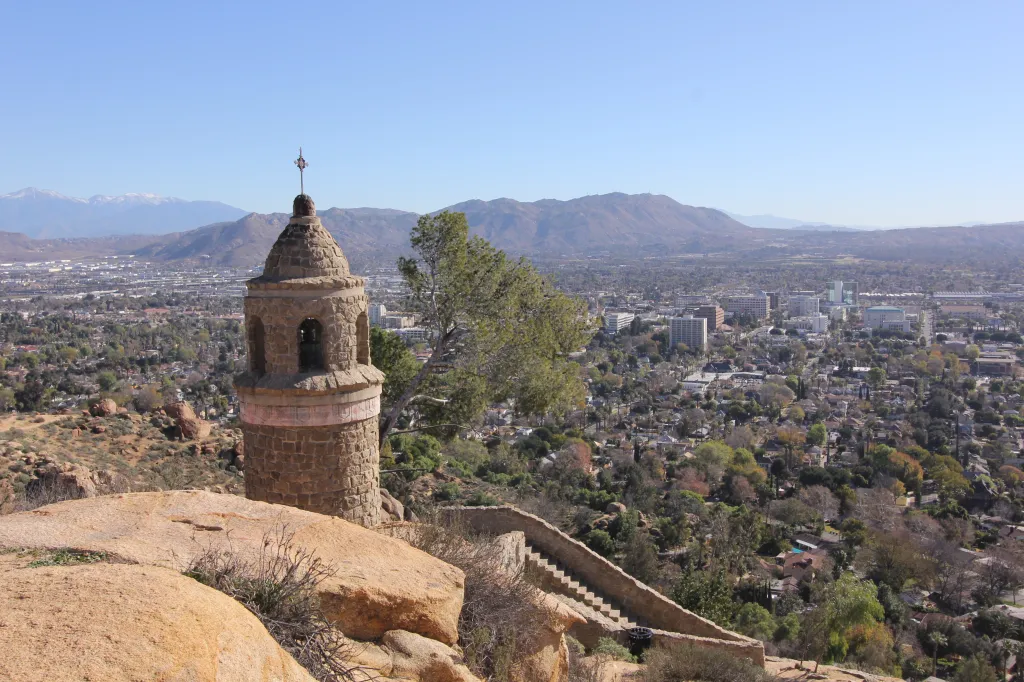
One of the most recognizable features of Moreno Valley is Box Springs Mountain, which rises near the northwestern edge of the city. The mountain is important because it gives Moreno Valley a natural backdrop and a clear visual marker. Many cities have a skyline, a tower, a courthouse, or a waterfront. Moreno Valley has the mountain.
The large “M” on the side of Box Springs Mountain is one of the city’s most familiar symbols. It can be seen from different parts of the city and has become part of Moreno Valley’s local identity. For residents, that letter is more than a hillside marking. It is a sign that they are home.
The mountain also helps define the city’s relationship with nature. Moreno Valley may be suburban and developed, but it is still surrounded by hills, open spaces, and desert influenced landscapes. Box Springs Mountain reminds residents and visitors that the city sits in a valley shaped by geography, not just roads and housing developments.
March Air Reserve Base Shaped the Region
Moreno Valley’s history and regional importance are closely tied to March Air Reserve Base, located near the city and shared with the surrounding Riverside County area. March Field has deep military roots and has been part of Southern California aviation history for more than a century.
The base influenced development, jobs, transportation, population growth, and the identity of the surrounding communities. Military families, civilian workers, aviation history, and federal activity all helped shape the area. Even as the base changed over time, its presence continued to matter.
The nearby March Field Air Museum also helps preserve that history. It connects the community to aircraft, military service, wartime history, and the long aviation story of the region. For Moreno Valley residents, this connection gives the area a deeper historical layer beyond suburban growth.
Moreno Valley Grew Fast During the Late 20th Century
Moreno Valley’s modern growth was heavily shaped by Southern California’s housing expansion. As coastal and older urban areas became more expensive, more people moved inland looking for larger homes, newer neighborhoods, and more affordable living. Moreno Valley became one of the places where that growth was especially visible.
During the late 20th century, the city expanded quickly. New subdivisions, shopping centers, schools, roads, and public services were developed to support the rising population. This fast growth gave Moreno Valley opportunity, but it also brought challenges. Like many fast growing Inland Empire cities, Moreno Valley had to balance development with infrastructure, traffic, public safety, schools, and economic planning.
The city’s growth also made it more diverse. People from Los Angeles County, Orange County, other parts of Riverside County, and beyond moved into Moreno Valley. That migration helped create a city with a wide range of cultures, family traditions, food preferences, and community experiences.
The City Has a Strong Family Oriented Identity
Moreno Valley is often thought of as a family city. Many neighborhoods are built around single family homes, schools, parks, churches, youth sports, shopping centers, and community services. Families are a major part of the city’s identity, and that shows in how people use local spaces.
Parks and recreation matter in Moreno Valley because families need places for sports, walking, birthday parties, community programs, and weekend activities. The city’s parks help create gathering places in a community that is spread across a large area. They give residents space to connect beyond shopping centers and roads.
Schools are also central to local life. For many families, Moreno Valley is where children grow up, attend school, join teams, graduate, and start building their own future. The city’s identity is closely connected to everyday family life rather than tourism or nightlife.
Moreno Valley Is Connected to Outdoor Recreation
Moreno Valley is close to several outdoor recreation areas, including Lake Perris and the surrounding hills. This gives the city access to boating, fishing, hiking, camping, biking, picnicking, and scenic drives. While Moreno Valley itself is a large suburban city, the surrounding landscape gives residents the ability to enjoy nature without traveling far.
Lake Perris is especially important to the region. It serves as a recreational destination for families, outdoor lovers, and people looking for a break from the city. On warm days, the lake area can attract visitors from across the Inland Empire.
The nearby hills and open spaces also create opportunities for hiking and mountain views. Moreno Valley’s location gives it a different feeling from denser urban areas. The landscape is wider, sunnier, and more open, which is one reason many people are drawn to the Inland Empire lifestyle.
The City Plays a Major Role in Inland Empire Commerce
Moreno Valley has become increasingly important in logistics, warehousing, retail, and regional commerce. Its location near major highways, population centers, and Southern California markets makes it attractive for distribution and business operations.
The Inland Empire has become one of the most significant logistics regions in the country, and Moreno Valley is part of that larger economic story. Warehouses, business parks, shopping centers, and transportation corridors have helped shape the local job market.
This role brings both benefits and debates. Economic development can bring jobs, tax revenue, and investment, but residents also care about traffic, air quality, land use, and quality of life. Moreno Valley’s future depends in part on how it balances growth with community needs.
Moreno Valley Has a Diverse Food and Culture Scene
The city’s diversity shows up strongly in its food scene, local businesses, churches, schools, music tastes, neighborhood events, and family traditions. Moreno Valley has Mexican food, soul food, barbecue, Asian cuisine, seafood, burgers, bakeries, boba shops, coffee spots, and casual family restaurants.
Food is one of the easiest ways to understand the city’s cultural mix. Moreno Valley is not known for one single dish or restaurant district. Instead, its dining scene is spread across shopping centers and neighborhood plazas. That makes it feel practical and local, shaped by where people live, work, and shop.
The city’s culture also reflects the wider Inland Empire, where people bring influences from Los Angeles, the Bay Area, the South, Mexico, Central America, the Pacific Islands, and many other places. Moreno Valley’s identity is built from that mixture.
Moreno Valley Continues to Define Its Future
Because Moreno Valley is still a relatively young city, its identity is continuing to develop. Cities that incorporated more than 100 years ago often have older downtowns, long established civic landmarks, and historic districts that define them. Moreno Valley is different. It is still building its long term image.
The city’s future will likely depend on several important questions. How will it create more local jobs? How will it support small businesses? How will it improve transportation and infrastructure? How will it protect open space while allowing growth? How will it strengthen schools, parks, public safety, and community pride?
Moreno Valley’s story is not finished. That is part of what makes it interesting. It is a city still becoming itself, shaped by residents who want opportunity, stability, and a strong sense of belonging.
25 Fun Facts About Moreno Valley, California
- Moreno Valley officially incorporated as a city on December 03, 1984, making it one of Riverside County’s younger major cities.
- The city is commonly nicknamed “MoVal,” a shorter name used by residents, businesses, and local organizations.
- Moreno Valley is one of the largest cities in Riverside County by population.
- The city sits in the Inland Empire, one of Southern California’s fastest growing and most important regions.
- Box Springs Mountain is one of Moreno Valley’s most recognizable natural landmarks.
- The large “M” on Box Springs Mountain is a major symbol of local pride.
- Moreno Valley is located near March Air Reserve Base, one of the region’s most historic military aviation sites.
- March Field’s aviation history dates back to the World War I era.
- The March Field Air Museum near Moreno Valley preserves aircraft and military aviation history.
- Moreno Valley is close to Lake Perris, a popular regional destination for boating, fishing, camping, and outdoor recreation.
- The city has strong suburban roots, with many neighborhoods built for families and commuters.
- Moreno Valley grew rapidly during the late 20th century as more people moved inland for housing and space.
- The city is part of the Riverside San Bernardino Ontario metropolitan area.
- Moreno Valley is east of Riverside, one of the oldest and most historically important cities in the Inland Empire.
- The city’s landscape includes valley views, hills, open sky, and nearby mountains.
- Moreno Valley has a diverse food scene that includes Mexican food, barbecue, seafood, Asian cuisine, burgers, bakeries, and boba shops.
- The city has several parks and recreation spaces that serve families, youth sports, and community events.
- Moreno Valley’s location gives residents access to both urban services and outdoor recreation.
- The city has become an important location for logistics, warehouses, retail centers, and regional commerce.
- Moreno Valley has a strong connection to commuter culture, with many residents traveling to jobs across Riverside County, San Bernardino County, Orange County, and Los Angeles County.
- The city’s growth has brought together people from many different parts of Southern California.
- Moreno Valley has a warm inland climate, with hot summers and mild winters.
- The city is near major transportation routes that connect it to the rest of Southern California.
- Moreno Valley’s identity is still evolving because it is a newer city compared with many older California communities.
- The city’s combination of military history, mountain views, family neighborhoods, diversity, and Inland Empire growth gives it a distinct personality.
Why Moreno Valley Is Worth Knowing
Moreno Valley is worth knowing because it tells a larger story about modern Southern California. It represents the movement inland, the search for opportunity, the growth of family communities, and the rise of the Inland Empire as a major economic and cultural region.
It is not a city built around old tourist myths or polished coastal images. It is a real working city where people build lives, raise families, commute, start businesses, attend school, serve in the military, worship, shop, eat, and gather. Its story is practical, but that does not make it plain. Moreno Valley has layers of history, geography, culture, and ambition.
From Box Springs Mountain to March Field, from Lake Perris access to neighborhood parks, from local restaurants to family homes, Moreno Valley continues to grow into a city with its own voice. Its fun facts help show the personality of the place, but its deeper story is about transformation. Moreno Valley is a city that has changed quickly, grown boldly, and continues to define what it means to be one of the Inland Empire’s major communities.
Discover more from City Towner
Subscribe to get the latest posts sent to your email.