Box Springs Mountain in Moreno Valley California
Box Springs Mountain is one of the most recognizable natural landmarks in Moreno Valley, California. Rising along the northwestern side of the city, the mountain gives Moreno Valley a dramatic backdrop, a sense of place, and one of its most familiar symbols. For many residents, the mountain is more than scenery. It is part of the city’s identity, a visual reminder of home, and a natural boundary between Moreno Valley, Riverside, and the surrounding Inland Empire.
The mountain is part of the Box Springs Mountains range in northwestern Riverside County. It sits near the meeting point of Moreno Valley and Riverside, giving both cities a strong connection to its slopes, trails, views, and history. From Moreno Valley, the mountain is especially known for the large “M” visible on the hillside. That letter has become one of the most recognizable images associated with the city.
Box Springs Mountain stands out because it blends nature, local history, outdoor recreation, and community pride. It is a place where hikers climb dusty trails, families enjoy views, photographers capture sunsets, students see a symbol connected to local schools, and longtime residents remember how the valley looked before modern development filled much of the area below.
A Mountain That Shapes the Look of Moreno Valley
Moreno Valley gets part of its visual personality from Box Springs Mountain. The city has wide roads, neighborhoods, shopping centers, schools, parks, and commercial areas, but the mountain gives the area a natural anchor. It rises above the valley and creates a rugged background that can be seen from many parts of town.
For residents driving home from work, heading to school, or moving through the city, the mountain is often in view. It gives Moreno Valley a sense of orientation. People may not always think about it directly, but the mountain quietly helps define where they are.
The shape of the mountain also adds character to the city’s skyline. Unlike coastal cities with ocean views or older downtown cities with tall buildings, Moreno Valley’s view is shaped by hills, open sky, and inland terrain. Box Springs Mountain is one of the clearest reminders that Moreno Valley sits inside a valley, surrounded by natural features that existed long before the city incorporated on December 03, 1984.
The Famous “M” on the Mountain
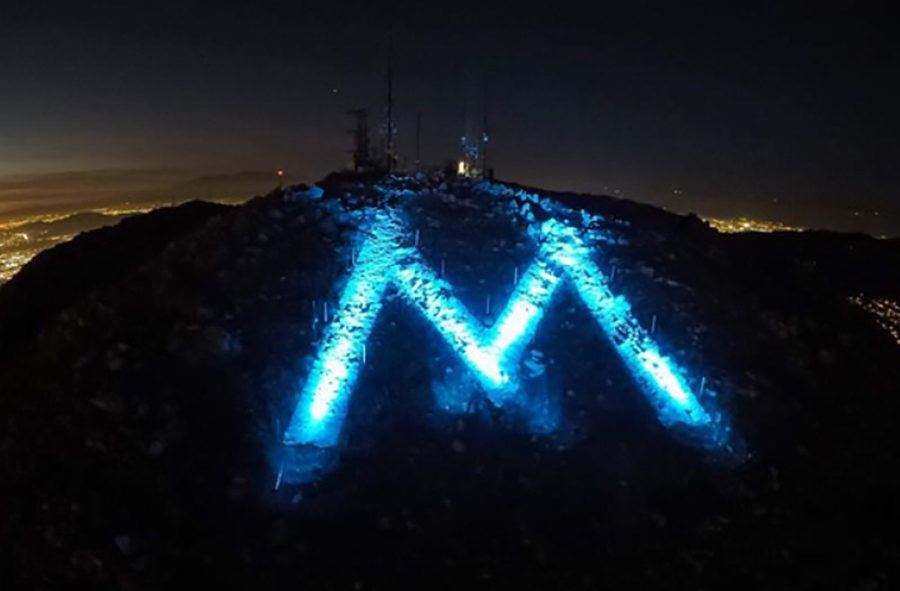
The famous “M” on the hillside in Moreno Valley, California is one of the city’s most recognizable landmarks, a simple but powerful symbol that has become deeply tied to local pride, school spirit, and the identity of the community. Set against the slopes of Box Springs Mountain, the large hillside letter can be seen from different parts of Moreno Valley, standing as a familiar marker for residents driving through town, students heading to school, and visitors entering the valley. For many people in the city, seeing that “M” means they are home.
The “M” is more than just a letter painted or arranged on a mountain. It represents Moreno Valley’s connection to the land around it. The city sits in a broad valley framed by hills, open sky, and Inland Empire terrain, and Box Springs Mountain gives Moreno Valley one of its strongest visual backdrops. The “M” takes that natural feature and turns it into a civic symbol. It makes the mountain feel personal, as if the landscape itself is carrying the name of the city.
The hillside letter is closely connected to Moreno Valley High School and the older community identity that existed before Moreno Valley officially became a city on December 03, 1984. Like many hillside letters across California and the American West, it began as a mark of school pride and local recognition. Over time, however, it grew into something larger. As Moreno Valley expanded from a smaller valley community into one of the major cities of Riverside County, the “M” became a symbol not just for a school, but for the entire city.
Part of what makes the “M” special is how visible it is. It does not sit hidden inside a building or behind a gate. It is out in the open, placed high enough on the hillside to be seen from roads, neighborhoods, and commercial areas. That visibility gives it a daily presence in people’s lives. Residents may pass it on the way to work, see it during a school commute, notice it while shopping, or catch it in the distance during sunset. Over time, those small repeated moments turn the “M” into part of local memory.
For longtime residents, the “M” can bring back memories of growing up in Moreno Valley, attending school, playing sports, driving through town, or watching the city change over the years. For newer residents, it offers a quick and clear symbol of belonging. It is one of those landmarks that helps a city feel like a place with its own story. Moreno Valley has changed dramatically over the past several decades, but the “M” remains a steady reminder of community identity.
The letter also carries a strong sense of hometown pride. Moreno Valley is often nicknamed “MoVal,” and like that nickname, the “M” gives residents something simple and recognizable to rally around. It appears in local conversations, photos, school spirit, social media posts, and the mental map people have of the city. It tells people that Moreno Valley is not just a collection of neighborhoods and shopping centers. It has symbols, history, and pride of its own.
The setting also adds to the meaning. Box Springs Mountain is rugged, dry, and distinctly Inland Empire. The landscape around the “M” reflects the natural character of the region, with rocky slopes, chaparral, golden hillsides, and wide views over the valley below. The mountain changes with the seasons and the light. After rain, the hills may look greener. During dry months, they take on warmer brown and gold tones. At sunrise or sunset, the hillside can glow with color, making the “M” stand out even more.
The “M” also helps connect Moreno Valley to a wider tradition of hillside letters found across California and the western United States. Many towns and schools placed large letters on hillsides as symbols of identity, especially in communities where mountains or hills naturally overlooked the town. These letters often began as school projects, student traditions, or community markers, but many became civic icons over time. Moreno Valley’s “M” fits into that tradition while still feeling uniquely local.
What makes the Moreno Valley “M” meaningful is not only its size or location, but the way people feel about it. A landmark becomes important when people attach memories to it. The “M” has been seen by generations of residents. It has watched Moreno Valley grow, watched new neighborhoods appear, watched traffic increase, and watched the city become one of the largest communities in Riverside County. It is a quiet witness to the city’s transformation.
For visitors, the “M” is a great visual introduction to Moreno Valley. It immediately tells them that the city has a landmark worth noticing. It also encourages people to look toward Box Springs Mountain and understand the geography of the area. Moreno Valley is not flat and anonymous. It is a valley city with a mountain watching over it, and the “M” gives that mountain a voice.
For photographers and local content creators, the “M” is one of the city’s most natural subjects. It works well in skyline shots, neighborhood views, sunset photos, school related imagery, and community storytelling. It can represent home, pride, memory, resilience, and location all at once. A single image of the “M” can communicate Moreno Valley without needing much explanation.
The famous “M” on the hillside remains one of Moreno Valley’s clearest symbols because it is simple, visible, and emotionally connected to the community. It honors the city’s name, reflects its school and civic roots, and gives residents a landmark they can claim as their own. Whether someone sees it every day or only notices it while passing through, the “M” stands as a bold reminder of Moreno Valley’s identity, history, and hometown pride.
Box Springs Mountain Reserve and Open Space
Much of Box Springs Mountain is connected to protected open space and reserve land. Box Springs Mountain Reserve offers trails, picnic areas, wildlife habitat, and access to nature close to the city. The reserve helps preserve the mountain’s natural character while giving residents and visitors a place to enjoy the outdoors.
The reserve includes miles of multi-use trails that attract hikers, runners, mountain bikers, horseback riders, and people who simply want fresh air and a good view. The trails vary in difficulty, which means visitors can choose experiences that match their comfort level. Some areas are easier for casual walking, while others are steeper and more demanding.
Open space is especially valuable in a fast growing region like the Inland Empire. Moreno Valley and nearby Riverside have both experienced major development over the decades. Box Springs Mountain remains important because it protects a piece of the region’s natural environment. It gives people a place to step away from traffic, neighborhoods, and commercial activity without leaving the area.
Hiking the Trails Around Box Springs Mountain
Hiking is one of the most popular ways to experience Box Springs Mountain. The trails offer views of Moreno Valley, Riverside, surrounding hills, and distant mountain ranges. Depending on the route, hikers may pass through chaparral, rocky slopes, dry washes, open ridges, and areas where native plants shape the landscape.
The mountain’s trails can be challenging, especially during warm weather. Moreno Valley has a hot inland climate, and the exposed hillsides can become intense under the sun. Hikers should bring water, wear proper shoes, pay attention to trail conditions, and avoid pushing too hard during the hottest parts of the day.
One of the most rewarding parts of hiking Box Springs Mountain is the view. As hikers climb higher, the valley begins to open below them. Roads, neighborhoods, schools, shopping areas, and distant communities become part of a larger landscape. From above, Moreno Valley feels both large and connected to the surrounding region.
Wildlife and Natural Habitat
Box Springs Mountain provides habitat for a variety of plants and animals. The area includes chaparral, coastal sage scrub, grasses, rocks, and dry slopes that support wildlife suited to Southern California’s inland environment. Visitors may see birds, lizards, rabbits, squirrels, and other animals while exploring the trails.
The mountain is also associated with larger wildlife in the broader area, including coyotes, bobcats, deer, and other animals that move through the hills and open spaces. These species are part of the natural system that remains around Moreno Valley, even as the city has grown.
Wildlife is one reason visitors should respect the mountain. Staying on marked trails, keeping dogs controlled, packing out trash, and avoiding disturbance to animals all help protect the area. Box Springs Mountain is not only a recreation space. It is also a living habitat.
Plants, Chaparral and Inland California Beauty
The beauty of Box Springs Mountain is not the lush green beauty of a forest or coastal garden. It is the dry, rugged beauty of inland Southern California. The landscape includes chaparral, sage scrub, rocks, grasses, and seasonal color that changes with the weather.
After rain, the hills can look greener and more alive. Wildflowers may appear in certain seasons, adding color to the slopes. During dry periods, the mountain takes on golden, brown, and gray tones that reflect the climate of the Inland Empire.
This type of landscape has its own quiet power. It may look harsh to some people, but it is full of detail. The smell of dry brush, the sound of wind moving across the slope, the sight of birds overhead, and the wide valley views all create a strong sense of place.
The History Behind the Box Springs Name
The name Box Springs is believed to come from a natural spring in the area. In earlier times, travelers, teamsters, and people moving through the valley relied on water sources for horses, wagons, and travel. According to local history, a spring in the mountain area was boxed in to protect or hold the water, giving rise to the name Box Springs.
That story connects the mountain to a time before freeways, suburbs, and shopping centers. Water was one of the most important resources in Southern California history, especially in dry inland areas. Springs, wells, streams, and irrigation shaped where people settled and how communities developed.
The name Box Springs carries that older history forward. It reminds people that the mountain was once part of a more rural and rugged travel landscape. Before Moreno Valley became a large modern city, the area was shaped by movement, ranching, farming, water access, and the practical needs of people crossing the land.
A Place Shared by Moreno Valley and Riverside
Box Springs Mountain is closely tied to Moreno Valley, but it also has a strong connection to Riverside. The mountain sits between the two cities and serves as a natural divider as well as a shared landmark. Riverside views one side of the mountain, while Moreno Valley views another.
This shared identity gives Box Springs Mountain regional importance. It is not only a Moreno Valley feature, and it is not only a Riverside feature. It belongs to the larger Inland Empire landscape. People from both cities use its trails, recognize its shape, and see it as part of their daily environment.
The mountain also connects nearby institutions and communities. The University of California, Riverside is located near the mountain’s Riverside side, and the surrounding area includes protected land, trails, and natural study areas. That makes the mountain important for recreation, education, conservation, and local pride.
The Mountain’s Role in Local Memory
For longtime residents, Box Springs Mountain is part of memory. People remember seeing the “M” as children, driving past the mountain on the way to school, watching the hills change color during different seasons, or using the mountain as a landmark before smartphone navigation made directions easier.
Local landmarks matter because they help people feel rooted. A city can change quickly, especially a place like Moreno Valley that experienced rapid growth in the late 20th century. Neighborhoods may expand, shopping centers may change, and roads may become busier, but the mountain remains.
That stability gives Box Springs Mountain emotional value. It has watched the city grow beneath it. It has seen Moreno Valley move from a collection of communities and open land into a major Riverside County city. For many residents, the mountain is part of their personal history.
Outdoor Recreation Close to the City
One of the best things about Box Springs Mountain is how close it is to urban life. Residents do not need to drive deep into the wilderness to experience hiking, views, and open space. The mountain sits close enough to Moreno Valley neighborhoods that outdoor recreation can fit into a regular day.
Someone can hike in the morning, return home for lunch, and still have the rest of the day for errands or family time. That convenience matters. It makes outdoor activity more accessible for people who might not have time for a full day trip.
The mountain also gives residents a healthier way to enjoy the city. Walking, hiking, running, and biking are all ways to stay active while connecting with nature. In a fast paced region where many people commute and spend time in cars, having nearby trails is valuable.
Sunsets, Photography and Valley Views
Box Springs Mountain is a great place for views, especially during sunrise and sunset. The Inland Empire sky can create dramatic colors over the hills, and the elevated terrain gives photographers a chance to capture Moreno Valley from a different angle.
The mountain itself is also photogenic. The “M,” the rocky slopes, the trails, the surrounding valley, and the changing light make it a strong subject for local photography. Residents often use the mountain as a visual symbol in community images, school memories, and city related content.
For visitors, the views help explain Moreno Valley’s geography. From the mountain, it becomes easier to see how the city fits into Riverside County. The neighborhoods, roads, and surrounding hills all appear connected. It is one of the best places to understand the city from above.
Fire, Heat and Respect for the Landscape
Like many Southern California hillsides, Box Springs Mountain is affected by heat, dry brush, and wildfire risk. The chaparral landscape is naturally adapted to dry conditions, but fire can still pose danger to nearby homes, trails, wildlife, and visitors.
This means people should treat the mountain with care. Visitors should avoid open flames, dispose of trash properly, respect closures, and pay attention to weather conditions. During hot, dry, windy days, the risk can be higher.
The mountain’s rugged beauty comes with responsibility. It is a natural area close to a major urban population, which means human behavior can have a major impact. Protecting Box Springs Mountain helps preserve it for future hikers, families, students, and residents.
Why Box Springs Mountain Matters to Moreno Valley
Box Springs Mountain matters to Moreno Valley because it gives the city a landmark, a story, a place to explore, and a symbol of pride. It is one of the few features that can be understood instantly by residents and visitors alike. When people see the mountain and the “M,” they know they are looking at something tied deeply to Moreno Valley.
The mountain also gives the city a connection to nature. Moreno Valley is a large suburban community, but Box Springs Mountain reminds everyone that the city is part of a larger natural landscape. It gives residents access to trails, views, wildlife, open space, and regional history.
Most importantly, Box Springs Mountain helps Moreno Valley feel distinct. Many Southern California cities have shopping centers, schools, freeways, and neighborhoods. Not every city has a mountain watching over it with a symbol visible from across town. That makes Box Springs Mountain one of Moreno Valley’s most meaningful features.
A Landmark That Continues To Inspire the City
Box Springs Mountain continues to inspire Moreno Valley because it represents endurance. The city has grown, changed, expanded, and developed, but the mountain remains a steady presence. It connects the past to the present and gives residents a natural symbol they can share.
For hikers, it offers challenge and reward. For photographers, it offers views and light. For families, it offers a place to learn about nature. For longtime residents, it offers memory. For newcomers, it offers a clear introduction to the character of the city.
Box Springs Mountain is more than a hill with a letter on it. It is part of Moreno Valley’s identity. It tells the story of a city shaped by landscape, growth, history, and pride. Whether seen from a road, explored on foot, photographed at sunset, or remembered from childhood, the mountain remains one of the most powerful symbols of Moreno Valley, California.
Discover more from City Towner
Subscribe to get the latest posts sent to your email.