
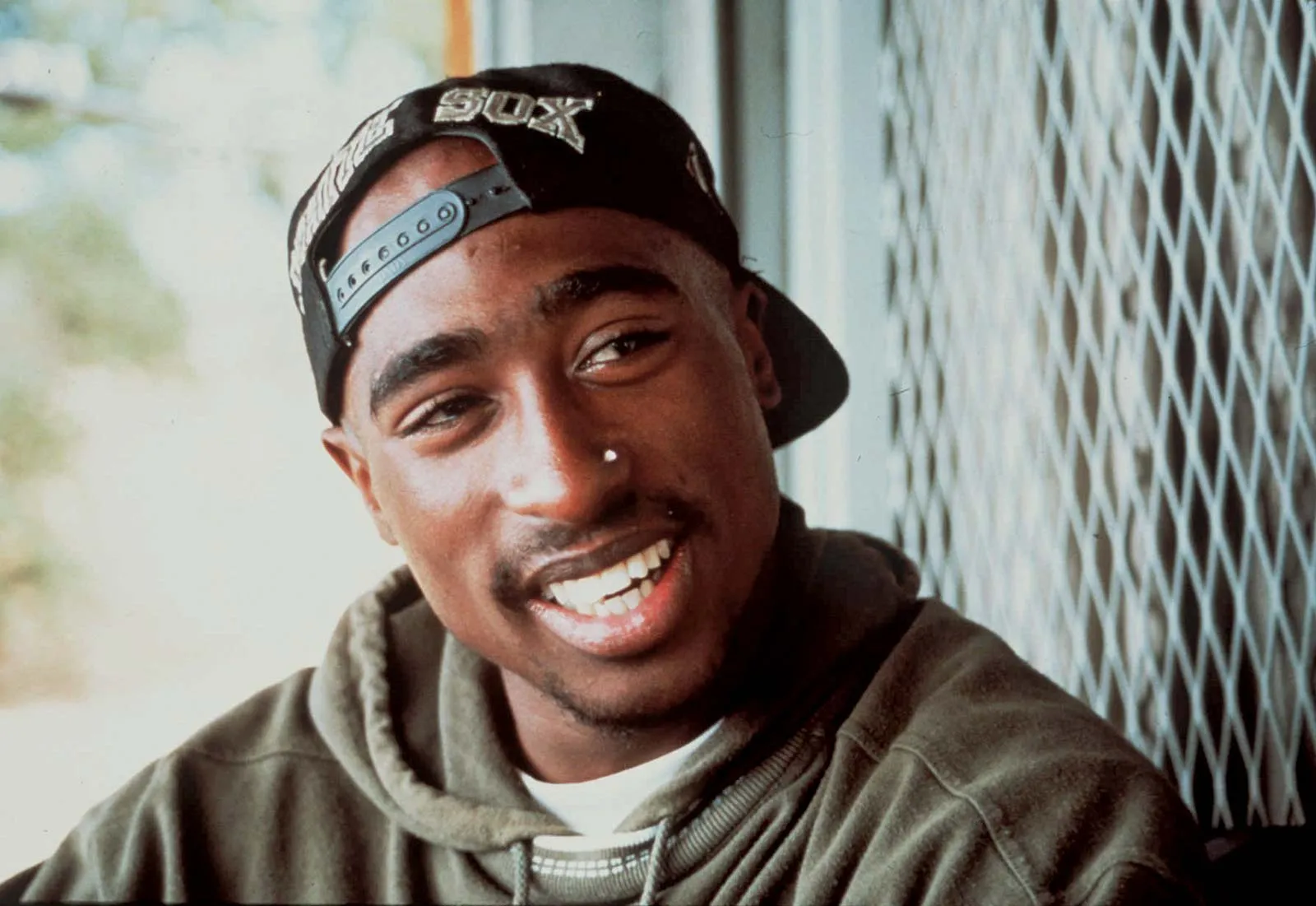
The Murder of Tupac Shakur in Las Vegas Nevada
The murder of Tupac Shakur on September 7, 1996, in Las Vegas, Nevada, remains one of the most famous and heavily discussed crimes in music history. Tupac was only 25 years old when he was shot in a drive-by attack near the Las Vegas Strip. He was riding in a black BMW driven by Death Row Records founder Marion “Suge” Knight when a white Cadillac pulled beside them and gunfire erupted. Tupac was hit multiple times, rushed to the hospital, and fought for his life for six days before dying on September 13, 1996.
His death shocked the world because Tupac was not only a rapper. He was a cultural force, an actor, a poet, a political voice, and one of the most influential artists of his generation. His music captured pain, ambition, anger, love, survival, and social struggle in a way that reached people far beyond hip-hop. When he died, it felt like more than the loss of a celebrity. It felt like the silencing of a voice that had become central to 1990s culture.
For years, Tupac’s murder remained officially unsolved. Rumors, theories, documentaries, books, interviews, and street stories filled the silence left by the lack of a conviction. Many people believed they knew what happened, but the legal system did not bring charges for decades. Then, in 2023, Duane “Keffe D” Davis was arrested and charged in connection with the killing. His arrest brought renewed attention to a case that had haunted hip-hop for nearly 30 years.
Who Was Tupac Shakur?
Tupac Amaru Shakur was born on June 16, 1971, in New York City. He became one of the most powerful voices in rap music, known for his emotional delivery, sharp writing, rebellious spirit, and ability to speak from several sides of life at once. He could make songs about poverty and police brutality, then turn around and make records about fame, betrayal, street conflict, family, and personal pain.
Tupac’s life was shaped by activism, struggle, and performance. His mother, Afeni Shakur, had been a member of the Black Panther Party, and that revolutionary background influenced the way Tupac saw the world. Even when his music became aggressive or controversial, there was often a deeper social awareness underneath it. He spoke about young Black men being trapped by poverty, violence, racism, and a system that seemed designed to punish them before they had a chance to grow.
By 1996, Tupac was one of the biggest artists in the world. He had released major albums, starred in films, and become a headline-making figure whose every move drew attention. His album “All Eyez on Me” captured his larger-than-life presence and helped define the sound and image of West Coast rap during that era. But his fame came with danger, conflict, legal problems, and a growing sense that his life was moving at a speed no one could control.
The Las Vegas Trip
On September 7, 1996, Tupac traveled to Las Vegas for the Mike Tyson and Bruce Seldon fight at the MGM Grand. The event was a major attraction, bringing celebrities, athletes, entertainers, gamblers, and street figures into the same city on the same night. Tupac was there with Suge Knight and members of the Death Row Records circle.
At the time, Tupac was closely tied to Death Row Records, one of the most powerful and controversial labels in hip-hop. Death Row had produced some of the biggest rap music of the decade, but it was also surrounded by rumors of violence, intimidation, gang connections, and fierce rivalries. Tupac’s public image had become tied to that world. He was famous, wealthy, outspoken, and deeply involved in the East Coast and West Coast rap tensions that dominated the mid-1990s.
The Tyson fight itself did not last long. After the fight, Tupac and his entourage moved through the MGM Grand. What happened inside the casino after the fight became one of the key moments leading up to the shooting.
The Fight at the MGM Grand
After the boxing match, Tupac and members of the Death Row group encountered Orlando “Baby Lane” Anderson inside the MGM Grand. Anderson was associated with the South Side Compton Crips, a rival group connected to earlier tensions involving Death Row associates. Surveillance footage later showed Tupac and others attacking Anderson in the casino.
That fight became central to the murder investigation. Prosecutors later alleged that the beating of Anderson sparked the retaliation that led to Tupac being shot later that night. The casino confrontation connected Tupac’s killing to street politics, gang rivalry, and the already tense relationship between people around Death Row and people connected to the Crips.
The fight was brief, but its consequences were enormous. In the world surrounding Death Row at the time, public disrespect and physical violence could quickly escalate. The MGM Grand incident did not happen in isolation. It happened inside a larger atmosphere of reputation, retaliation, loyalty, and danger. After the fight, Tupac continued with Suge Knight and the Death Row group, planning to attend a party later that night.
The Drive After the Fight
Later that evening, Tupac rode in the passenger seat of a black BMW driven by Suge Knight. The two were reportedly headed to a nightclub where a Death Row related event was planned. The Las Vegas Strip was crowded, bright, and active, filled with traffic and people leaving the fight.
Tupac was full of energy that night. Images and accounts from the evening show him in a lively mood, dressed sharply and surrounded by the attention that followed him everywhere. He had no way of knowing that the ride from the MGM Grand area would become the final public movement of his life.
As the BMW moved through traffic, a white Cadillac eventually pulled up beside it near East Flamingo Road and Koval Lane. It was a busy intersection near the Strip, the kind of place where cars stop, people look around, and city lights make everything feel public. But in that moment, the crowded setting did not prevent violence.
Someone inside the Cadillac opened fire into the BMW.
The Shooting at East Flamingo Road and Koval Lane
The shooting happened on September 7, 1996, near East Flamingo Road and Koval Lane in Las Vegas, Nevada. Multiple shots were fired into the vehicle carrying Tupac and Suge Knight. Tupac was struck several times, including serious wounds that caused life-threatening injuries. Suge Knight was also wounded but survived.
The attack was fast and brutal. After the gunfire, the Cadillac fled. Emergency responders and police were soon involved, and Tupac was rushed to University Medical Center of Southern Nevada. The shooting immediately became national news. A superstar rapper had been gunned down in one of the most visible entertainment cities in America.
The scene itself became part of hip-hop history. The intersection became associated forever with Tupac’s final night. Unlike many murders that happen in hidden places, Tupac’s shooting took place in public, after a major celebrity event, in a city packed with visitors. Yet even with all that visibility, the case remained unsolved for decades.
Tupac’s Final Days in the Hospital
After the shooting, Tupac was taken to the hospital in critical condition. Doctors worked to save him, and he remained alive for six days. During that time, fans, family members, friends, and people across the music industry waited for updates. Many hoped he would survive, partly because Tupac had survived violence before. In 1994, he had been shot in New York and lived. His public image had become so intense that some fans almost believed he was impossible to kill.
But this time, the wounds were too severe. Tupac died on September 13, 1996. He was 25 years old.
His death sent shock waves through music, film, and popular culture. Fans gathered, radio stations played his music, and tributes poured in. For many young people, especially those who saw themselves in Tupac’s anger and vulnerability, his death felt personal. He had spoken to people who felt ignored, judged, trapped, or misunderstood. Losing him felt like losing someone who had put their pain into words.
The Investigation and the Long Search for Justice
From the beginning, the investigation faced challenges. The shooting involved street rivalries, fear of retaliation, distrust of police, and witnesses who were reluctant to cooperate. Although many people in the public believed the killing was connected to the MGM Grand fight, proving the case in court was another matter.
For years, Orlando Anderson was widely discussed as a possible suspect because of the casino fight. He denied involvement and was never charged. Anderson was later killed in an unrelated shooting in 1998, which removed one of the most frequently named figures from the possibility of prosecution.
The investigation also became tangled with the mythology surrounding Tupac. Some theories blamed East Coast and West Coast rap rivalries. Others pointed to gang retaliation. Some speculated about record label politics, personal betrayal, or larger conspiracies. The lack of an arrest allowed theories to grow, and over time the case became part crime story, part cultural legend, and part unresolved wound.
Duane “Keffe D” Davis and the 2023 Arrest
In September 2023, nearly 27 years after the shooting, Duane “Keffe D” Davis was arrested and charged in connection with Tupac’s murder. Davis had long been connected to the story because he was the uncle of Orlando Anderson and had publicly discussed the events surrounding the shooting in interviews and in his memoir.
Prosecutors alleged that Davis helped organize or direct the retaliation after the MGM Grand fight. They argued that he was present in the Cadillac and played a key role in the events that led to Tupac being shot. Davis pleaded not guilty, and the case entered the legal system decades after the murder.
The arrest was a major moment because it was the first time anyone had been criminally charged in Tupac’s killing. For years, the case had seemed frozen in rumor and speculation. The charge against Davis did not erase the long delay, and it did not automatically answer every question, but it showed that prosecutors believed they could finally bring part of the case before a court.
Why the Case Stayed Unsolved for So Long
Tupac’s murder remained unsolved for decades for many reasons. One major issue was witness cooperation. In crimes involving gangs, street reputations, or powerful figures, people may refuse to talk out of fear or loyalty. Even when people know details, they may not want to testify in court.
Another issue was the chaotic environment around the shooting. Las Vegas was packed that night. The movement from the MGM Grand to the Strip involved many vehicles, many people, and a fast-moving timeline. Although the shooting happened in public, identifying and proving who was in the Cadillac, who fired, and who ordered the attack required reliable evidence.
There was also distrust between people in hip-hop circles and law enforcement. In the 1990s, many artists and street figures were not eager to cooperate with police. That culture of silence made it harder to build a case. Over time, memories faded, suspects died, evidence aged, and the public filled the gap with theories.
The East Coast and West Coast Tensions
Tupac’s murder happened during the height of the East Coast and West Coast rap conflict. Tupac, aligned with Death Row Records on the West Coast, had been publicly feuding with The Notorious B.I.G., Bad Boy Records, and people connected to the East Coast scene. The feud was fueled by diss records, interviews, media coverage, personal accusations, and industry rivalry.
Because of that backdrop, many people initially viewed Tupac’s murder through the lens of the rap war. His death was followed months later by the murder of The Notorious B.I.G. in Los Angeles on March 9, 1997. The two killings became linked in public memory, even though each case had its own facts, suspects, and investigative path.
The East Coast and West Coast rivalry helped make Tupac’s murder feel larger than a single shooting. It seemed to represent the dangerous point where music, fame, street affiliations, and media-fueled conflict all collided. For fans, it was a warning about how quickly artistic competition and real-life violence could become inseparable.
The Impact on Hip-Hop and Culture
Tupac’s death changed hip-hop forever. He left behind a massive body of work, including released music, unreleased recordings, film roles, interviews, poems, and cultural influence that continued to grow after his death. In some ways, his legacy became even larger because he died young. He became a symbol of brilliance cut short.
Artists after Tupac studied his emotional honesty, his intensity, and his ability to move between vulnerability and aggression. He could speak like a revolutionary, a wounded son, a street soldier, a romantic, and a prophet of doom. That range made him different. His music still resonates because it feels alive, conflicted, and human.
His murder also forced hip-hop to confront the real-life consequences of violence. The genre had always reflected harsh realities, but the deaths of Tupac and Biggie made the danger impossible to ignore. Their murders became turning points, reminding the industry that fame did not protect artists from street conflicts, ego, jealousy, or retaliation.
Remembering Tupac Beyond the Murder
Although Tupac’s murder is one of the most discussed parts of his story, it should not define him entirely. He was more than the way he died. He was a writer, performer, actor, son, friend, and thinker. He left behind music that continues to speak to new generations.
Tupac’s work dealt with poverty, racism, police violence, motherhood, betrayal, ambition, and survival. Songs like “Dear Mama,” “Changes,” “Keep Ya Head Up,” and many others showed his ability to blend personal emotion with social commentary. Even his more aggressive songs reflected the pressure and contradictions of a young man trying to survive fame, trauma, and conflict.
His death froze him at 25, but his influence kept moving. Fans who were not alive in 1996 still discover his music and feel connected to his voice. That is part of why his murder remains such a powerful cultural wound. People are not only mourning who he was. They are also mourning who he might have become.
A Murder That Still Carries Weight
The murder of Tupac Shakur on September 7, 1996, in Las Vegas, Nevada, still carries weight because it sits at the intersection of fame, music, street politics, and unresolved grief. He was shot after a night that began with a major boxing match and ended with one of the most famous drive-by shootings in American history. He died six days later, leaving behind a legacy that continues to shape hip-hop and popular culture.
The later arrest of Duane “Keffe D” Davis brought the case back into the courtroom and forced the public to revisit the facts after years of speculation. Whether the legal process answers every question remains to be seen, but the case has already shown how long the shadow of one night can stretch.
Tupac’s story is tragic because he was young, gifted, and constantly in motion. He lived with urgency, as if he knew time was short. His murder ended his life, but it did not silence his voice. Nearly 30 years later, his music still plays, his words still circulate, and his name still carries power.
Discover more from City Towner
Subscribe to get the latest posts sent to your email.