
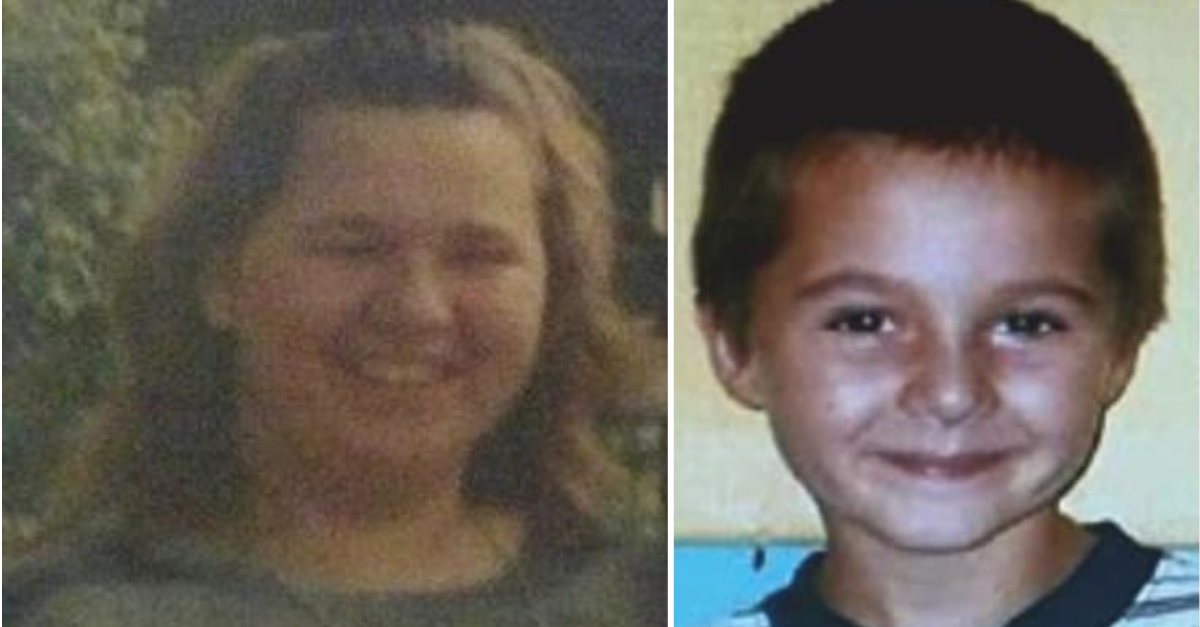
Monica Rollins and 6-Year Old Dalton Killed in Heflin Alabama
On September 16, 2002, the quiet community of Heflin, Alabama, was shaken by a crime that would haunt Cleburne County for more than two decades. Inside a home on Sugar Hill Road, 23-year-old Monica Pritchett Rollins and her 6-year-old son, Dalton Rollins, were found murdered. Monica was heavily pregnant at the time, and her unborn child also died as a result of the attack. What happened inside that home became one of the most painful and disturbing murder cases in the area’s history.
The case was especially heartbreaking because it struck at the center of a young family. Monica was a mother preparing to welcome another child into the world. Dalton was a young boy with his whole life ahead of him. Monica’s younger son was also inside the home but survived the attack unharmed. The fact that one child lived while his mother, brother, and unborn sibling were killed added another layer of emotional devastation to an already horrific crime.
For years, the murders of Monica and Dalton Rollins remained unsolved. Investigators collected evidence, followed leads, spoke with people connected to Monica, and waited for science and time to bring answers. The case became known as one of Heflin’s most troubling cold cases, not only because of the brutality of the crime but because of how long Monica’s family and the community had to wait for justice.
A Young Mother With a Growing Family
Monica Rollins was only 23 years old when her life was taken. She was a young woman raising her children in Heflin, a small Alabama town where violent crimes of this nature were not something residents expected to happen close to home. Monica was pregnant and nearing the end of her pregnancy, with reports placing her at about 36 weeks along. She was close to giving birth, and her family was preparing for another baby boy.
Her son Dalton was 6 years old, an age when children are full of energy, curiosity, and personality. He was old enough to understand the world around him but still young enough to depend completely on the adults in his life for safety. Dalton’s murder made the case even more devastating because it showed that the violence inside the home did not stop with Monica.
Monica’s youngest son, Aaron, was also in the home. He was a toddler at the time and was later found alive. The survival of Monica’s youngest child became one of the most haunting details of the case. Investigators and family members were left with painful questions about what he may have seen or heard, and how long he had been inside the home before help arrived.
The Discovery on September 16, 2002
The bodies of Monica and Dalton Rollins were discovered on September 16, 2002. Concern grew after family members could not reach Monica, and someone went to check on her at the home. What was found inside turned into a nightmare for the family and for first responders.
Monica and Dalton had been stabbed to death. Monica’s unborn baby also died because of the attack. Their deaths appeared to have happened before they were found, meaning the crime may have occurred days earlier. The scene was deeply disturbing, and those who worked the case later described it as one of the worst they had encountered.
The home was located around Sugar Hill Road or Sugar Hill Drive in Heflin, Alabama. The rural setting made the crime feel even more chilling. A place that should have been private and safe had become the scene of a brutal killing. For residents of Heflin, the murders were not distant news. They were personal, local, and frightening.
The Child Who Survived
One of the most emotional parts of the case involved Monica’s surviving toddler son. He was found alive inside the home after his mother and brother were discovered dead. Reports have described him as being unharmed, though the emotional weight of surviving such an event is impossible to measure.
His survival raised difficult questions. How long had he been in the house after the killings? What did he experience during those hours or days? Did he understand any part of what had happened? Because he was so young, he could not provide investigators with a clear account. Still, his presence in the home became an unforgettable part of the story.
For Monica’s family, the survival of her youngest son was both a blessing and another source of heartbreak. He had lost his mother, his older brother, and an unborn sibling in one act of violence. While he lived, his life was permanently changed before he was old enough to understand why.
A Community Left in Fear And Grief
Heflin is the kind of Alabama town where news travels fast, especially when something violent happens. The murders of Monica and Dalton Rollins spread fear and sorrow through the community. Residents wanted to know who could commit such a crime and whether the killer was still nearby.
The brutality of the murders made the case stand out. This was not only the killing of an adult. It was the killing of a pregnant mother and a child. That combination created deep anger and grief. People wanted answers, but as the days turned into weeks and the weeks became years, the case remained unresolved.
The Rollins family had to live with unanswered questions. They knew what had happened, but they did not know who was responsible. That uncertainty can be its own form of pain. Each year that passed without an arrest made the wound harder to close.
The Early Investigation
Investigators worked the case from the beginning, gathering physical evidence from the home and interviewing people connected to Monica. They looked for anything that could point them toward the person responsible. In murder investigations, especially those involving a private residence, evidence from the scene can be critical. DNA, fingerprints, fibers, and other details can help build a picture of who was present and what may have happened.
Some information was kept from the public. That is common in homicide investigations because detectives often hold back certain facts that only the killer would know. Those details can later help confirm whether a confession is truthful or whether a suspect is trying to mislead police.
Despite the work done early on, no immediate arrest solved the case. Leads came and went. People were questioned. Evidence was preserved. But for years, Monica and Dalton’s murders remained unsolved.
A Cold Case That Refused To Fade
As time passed, the murders became a cold case, but they were not forgotten. Cold cases often depend on persistence, better technology, and fresh eyes. What cannot be solved in the first months or years may later become clearer when DNA testing improves or when investigators decide to reexamine old evidence.
The Rollins case carried special weight because of the victims. Monica was pregnant. Dalton was a child. An unborn baby also died. Cases like this stay with investigators, families, and communities because they represent the loss of innocent life in its most painful form.
Over the years, law enforcement continued to revisit the case. The search for answers did not disappear. Investigators knew that somewhere in the evidence or in the people connected to the case, there could still be a path to the truth.
The Role of DNA Evidence
One of the key breaks in the case came through DNA evidence. Investigators later reexamined evidence from the crime scene, including a cigarette butt. DNA testing connected that evidence to Lewis Ladon Spivey, a man who had known Monica.
DNA can be powerful in a cold case because it can speak years after a crime. A piece of evidence that once seemed limited can become extremely important when technology improves. In the Rollins case, DNA helped investigators connect a person to the scene in a way that earlier investigative work had not been able to do conclusively.
The cigarette butt became a critical piece of the investigation. It placed attention on Spivey and helped law enforcement move closer to an arrest after more than 20 years of waiting.
The Arrest of Lewis Ladon Spivey
In June 2023, Lewis Ladon Spivey was arrested in connection with the murders of Monica and Dalton Rollins. At the time, he had been serving a prison sentence in Florida on unrelated charges. After his release or near the end of that sentence, authorities moved forward in the Alabama case.
Police said Spivey confessed and took responsibility for the murders. That confession, combined with DNA evidence, gave investigators the major breakthrough they had been seeking for more than two decades.
The arrest brought renewed attention to the case. For many people in Heflin and for Monica’s family, it was the first real movement toward justice after years of uncertainty. It did not erase the pain, but it answered the question that had lingered since September 2002: who killed Monica and Dalton?
The Weight of a Confession
A confession in a case this serious carries enormous weight, especially when it comes after years of silence. Police said Spivey gave a detailed confession and took sole responsibility for the deaths. In a case where some details had been held back from the public, investigators could compare what he said against facts known only to law enforcement.
That kind of confirmation matters. False statements, rumors, and speculation can surround cold cases for years. A confession backed by physical evidence gives the legal system stronger ground to move forward.
For Monica’s loved ones, hearing that someone admitted responsibility may have brought a mix of relief, anger, and renewed grief. Relief because answers had finally come. Anger because the person responsible had lived for years while the family suffered. Grief because no confession could bring Monica, Dalton, or the unborn baby back.
Remembering Dalton Rollins
Dalton Rollins was only 6 years old when he was killed. At that age, a child is just beginning to build memories, friendships, and dreams. Dalton should have had years ahead of him, school milestones, birthdays, family gatherings, and the chance to grow into the person he was meant to become.
His death is one of the most painful parts of the case. Children are supposed to be protected from violence, especially inside their own homes. Dalton’s murder showed a level of cruelty that deeply affected everyone who learned about the case.
In stories about violent crime, child victims must never become just a detail. Dalton was not only Monica’s son. He was a person whose life mattered. His future was stolen, and his name remains central to the tragedy.
Remembering Monica Rollins
Monica Rollins was a young mother whose life was also taken far too soon. She was raising children and preparing to give birth. She had responsibilities, relationships, hopes, and a family that loved her.
Her pregnancy made her murder even more devastating. Monica’s unborn child died before ever having the chance to live outside the womb. The attack ended not only Monica’s life but also the life of the baby she was carrying. That loss expanded the tragedy beyond two victims and made the crime even more painful for those who knew her.
Monica’s story is a reminder that victims are more than the worst thing that happened to them. She was a mother, a daughter, and a person with a life that mattered. Her memory continues through the family members who loved her and through the continued telling of her story.
The Pain of Waiting for Justice
The time between September 2002 and the arrest in June 2023 was more than 20 years. For a grieving family, that is a very long time to wait. Every anniversary of the murders likely reopened the pain. Every year without an arrest may have felt like another delay in justice.
Cold cases can be especially hard on families because they leave people suspended between grief and unanswered questions. They may know their loved ones are gone, but they do not know who did it, why it happened, or whether the person responsible will ever be held accountable.
The Rollins family had to carry that burden for decades. The eventual arrest did not remove those years of suffering, but it did show that the case had not been abandoned.
Why the Case Still Matters
The murder of Monica and Dalton Rollins still matters because it represents the lasting damage of violent crime. It matters because a young mother, her child, and her unborn baby were killed inside a home where they should have been safe. It matters because the surviving child had to grow up with a loss that began before he could understand it.
The case also matters because it shows the importance of preserving evidence and continuing to work cold cases. DNA technology, renewed investigative effort, and persistence can produce answers even decades later. For families waiting on justice, that hope can be powerful.
Monica and Dalton’s case became a reminder that time does not erase responsibility. A case may grow old, but the victims do not become less important. Their names still matter. Their lives still matter. Their family’s pain still matters.
A Tragedy That Changed Heflin
The murders of Monica and Dalton Rollins left a permanent mark on Heflin, Alabama. Small towns often carry tragedies differently than larger cities because the distance between people is smaller. A crime like this can feel like it happened to the entire community.
Residents who remember the case remember the shock, fear, and sadness that followed. Law enforcement officers who worked the scene carried the weight of what they saw. Family members carried the heaviest burden of all.
Even after the arrest of Lewis Ladon Spivey, the story remains painful. Justice can answer questions, but it cannot undo the damage. The lives lost on September 16, 2002, remain at the heart of the case.
The Legacy of Monica And Dalton Rollins
The legacy of Monica and Dalton Rollins is not only the tragedy of their deaths. It is also the reminder that victims deserve to be remembered with care, dignity, and truth. Monica was a young mother. Dalton was a young boy. Monica’s unborn child was never given the chance to live. Their story deserves more than a brief mention in a cold case file.
Their murders show how one act of violence can ripple through generations. A family was changed forever. A child survived without his mother and brother. A community lost its sense of safety. Investigators spent years trying to bring answers to a case that never should have happened.
More than 20 years after their deaths, the names Monica and Dalton Rollins still carry meaning in Heflin. They represent innocence lost, grief endured, and the long road toward accountability. Their story is painful, but telling it helps keep their memory alive.
Discover more from City Towner
Subscribe to get the latest posts sent to your email.