
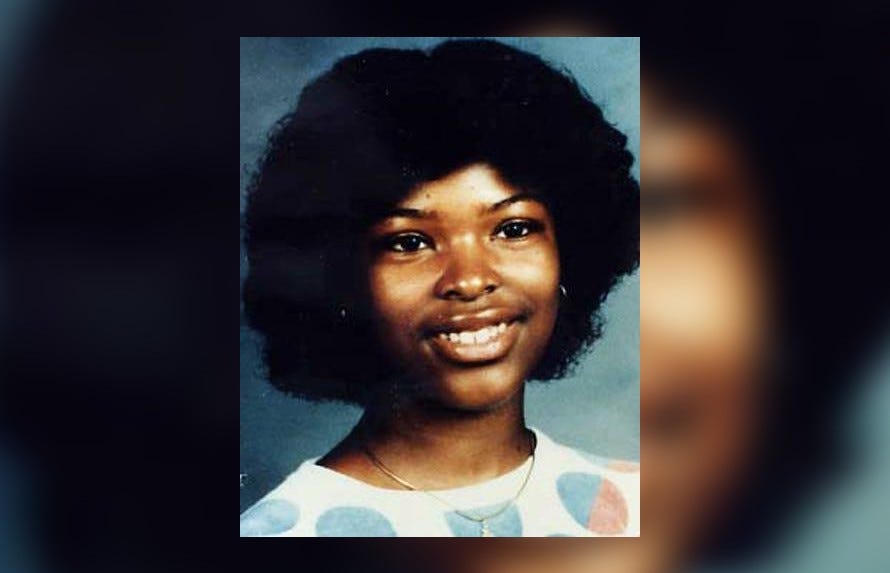
Jeffrey Lynn Smith Killed Not Far From Home in Hot Springs Arkansas
The disappearance of Jeffrey Lynn Smith remains one of the most haunting unsolved missing person cases out of Hot Springs, Arkansas. On December 4, 1985, Jeffrey Lynn Smith, who was commonly known as Lynn, vanished while making her way home from school. She was only 16 years old at the time, a young girl with her whole life still ahead of her, and her sudden disappearance left her family searching for answers that have remained painfully out of reach for decades.
Lynn’s case is especially heartbreaking because she disappeared during what should have been an ordinary day. She had gone to school, spent time around people who knew her, and was expected to return home like usual. Instead, she never arrived. That simple walk home became the last known chapter of her life, turning a normal school day into a mystery that has continued to trouble her family, investigators, and true crime followers for years.
The case has drawn renewed attention because of the questions surrounding the early handling of the investigation, the people last connected to Lynn before she vanished, and the lingering belief from her loved ones that she did not leave voluntarily. Her disappearance was not just a case of a teenager missing for a few hours or a runaway returning after time away. Lynn vanished completely, leaving behind unanswered questions, emotional damage, and a family forced to fight for her story to be taken seriously.
Who Was Jeffrey Lynn Smith?
Jeffrey Lynn Smith was a 16-year-old girl from Hot Springs, Arkansas. Though her first name was Jeffrey, she was known by her middle name, Lynn. She was a teenager growing up in the mid 1980s, a time before cell phones, social media, surveillance cameras on every corner, and digital footprints that could help trace a missing person’s final movements.
Lynn was described as a young girl with family ties, school routines, and people who expected her home. Her family has long maintained that disappearing without contact was not like her. That detail is important because many missing teenager cases from earlier decades were quickly labeled as runaway situations, especially when the missing child was older, had a boyfriend, or was believed to have personal struggles. But families often know the difference between normal teenage behavior and something deeply wrong.
In Lynn’s case, her loved ones believed something happened to her. They did not believe she simply walked away from her life. They did not believe she intentionally cut off all contact. They believed she was a missing child who needed help, and over time, the facts surrounding her final known movements made the case even more troubling.
Lynn was a Black teenage girl, and her case also reflects a larger issue seen in many missing person cases involving Black girls and young women. Too often, families have had to work harder to get attention, urgency, and long-term public interest. In Lynn’s case, her family continued to speak her name long after the initial search faded from public attention.
The Day Lynn Disappeared
On December 4, 1985, Lynn attended school in Hot Springs, Arkansas. After school, she was expected to make her way home. Reports about her final known movements say she was last seen walking after school, possibly with her boyfriend and another friend before the group separated.
What should have been a short and routine trip home became the center of a decades-long mystery. Lynn never made it back. Her family did not hear from her. She did not show up later with an explanation. There was no clear goodbye, no confirmed sighting that explained where she went, and no evidence that she had planned to leave.
The uncertainty of those last moments is one of the most painful parts of the case. When a person disappears while walking home, investigators and family members are forced to examine every possibility. Did she get into a vehicle? Did she meet someone she knew? Was she forced somewhere? Did something happen between the time she left school and the time she was expected home? Each question opens another painful possibility, but none has led to a confirmed answer.
Her disappearance happened in daylight, during a normal routine, in a place where people knew her. That makes the case feel even more unsettling. Lynn was not on a faraway trip. She was not in an unfamiliar city. She was in her own community, doing something ordinary, when she vanished.
The Last Known People Around Her
A major focus in Lynn’s disappearance has been the people believed to have been around her shortly before she went missing. Reports have stated that she was walking with her boyfriend, Frank Hannah, and another friend after school. At some point, the group reportedly separated. After that, Lynn was never seen again.
In missing person cases, the last known people to see the missing individual are always important. That does not automatically mean they are guilty of wrongdoing, but it does mean investigators must closely examine their statements, timelines, relationships, and actions after the disappearance.
Lynn’s boyfriend has received attention in public accounts of the case because of his reported connection to her final walk home and because of later details involving a ring that allegedly belonged to Lynn. Family members and writers who have covered the case have pointed to those details as troubling. The ring has become one of the most discussed pieces of the story because it may have represented a physical link to Lynn after she disappeared.
The relationship between Lynn and her boyfriend has also been described as complicated in some accounts. Some reports have suggested that Lynn may have been planning to end the relationship. That detail, if accurate, would have added another reason for investigators to examine the dynamics between them. However, without a solved case or public court record confirming exactly what happened, the case remains in the realm of suspicion, unanswered questions, and unresolved grief.
The Ring That Raised Questions
One of the most talked-about details in the disappearance of Jeffrey Lynn Smith is the story of a ring she reportedly owned. The ring has been described as a gold opal ring that Lynn cared about and wore often. After her disappearance, public accounts say the ring was pawned, and that the person connected to pawning it was her boyfriend.
That detail has kept suspicion alive for years. If the ring truly belonged to Lynn and was pawned after she vanished, it raises obvious questions. How did someone else end up with it? When was it last seen on Lynn? Did she give it away, or was it taken from her? Was the ring pawned because someone knew Lynn would not return to ask for it back? These are the kinds of questions that can haunt a case for decades.
At the same time, one object alone does not solve a disappearance. A ring can raise suspicion, but investigators still need enough evidence to establish what happened, who was involved, and whether a crime occurred. In Lynn’s case, the ring became a disturbing clue, but not a public breakthrough that brought closure.
For Lynn’s family, the ring was not just jewelry. It was a personal item connected to a missing daughter, sister, and loved one. The idea that something she treasured surfaced after she vanished only deepened the family’s concerns that she had not left by choice.
Early Questions About the Investigation
One of the most painful parts of Lynn’s case is the belief that her disappearance may not have been handled with enough urgency in the beginning. Public accounts of the case say it was initially treated as a runaway situation. That has been a recurring issue in many missing teenager cases from past decades, especially when police assumed a teenager left voluntarily instead of considering immediate danger.
When a case is treated as a runaway situation too quickly, valuable time can be lost. The first hours and days after a disappearance are often the most important. Witnesses may still remember details clearly. Physical evidence may still exist. People connected to the missing person may still be reachable before stories change or memories fade. If urgency is delayed, the case becomes harder to solve.
Lynn’s family did not believe she was a runaway. They believed something had happened to her. That disagreement between family instinct and early official assumptions is one of the reasons the case remains so frustrating. Families often know when a missing loved one’s behavior does not fit. When those concerns are dismissed, the damage can last for generations.
Over time, Lynn’s case became viewed more seriously as an endangered missing person case. But by then, years had passed. Memories had faded. Evidence that might have existed in 1985 may have been lost. People who knew important details may have moved away, died, or chosen silence.
The Pain of a Family Left Behind
For Lynn’s family, her disappearance did not end on December 4, 1985. That date became the beginning of a lifelong search. Every holiday, birthday, school milestone, family gathering, and passing year carried the weight of her absence.
When someone is missing, families live in a state of emotional limbo. They grieve, but they cannot fully mourn. They hope, but that hope is mixed with fear. They imagine every possible outcome, from the possibility that their loved one is alive somewhere to the fear that something terrible happened long ago. This type of loss is often called ambiguous grief because there is no final answer, no funeral, no clear ending, and no confirmed truth.
Lynn’s loved ones have spent decades trying to keep her story alive. That effort matters because missing person cases can fade from public memory quickly, especially when there is no arrest, no body, and no major media attention. Families often become the strongest advocates, making sure the missing person is not reduced to a file number or forgotten photograph.
In Lynn’s case, her sister and other relatives have continued to seek attention for the case. Their persistence is part of why people still learn her name today. Without family advocacy, many cold cases disappear from public conversation completely.
Why Lynn’s Case Still Matters
The disappearance of Jeffrey Lynn Smith still matters because she was a child who never came home. Her case matters because her family deserves answers. It matters because the truth of what happened to her has never been publicly established. It matters because the early assumptions made in missing person cases can affect whether justice is ever possible.
Lynn’s story also matters because it shows how easily a young person can vanish in a familiar place. She was not missing from a distant highway or an unknown location. She disappeared in her own community after school. That reality is terrifying because it reminds people that danger does not always come from strange places. Sometimes the most important clues are found in the familiar routines, relationships, and locations of everyday life.
Her case also reflects the importance of continuing to look at old disappearances with fresh eyes. Cold cases are not hopeless simply because time has passed. New witnesses may come forward. Old evidence may be reexamined. People who were once afraid to speak may finally feel ready. Advances in technology, renewed media interest, and public pressure can sometimes bring movement to cases that seemed frozen for decades.
Even if no new evidence is publicly known, keeping Lynn’s name visible helps preserve the possibility of answers. Someone may still know something. Someone may remember a conversation, a confession, a strange behavior, or a detail that did not seem important at the time. In cold cases, even a small piece of information can matter.
The Unanswered Questions
Many questions remain in Lynn’s disappearance. Who was the last person to see her alive? What exactly happened after she left school on December 4, 1985? Did she get into a car? Did she meet someone she knew? Was she harmed by someone close to her? What was the full story behind the ring reportedly pawned after she vanished? Could the case have been solved if it had been treated differently from the start?
These questions continue to define the mystery. The lack of answers does not mean nothing happened. It means the truth has not yet been fully uncovered. For Lynn’s family, every unanswered question is another wound.
The person or people who know what happened to Lynn may have lived with that knowledge for decades. They may have told someone. They may have changed their story. They may have assumed time protected them. But time does not erase responsibility. If Lynn was harmed, the truth still matters, no matter how many years have passed.
Remembering Jeffrey Lynn Smith
Jeffrey Lynn Smith was more than a missing person case. She was a teenage girl with a name, a family, a future, and a life that mattered. She was 16 years old when she disappeared from Hot Springs, Arkansas, on December 4, 1985. She should have grown older, made choices, built memories, and lived beyond the short years she was given before her story became a mystery.
Her disappearance remains unsolved, but her name continues to be spoken because her family refused to let her be forgotten. Each time her story is shared, it pushes back against silence. Each retelling keeps attention on a case that still deserves answers.
The disappearance of Lynn Smith is a reminder that unresolved cases are not just old stories. They are open wounds for real families. They are unfinished chapters in communities. They are calls for truth that remain unanswered until someone finally speaks, evidence finally surfaces, or justice finally arrives.
Until that day comes, Jeffrey Lynn Smith remains a missing girl from Hot Springs whose family has waited far too long to know what happened on the day she never came home.
Discover more from City Towner
Subscribe to get the latest posts sent to your email.