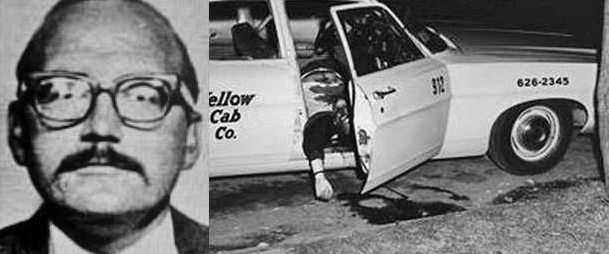
Paul Lee Stine Shot & Killed While Driving Taxi in San Francisco California
Paul Lee Stine was a 29 year old cab driver in San Francisco, California, whose murder on October 11, 1969, became one of the most infamous crimes connected to the Zodiac Killer. Before his death became part of one of America’s most well known unsolved serial murder cases, Paul was a real person with a life, goals, work, and people who cared about him. He was more than the final confirmed victim in a terrifying crime spree. He was a young man trying to build his future.
Paul worked for Yellow Cab in San Francisco. Driving a taxi at night in a busy city required patience, alertness, and trust in strangers. Cab drivers meet people from every part of life. They pick up passengers from hotels, theaters, bars, restaurants, neighborhoods, and street corners. Most rides are routine, but the work can be dangerous because drivers often sit alone with strangers behind them, carry cash, and travel wherever a passenger directs them.
In Paul’s case, one ordinary fare became fatal. On the night of October 11, 1969, he picked up a passenger in San Francisco. That passenger would later be connected to the Zodiac Killer, an unidentified murderer who had already caused fear across Northern California through shootings, letters, ciphers, and public threats.
Paul did not know he was driving toward the final moments of his life.
The Night of October 11, 1969
On October 11, 1969, Paul Lee Stine was working as a cab driver in San Francisco. He picked up a passenger near Geary and Mason streets, an area connected to the city’s theater district and nightlife. The ride appeared ordinary at first. A man entered the taxi and gave a destination in the Presidio Heights area, one of San Francisco’s residential neighborhoods.
The passenger reportedly directed Paul toward Washington and Maple streets, but the taxi ultimately stopped near Washington and Cherry streets. That location would become one of the most important crime scenes in the Zodiac case. Shortly before 10:00 p.m., Paul was shot at close range while seated inside his cab.
The attack was sudden and brutal. The killer shot Paul in the head, killing him inside the vehicle. After the shooting, the killer did not immediately flee. He searched Paul, took personal items, and removed a piece of Paul’s bloodstained shirt. That piece of fabric would later become chilling evidence when it was mailed with letters claiming responsibility for the murder.
The killer then left the cab and fled on foot into the neighborhood.
The Crime Scene at Washington And Cherry
The murder took place in Presidio Heights, near Washington and Cherry streets in San Francisco. The area was not a remote location. It was a residential neighborhood with homes, streets, and people nearby. That made the crime especially bold. Unlike earlier Zodiac attacks that occurred in more isolated lover’s lane type locations, this killing happened on a city street in an upscale neighborhood.
Paul’s cab was found with the engine still running. He was inside, fatally wounded. The killer had taken time at the scene, which increased the risk of being seen. In fact, witnesses did see him. Several teenagers across the street reportedly observed a man inside the cab after the shooting. They saw behavior that appeared suspicious, including the man wiping down parts of the vehicle and going through Paul’s pockets.
Those witnesses contacted police and provided a description. Their role became one of the most important parts of the case because the Paul Stine murder offered one of the clearest reported views of the Zodiac Killer. Unlike some earlier attacks where the victims were dead or injured and the offender disappeared into darkness, this crime had witnesses who saw the killer after the shooting.
Still, despite that critical moment, the killer escaped.
A Mistaken Description And a Missed Chance
One of the most discussed parts of the Paul Stine murder involves the police response after the shooting. After the witnesses called authorities, a suspect description was broadcast. However, the description was reportedly incorrect at first, identifying the suspect as a Black male rather than a white male. This mistake has been discussed for decades because responding officers may have seen a white man walking nearby after the murder and did not stop him.
If that man was the killer, it would have been one of the closest missed opportunities in the entire Zodiac investigation. The Zodiac case is filled with uncertainty, but the idea that police may have been near the killer moments after Paul’s murder has remained one of its most frustrating details.
The mistaken description does not change the fact that police were responding to a dangerous and fast moving situation. But it does show how one error can affect an investigation. In the minutes after a violent crime, information moves quickly, and every detail matters. A wrong description can shift attention away from the person officers should be looking for.
The killer took advantage of those minutes and disappeared into the night.
The Zodiac Connection
Paul Lee Stine’s murder is widely recognized as the final confirmed homicide attributed to the Zodiac Killer. Before Paul’s killing, the Zodiac had already been linked to attacks in Northern California, including murders and attempted murders in areas such as Benicia, Vallejo, and Napa County. The killer had also begun communicating with newspapers through letters, taunting police and the public while claiming responsibility for his crimes.
Paul’s murder was different from the earlier attacks in several ways. The earlier Zodiac crimes often involved young couples in parked cars or isolated areas. Paul was a lone cab driver. He was not attacked at a lover’s lane. He was killed during a taxi ride in the middle of San Francisco. The shift in victim type and setting made the crime stand out.
The killer’s connection to the murder was strengthened by what happened after Paul was killed. The Zodiac mailed letters that included pieces of Paul’s bloodstained shirt. That was powerful proof that the letter writer had direct access to evidence from the crime scene. It showed that the person claiming responsibility was not simply someone trying to take credit after reading the news.
The shirt pieces became some of the most important physical evidence connecting the Zodiac to Paul Stine’s murder.
The Letters After the Murder
After Paul Stine was killed, the Zodiac continued his pattern of communicating through the media. He sent letters to newspapers, using the now infamous phrase associated with his writings. The inclusion of Paul’s shirt pieces turned the letters into more than threats or taunts. They became physical proof of contact with the murder.
The Zodiac’s letters were designed to create fear and attention. He wanted the public to know he was still active. He wanted police to know he was watching the investigation. He wanted newspapers to print his words. In some ways, the Zodiac case became as much a psychological campaign as a series of violent crimes. The killer used communication to extend the terror beyond the crime scenes.
Paul’s murder gave the Zodiac a new platform because it happened in San Francisco, one of the major media centers of the region. The crime brought the killer’s violence directly into the city and increased public fear. If a cab driver could be killed in a residential neighborhood, people had reason to wonder where the Zodiac might strike next.
The letters following Paul’s murder helped cement the killing as part of the Zodiac case and kept the fear alive long after the cab had been removed from Washington and Cherry.
Who Paul Stine Was
Although Paul Stine is often remembered through the lens of the Zodiac case, it is important to remember him as a person. He was 29 years old, working as a cab driver, and also reportedly connected to academic goals. He was not simply a name on a victim list. He was a young man with plans and responsibilities.
True crime history often gives more attention to killers than victims. The Zodiac Killer became infamous because of the mystery, the letters, the codes, and the fact that he was never caught. But Paul Stine’s life mattered more than the killer’s notoriety. Paul was the one who lost everything. His family and loved ones were the ones left with grief.
Driving a cab was part of his daily reality. He likely expected October 11, 1969, to be another night of fares, directions, traffic, and routine conversations with passengers. Instead, he encountered a killer who saw him as a target. The violence that ended his life was senseless, calculated, and deeply cruel.
Remembering Paul means pulling him out from behind the shadow of the Zodiac and recognizing the human being at the center of the crime.
The Fear That Followed
The murder of Paul Lee Stine intensified fear in San Francisco and the wider Bay Area. The Zodiac had already built a terrifying public image through earlier attacks and written threats. Paul’s murder proved that the killer could change patterns, move into a major city, and strike someone who had no obvious connection to previous victims.
Cab drivers were especially shaken. Their work already involved risk, and Paul’s murder showed how vulnerable drivers could be when alone with passengers at night. A taxi driver cannot fully control who gets into the back seat. Once the ride begins, the driver may be focused on traffic and directions while the passenger has the advantage of position.
The public also worried because the Zodiac appeared to enjoy attention. His letters made him seem unpredictable and theatrical. People did not know whether he would kill again, target children, attack buses, or continue sending threats to newspapers. The fear was not only about what he had done, but about what he claimed he might do next.
Paul’s death became part of that atmosphere of anxiety.
The Investigation And the Unsolved Mystery
Despite witness descriptions, physical evidence, letters, and enormous public attention, the Zodiac Killer was never officially identified or convicted. Paul Stine’s murder remains unsolved because the killer’s identity remains unresolved. Over the decades, many suspects have been proposed by writers, investigators, amateur researchers, and true crime followers, but no public conviction has ever answered the case.
The investigation into Paul’s murder included the cab, the crime scene, witness statements, fingerprints, handwriting, letters, and the shirt evidence. Yet the killer escaped accountability. The case became one of the most famous unsolved murder investigations in American history.
The unsolved nature of the case has created endless debate. People continue to examine maps, timelines, witness descriptions, police reports, letters, codes, and suspect histories. Some focus on the possibility that the Zodiac made mistakes. Others argue that the case was damaged by early errors, limited technology, and the difficulty of linking crimes across jurisdictions in that era.
For Paul’s loved ones, though, the most important fact remains simple: he was murdered, and the person responsible was never brought to justice.
Why Paul Stine’s Murder Stands Apart
Paul Stine’s murder stands apart because it was the only confirmed Zodiac killing in San Francisco. It also stands apart because of the witnesses, the shirt evidence, and the possibility that police may have come close to encountering the killer shortly after the crime.
The murder also changed the public understanding of the Zodiac. Earlier attacks suggested a killer targeting couples in isolated places. Paul’s murder showed that the killer could choose a completely different type of victim. That unpredictability made him more frightening. If there was no clear pattern, anyone could wonder whether they might be at risk.
Paul’s murder also gave investigators some of the strongest evidence of the Zodiac’s involvement because of the shirt pieces. Without that evidence, some might have questioned whether the murder truly belonged to the same offender. But the killer’s possession of Paul’s shirt helped link the crime to the letters and the larger Zodiac case.
That connection made Paul Stine’s death one of the central chapters in the story of the Zodiac Killer.
The Human Cost Behind the Infamy
The Zodiac case is often discussed through mystery, puzzles, and suspect theories. People focus on ciphers, letters, handwriting, police mistakes, and possible identities. Those elements are part of the case, but they can sometimes overshadow the victims. Paul Lee Stine should not be remembered only as the cab driver killed by the Zodiac. He should be remembered as a young man whose life was stolen.
His murder had consequences beyond the headlines. His family lost him. His friends lost him. His future disappeared. He never got to continue his studies, grow older, build the rest of his life, or move beyond the job he was working that night. The Zodiac Killer’s fame came at the cost of real human lives, and Paul was one of them.
Every discussion of the case should keep that truth in view. The killer sought attention, but the victims deserve remembrance. Paul did not choose to become part of a national mystery. He was working when he was attacked. His name remains tied to the case because he was murdered, not because he wanted attention.
Remembering Paul Lee Stine
Paul Lee Stine was murdered on October 11, 1969, in San Francisco, California. He was 29 years old and working as a Yellow Cab driver when he picked up a passenger near Geary and Mason streets. The ride ended in Presidio Heights near Washington and Cherry streets, where the passenger shot and killed him. The killer took part of Paul’s bloodstained shirt and later mailed pieces of it with letters claiming responsibility.
His murder is considered the final confirmed homicide linked to the Zodiac Killer. More than five decades later, the case remains unsolved. The person responsible has never been publicly identified, charged, or convicted as the Zodiac.
Paul’s death remains one of the most haunting moments in San Francisco crime history. It was a bold killing on a city street, witnessed in part by young people nearby, followed by letters that deepened the terror surrounding the Zodiac case. But beyond the historical importance, it was the murder of a real man.
Paul Lee Stine deserves to be remembered not only as a victim in a famous case, but as a person with a life that mattered. His murder remains a reminder that behind every unsolved case is a family, a future taken away, and a truth still waiting to be fully revealed.
Discover more from City Towner
Subscribe to get the latest posts sent to your email.