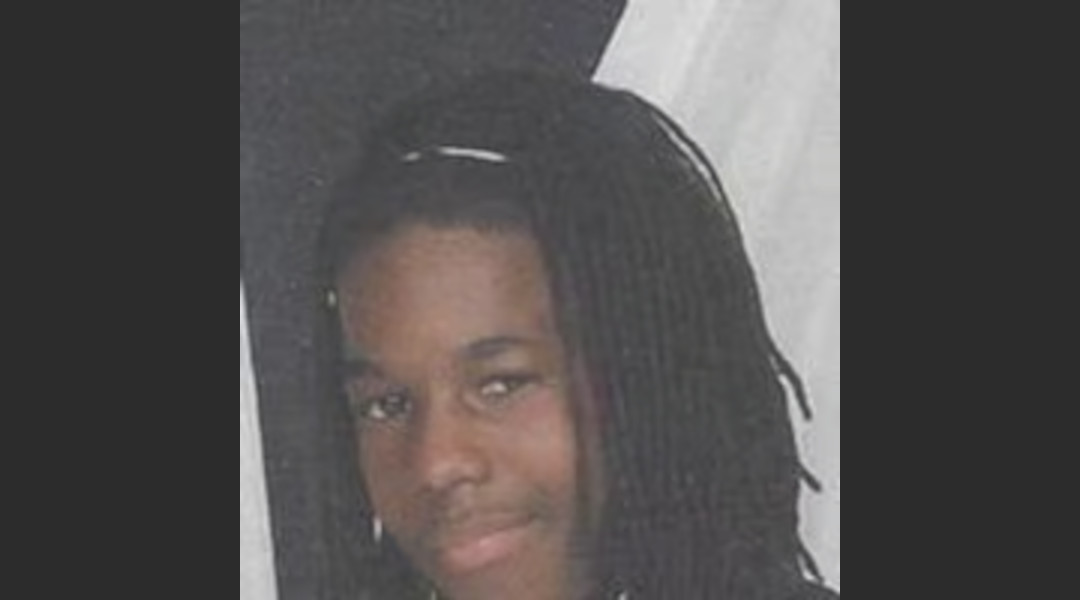
Cedric Maurice Brown Shot & Killed in New Orleans Louisiana
Cedric Maurice Brown, known to relatives and friends by the nickname “Paw,” was only 22 years old when he was shot and killed in New Orleans, Louisiana, on September 7, 2012. His death occurred during a late evening shooting in the Lower Algiers section of the city, where police officers found him near a bicycle after residents reported hearing gunfire.
Cedric’s murder became another unresolved homicide in a city that was experiencing persistent gun violence. Although investigators responded to the scene and began looking for witnesses, the publicly available details about the crime remained limited. No confirmed motive was announced, no suspect was publicly identified and no arrest was reported.
More than a decade later, the central questions surrounding Cedric’s death remain unanswered. Investigators have not publicly explained why he was targeted, whether he knew the person who shot him or what happened immediately before the gunfire. His family was left to mourn a young father whose life ended without accountability or a clear explanation.
Cedric’s Life Before the Shooting
Cedric Maurice Brown was born on May 25, 1990, and was a lifelong resident of New Orleans. He grew up in a city known for its strong neighborhoods, close family relationships and deeply rooted cultural traditions.
Cedric attended O. Perry Walker High School, an important educational institution in the Algiers community. He was known as “Paw” among those closest to him, a nickname that reflected the personal identity he carried among relatives, friends and members of his neighborhood.
At the time of his death, Cedric was the father of a young son. His role as a parent meant that his murder affected not only his parents, siblings and extended relatives, but also a child who would grow up without him.
Cedric’s family included his parents, Thaddeus Bailey and Jacqueline Brown, as well as several brothers and sisters. His obituary reflected the large network of relatives who survived him and gathered to remember his life after the shooting.
Public accounts do not provide extensive information about Cedric’s employment, daily routine or long term goals. However, the limited information available makes clear that he was much more than a name in a homicide report. He was a son, brother, father and friend whose death created lasting grief.
The Evening of September 7, 2012
The shooting occurred during the night of September 7, 2012. At approximately 9:23 p.m., the New Orleans Police Department received reports of gunfire in the 6700 block of Maumus Avenue.
The location was near the intersection of Maumus Avenue and Mansfield Avenue in Lower Algiers. The area was primarily residential, with homes, neighborhood streets and places where residents regularly walked, drove and gathered.
Police officers arrived after the shots were reported and discovered Cedric near a bicycle. He had suffered gunshot wounds and was pronounced dead.
The public record does not clarify whether Cedric had been riding the bicycle, standing beside it or simply happened to be near it when the shooting occurred. It is also unclear whether the bicycle belonged to him.
That seemingly small detail may have mattered to investigators. A bicycle could have helped establish how Cedric arrived at the location, whether he was traveling through the neighborhood or whether he had been meeting someone nearby. However, law enforcement did not publicly release a detailed explanation of its importance.
The Crime Scene in Lower Algiers
The shooting took place in Lower Algiers, a community located on the West Bank of the Mississippi River. Although it is part of New Orleans, the area has its own neighborhoods, residential streets and local identity.
The 6700 block of Maumus Avenue was not described as a crowded entertainment district or busy commercial area. It was a neighborhood location where residents may have been inside their homes when the shots were fired.
Gunfire in a residential area can be heard by multiple people, but hearing shots does not always mean a person sees the shooter. Witnesses may look outside only after the attacker has fled. Darkness, distance and fear can make it difficult to identify a person or vehicle.
The time of the shooting also created investigative challenges. At approximately 9:23 p.m., visibility would have been limited. A shooter could have escaped on foot or in a vehicle before police arrived.
Investigators likely examined the immediate area for spent shell casings, weapons, fingerprints, blood evidence and other physical clues. They may also have spoken with residents and attempted to determine whether anyone saw Cedric before the shooting.
The full results of those efforts were not made public. There is no verified public description of the weapon used, the number of shots fired or the direction from which the shooter approached.
The Unknown Events Before the Gunfire
One of the largest gaps in the case concerns what Cedric was doing immediately before he was killed. Public reports do not identify anyone who was with him or explain why he was at Maumus and Mansfield avenues that evening.
It is unknown whether Cedric was traveling home, visiting someone, meeting a friend or passing through the neighborhood. There is also no confirmed account of an argument, robbery or confrontation before the shooting.
Without a known motive, investigators would have needed to consider several possibilities. Cedric may have been deliberately targeted by someone who knew him. He may have become involved in an unexpected dispute. He could also have been attacked during an attempted robbery or mistaken for someone else.
Those possibilities remain theories rather than established facts. No reliable public evidence confirms why the shooting occurred.
The lack of information about Cedric’s final movements may indicate that witnesses were unavailable, unwilling to speak or unable to provide useful details. It may also mean investigators withheld information to protect the case.
The Search for Witnesses
In many shooting investigations, witness cooperation is essential. Physical evidence may establish how a victim was killed, but it does not always reveal who fired the weapon or why.
Someone may have seen Cedric near the bicycle shortly before the shooting. A resident may have noticed a person standing nearby, an unfamiliar vehicle or someone running from the area after the gunfire.
Even witnesses who did not see the shooting itself could have provided valuable details. A description of clothing, a vehicle’s direction of travel or an argument heard before the shots could help investigators reconstruct the timeline.
Fear can prevent witnesses from cooperating. Residents may worry about retaliation, distrust law enforcement or believe that speaking will place their families in danger.
Other witnesses may assume their information is not important. They may have seen only part of the event or heard a rumor without understanding how it fits into the investigation.
In an unsolved homicide, small details can become important when combined with other evidence. A witness who remembers a vehicle, nickname or statement may hold information that supports an investigative theory.
The Absence of a Publicly Known Motive
No publicly confirmed motive has been identified in Cedric’s murder. This absence makes the case especially difficult to understand because motive often helps investigators narrow the possible suspect pool.
If Cedric was targeted over a personal disagreement, investigators would look closely at recent conflicts and relationships. If robbery was suspected, they would examine whether money or personal property was taken.
If the shooting involved retaliation, detectives might investigate previous incidents, neighborhood disputes or connections to other crimes. If Cedric was an unintended victim, the investigation would focus on who else may have been present or targeted.
None of those explanations has been publicly established. The available information states only that Cedric was found suffering from fatal gunshot wounds after police responded to reports of gunfire.
The silence surrounding the motive does not necessarily mean investigators developed no theories. Police departments often keep critical details confidential, particularly when revealing them could interfere with interviews or a possible prosecution.
No Publicly Identified Suspect
No suspect has been publicly identified in connection with Cedric’s murder. There is also no publicly reported arrest or criminal prosecution connected to the shooting.
The absence of an arrest may mean investigators lacked sufficient evidence to identify the shooter. It could also mean they suspected someone but could not meet the legal standard necessary to obtain charges.
A person may be considered during an investigation without ever being officially named. Detectives can examine relationships, review statements and compare alibis while keeping that work confidential.
Prosecutors require evidence that can prove guilt beyond a reasonable doubt. Suspicion alone is not enough. Even when investigators believe they know who committed a murder, a case may remain open if witnesses refuse to testify or physical evidence does not establish identity.
Without public court records or a law enforcement announcement, no particular person should be accused of killing Cedric. The responsibility for his death remains unresolved.
Gun Violence in New Orleans
Cedric’s murder occurred during a period when New Orleans communities were struggling with significant levels of gun violence. Young men were frequently among the victims, leaving families and neighborhoods to cope with repeated loss.
Each homicide created consequences beyond the immediate crime scene. Children lost parents, parents buried children and communities experienced fear and mistrust.
High numbers of shootings also placed heavy demands on homicide investigators. Detectives were required to handle multiple cases, process complex scenes and persuade reluctant witnesses to cooperate.
Cedric’s death should not be reduced to a statistic from a violent year. Statistics can show the scale of a problem, but they do not describe the individual life taken or the family affected.
He was 22 years old and had a child. His death ended his opportunities to raise his son, strengthen his relationships and pursue the future he may have imagined.
The Funeral and Family’s Grief
Cedric’s funeral was held on September 18, 2012, at Davis Mortuary Service in Marrero, Louisiana. He was later buried at Restlawn Park Cemetery in Avondale.
The service took place only 11 days after the shooting. His family had little time to process the sudden loss before preparing to say goodbye.
Funerals following violent deaths often carry multiple layers of grief. Relatives mourn the person while also struggling with anger, fear and uncertainty about why the killing occurred.
Cedric’s young son faced a permanent absence. As the child grew older, family members would have to explain who Cedric was and why he was no longer present.
The lack of an arrest can make that grief even more difficult. Families may feel that the person responsible continued living freely while their loved one was buried.
An unsolved homicide can prevent a sense of finality. Although the family knows the victim has died, they still wait for answers about the circumstances and the person responsible.
The Challenges of Solving the Case
A nighttime shooting can occur within seconds. The attacker may approach, fire and leave before nearby residents understand what happened.
If the shooter wore dark clothing or concealed identifying features, witness descriptions may have been limited. If a vehicle was involved, observers may have seen only its general shape or color.
Forensic evidence can be valuable, but it does not always identify a shooter. Spent shell casings may connect a weapon to another crime, but only if investigators later recover the firearm or enter matching evidence into a database.
Fingerprints and DNA may be difficult to obtain from an outdoor crime scene. Rain, traffic, emergency activity and contamination can damage or disturb evidence.
Investigators also must determine whether statements from witnesses are truthful and accurate. Stress can affect memory, and different witnesses may provide conflicting descriptions.
As time passes, witnesses move away, memories fade and physical evidence may become harder to interpret. Those challenges can cause a homicide investigation to become a cold case.
The Possibility of New Information
Although Cedric was killed in 2012, the passage of time does not eliminate the possibility that his case could be solved. Relationships change, and people who were once afraid or loyal to a suspect may become willing to speak.
Someone may have heard a confession or received information about the shooting after it occurred. A person who remained silent as a teenager or young adult may view the case differently years later.
Advances in technology can also help investigators. Ballistic evidence may be compared with information from later shootings. Digital records, archived photographs and improved forensic methods may provide new investigative opportunities.
Cold case reviews can identify overlooked details or inconsistencies in previous statements. A new detective may approach the evidence from a different perspective and develop questions that were not previously considered.
The most important breakthrough could still come from a witness. A truthful account of what happened before or after the shooting could identify a suspect, establish a motive or lead authorities to additional evidence.
Remembering Cedric Beyond the Crime
Cedric Maurice Brown should be remembered as more than the victim of a shooting on Maumus Avenue. He was a young man with family connections, a personal history and a child who survived him.
The nickname “Paw” was part of how relatives and friends knew him. It represented the familiar person behind the formal name used in police reports and public records.
When a murder remains unsolved, the details of the crime can overshadow the victim’s identity. Discussions focus on gunfire, evidence and suspects while the individual’s life receives less attention.
Cedric’s family knew his personality, memories, habits and dreams. They experienced the empty space created by his death in ways that a brief crime report could never capture.
His son lost the opportunity to develop a relationship with him. His parents lost a child, and his siblings lost a brother. Those losses continued long after the police left the scene.
A Case Still Waiting for Answers
The murder of Cedric Maurice Brown remains defined by the limited facts publicly available. He was shot and killed on September 7, 2012, near the intersection of Maumus Avenue and Mansfield Avenue in Lower Algiers.
Police found him near a bicycle after receiving reports of gunfire at approximately 9:23 p.m. He suffered fatal gunshot wounds and was pronounced dead.
What happened before those shots remains unclear. No confirmed argument, robbery or confrontation has been publicly described. No motive has been announced, and no suspect has been publicly identified.
Cedric’s family buried him on September 18, 2012, but the person responsible for ending his life has not been publicly held accountable.
The case may depend on someone who knows more than has been reported. A witness, former friend, relative or associate of the shooter may possess information capable of changing the investigation.
Until that information emerges, Cedric’s murder remains an unresolved act of violence. His family continues to live with the loss, and his son continues to live without the father who was taken from him at only 22 years old.
Cedric deserves more than a place in an unsolved homicide database. His family deserves the truth, and the person who killed him should be held responsible.
Discover more from City Towner
Subscribe to get the latest posts sent to your email.