25 Fun Facts About Tallahassee Florida
Tallahassee, Florida, is one of the most historically rich and culturally distinct cities in the state. While many people think of Florida through beaches, theme parks, cruise ports, and tropical skylines, Tallahassee offers a different side of Florida. It is a capital city, a college town, a historic Southern community, and a place surrounded by rolling hills, canopy roads, live oaks, lakes, and red clay soil.
Located in North Florida, Tallahassee has a personality shaped by government, education, Indigenous history, Spanish missions, plantation landscapes, civil rights activism, student life, and natural beauty. It does not feel like Miami, Orlando, Tampa, or Jacksonville. Tallahassee belongs to the Florida Panhandle and the Red Hills region, giving it a landscape and culture that stand apart from much of the peninsula.
The city is full of interesting stories. It has served as Florida’s capital since the territorial period, played a major role in the state’s political development, helped shape higher education through Florida A&M University and Florida State University, and preserved historic sites that tell the story of Native peoples, colonial settlement, slavery, Reconstruction, civil rights, and modern public life. Its fun facts reveal a city that is older, deeper, greener, and more complex than many visitors expect.
A Capital Chosen for Its Location
One of the most important facts about Tallahassee is that it became Florida’s capital because of geography. When Florida became a United States territory in 1821, its two major population centers were St. Augustine in the east and Pensacola in the west. Travel between the two cities was difficult and time consuming, so leaders needed a capital located between them.
Tallahassee was selected as the territorial capital in 1824. Its location made it a practical compromise between Pensacola and St. Augustine. That decision changed the city’s destiny. Instead of remaining a small settlement in North Florida, Tallahassee became the political center of the territory and later the state.
The capital role still defines the city today. Government buildings, state agencies, courts, lobbying offices, political organizations, and public policy institutions all shape Tallahassee’s economy and identity. The city’s rhythm changes when the Legislature is in session, making politics part of everyday life.
A Name With Indigenous Roots
The name Tallahassee is often understood to mean old fields or old town. This meaning is connected to the area’s Indigenous history and the cleared agricultural lands that existed before American settlement. The name reflects the fact that Tallahassee was not built on empty land. It grew in a place where Native communities had already lived, farmed, and built societies for many generations.
The Apalachee people were among the most important Indigenous communities in the region. They cultivated crops, lived in organized settlements, and played a major role in the history of North Florida before and during the Spanish mission period. Their presence is essential to understanding the deeper story of Tallahassee.
The city’s name is a reminder that Tallahassee’s history reaches far beyond its role as a capital. Its foundations are older than the United States, older than statehood, and older than the government buildings that now define its skyline.
A City of Rolling Hills
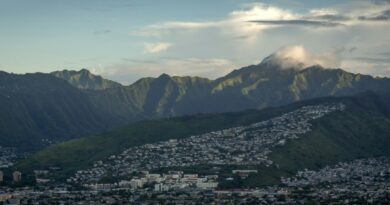
Many people are surprised to learn that Tallahassee is one of the hilliest cities in Florida. Much of the state is known for flat coastal land, but Tallahassee sits in the Red Hills region, an area with rolling terrain, red clay soil, forests, lakes, and canopy roads. This gives the city a landscape that feels different from the Florida most tourists imagine.
The hills help create scenic neighborhoods, winding roads, and dramatic tree lined streets. They also connect Tallahassee to a broader North Florida and South Georgia landscape known for natural beauty, historic plantations, hunting lands, conservation areas, and outdoor recreation.
This terrain gives Tallahassee a distinct visual character. It feels more like the Deep South than the tropical postcard version of Florida. The live oaks, Spanish moss, red clay, and wooded hills are part of the city’s identity.
Home to Two Major Universities
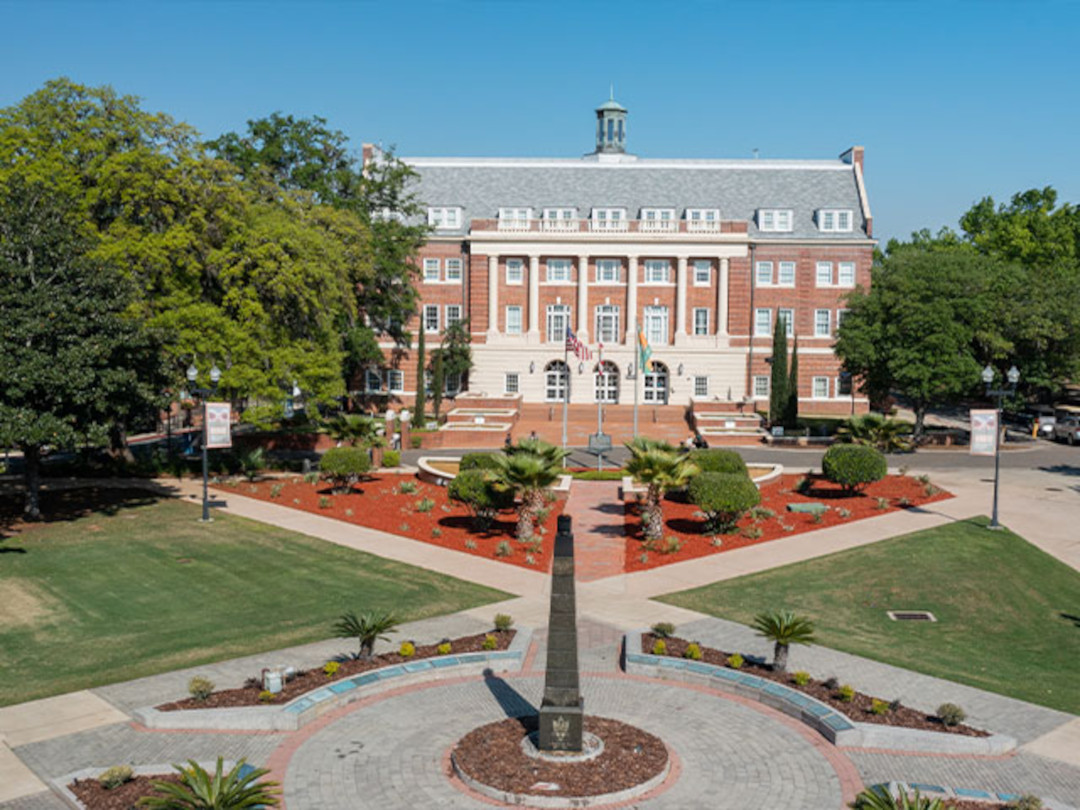
Tallahassee is one of Florida’s great college cities. It is home to Florida State University and Florida A&M University, two institutions that have shaped the city’s culture, economy, politics, and national reputation. The presence of these universities gives Tallahassee energy, diversity, sports culture, academic influence, and a steady flow of students, faculty, researchers, and alumni.
Florida State University is one of the largest and most influential public universities in the state. Its athletics, research, arts programs, student life, and alumni network have a major impact on the city. On game days, especially during football season, Tallahassee takes on a completely different atmosphere as fans fill the city.
Florida A&M University is one of the nation’s most important historically Black universities. Founded in 1887, FAMU has produced generations of leaders, professionals, educators, activists, artists, and public servants. Its cultural influence, academic legacy, marching band tradition, and role in civil rights history make it one of Tallahassee’s most treasured institutions.
The Florida Capitol Blends Old and New
Tallahassee has both a historic Capitol and a modern Capitol, creating one of the most interesting government complexes in the South. The historic Capitol reflects Florida’s older political era, while the modern Capitol tower represents the state’s twentieth century growth and expanding government.
The old Capitol has been restored and preserved as a museum, allowing visitors to experience Florida’s political past. Its dome, classical design, and historic chambers contrast sharply with the taller modern Capitol building nearby. Together, they tell the story of Florida’s transition from a smaller Southern state into one of the most populous and influential states in the country.
This blend of old and new is symbolic of Tallahassee itself. The city is deeply historic, but it also remains active as the center of modern state government.
A Major Site in Civil Rights History
Tallahassee played an important role in Florida’s civil rights movement. During the era of segregation, Black residents faced discrimination in schools, transportation, housing, employment, public accommodations, and voting rights. Students, clergy, community leaders, and everyday citizens organized to challenge injustice.
One of the most important civil rights events in the city was the Tallahassee bus boycott, which began in 1956. The boycott challenged segregated public transportation and showed the power of organized protest. Students from Florida A&M University and local Black leaders played a major role in the movement.
Tallahassee’s civil rights history is a reminder that the city’s story is not only about government and universities. It is also about courage, activism, and the fight for equal rights. That legacy continues to shape the city’s identity.
The Red Hills Give the City Natural Beauty
The Red Hills region surrounding Tallahassee is one of the most scenic areas in Florida. Known for its red clay soil, rolling land, forests, lakes, and wildlife, the region gives Tallahassee a rich outdoor setting. The city is close to parks, gardens, trails, lakes, rivers, and conservation lands.
This natural beauty makes Tallahassee a strong destination for people who enjoy outdoor recreation. Residents and visitors can walk canopy roads, visit gardens, explore state parks, paddle waterways, fish, birdwatch, or enjoy peaceful wooded areas. The landscape feels calm, green, and deeply rooted.
The Red Hills also help preserve a sense of old North Florida. While many Florida cities have been heavily shaped by coastal development, Tallahassee retains a strong connection to forests, farms, estates, and historic rural landscapes.
Canopy Roads Are Part of the City’s Identity
Tallahassee is known for its canopy roads, where large trees arch over the roadway and create shaded tunnels of green. These roads are among the most beautiful features of the city. Live oaks, pines, magnolias, and other trees create a sense of age, calm, and Southern atmosphere.
Canopy roads are not only scenic. They are part of Tallahassee’s sense of place. They remind residents and visitors that the city values natural beauty and historic character. Driving through these roads can feel like stepping into an older version of Florida.
The canopy road system also makes Tallahassee different from many fast growing cities. It gives the city a visual identity that is hard to copy and easy to remember.
A City With Deep Plantation History
Tallahassee and the surrounding Red Hills region were once part of the plantation South. During the antebellum period, cotton plantations shaped the economy and society of the area. Wealthy planters held political and social power, while enslaved African Americans were forced to work the land and build much of the region’s wealth.
This history is complex and painful, but it is essential to understanding Tallahassee. Plantation agriculture influenced land ownership, politics, architecture, race relations, and the development of local institutions. The legacy of slavery and segregation continued to affect the city long after the Civil War ended.
Historic sites in and around Tallahassee help tell this story. They provide opportunities to understand both the lives of plantation owners and, more importantly, the lives and labor of enslaved people whose stories were often ignored in older histories.
Mission San Luis Preserves Spanish Colonial History
Mission San Luis is one of Tallahassee’s most important historic sites. It preserves the story of a Spanish mission community where Apalachee residents and Spanish settlers lived during the colonial period. The site helps visitors understand a chapter of Florida history that came long before statehood.
The mission included religious, military, political, and residential spaces. It was part of Spain’s effort to extend control over North Florida and convert Indigenous peoples to Christianity. At the same time, it was a place of cultural exchange, conflict, adaptation, and disruption.
Today, Mission San Luis offers a powerful look at the early colonial history of the region. It reminds people that Tallahassee’s past includes Indigenous communities, European empire, and complex cultural encounters.
Tallahassee Was Not Captured During the Civil War
One of Tallahassee’s most notable Civil War facts is that it was the only Confederate state capital east of the Mississippi River that was not captured by Union forces during the war. This was largely due to the Confederate victory at the Battle of Natural Bridge on March 06, 1865.
The battle took place southeast of Tallahassee, as Union forces attempted to move toward the city. Confederate defenders, including soldiers, militia, and local volunteers, stopped the advance. As a result, Tallahassee avoided occupation before the war ended.
This fact is often remembered in local history, though it also belongs to the larger and painful story of the Civil War, slavery, and the Confederacy. It remains one of the city’s most frequently mentioned historical distinctions.
A Strong Museum and Historic Site Scene
Tallahassee has a strong collection of museums and historic sites. Visitors can explore Florida political history, Indigenous and Spanish colonial history, African American history, plantation history, natural history, art, science, and local culture. This makes the city a rewarding destination for people who enjoy learning about the past.
The city’s museums reflect its layered identity. Some focus on the state government and political development. Others explore early settlement, civil rights, university history, and the natural world. Together, they show that Tallahassee is one of Florida’s most historically important cities.
Because Tallahassee is both a capital and a college town, education is built into the city’s personality. Museums and historic sites help extend that culture of learning beyond classrooms and government buildings.
Twenty Five Fun Facts About Tallahassee, Florida
- Tallahassee became Florida’s territorial capital in 1824.
- The city was chosen as capital because it was located between Pensacola and St. Augustine, the two major population centers of territorial Florida.
- The name Tallahassee is often understood to mean old fields or old town.
- Tallahassee is located in the Red Hills region, giving it rolling terrain that feels different from much of flat Florida.
- The city is known for beautiful canopy roads lined with live oaks and other trees.
- Tallahassee is home to Florida State University.
- Tallahassee is also home to Florida A&M University, one of the nation’s most important historically Black universities.
- Florida A&M University was founded in 1887.
- Tallahassee has both a historic Capitol and a modern Capitol building.
- The historic Capitol now serves as a museum of Florida political history.
- Tallahassee was the only Confederate state capital east of the Mississippi River not captured by Union forces during the Civil War.
- The Battle of Natural Bridge helped prevent Union troops from taking Tallahassee on March 06, 1865.
- Mission San Luis preserves the history of a Spanish mission community connected to the Apalachee people.
- The Apalachee people were one of the most important Indigenous groups in the Tallahassee region.
- Tallahassee’s landscape includes red clay soil, wooded hills, lakes, and historic plantation lands.
- The city played an important role in Florida’s civil rights movement.
- The Tallahassee bus boycott began in 1956 and challenged segregated public transportation.
- Students from Florida A&M University were important participants in civil rights activism.
- Tallahassee is one of the few Florida cities where state government, two major universities, and deep Southern history all meet.
- The city’s population and atmosphere change noticeably when the Florida Legislature is in session.
- Tallahassee has a strong college sports culture, especially connected to Florida State University football.
- The Marching 100 of Florida A&M University is one of the most famous college marching bands in the country.
- Tallahassee has many parks, trails, gardens, and outdoor recreation areas.
- The city is closer in culture and geography to parts of Georgia and Alabama than to South Florida.
- Tallahassee offers a different side of Florida, with capital city history, university life, Southern landscapes, and political importance.
A City of Government and Student Life
Tallahassee’s mix of government and student life makes it unusual. Many cities are known mainly for politics, while others are known mainly for college culture. Tallahassee has both. State workers, elected officials, lobbyists, lawyers, professors, students, artists, athletes, and longtime residents all share the same city.
During legislative sessions, the city becomes a center of political activity. During football weekends, it becomes a sea of school colors, tailgates, and sports energy. During graduation seasons, families fill hotels and restaurants. During the school year, student life adds music, events, nightlife, activism, and cultural variety.
This combination gives Tallahassee a rhythm that changes throughout the year. It is formal and political in one moment, youthful and energetic in another. That mix keeps the city active and layered.
The Natural Side of Tallahassee
Tallahassee is one of Florida’s best cities for people who enjoy trees, parks, lakes, trails, and gardens. The city’s natural setting is one of its biggest strengths. Instead of beaches and palm lined boulevards, Tallahassee offers wooded landscapes, shaded roads, rolling hills, springs, rivers, and nearby coastal areas within driving distance.
Local parks and green spaces provide places for walking, running, biking, picnicking, birdwatching, and relaxing. The city’s tree canopy gives many neighborhoods a peaceful feeling, especially compared with more heavily developed parts of Florida.
This natural side is important because it shapes quality of life. Tallahassee may be a capital city, but it does not feel entirely urban. Its landscape keeps it connected to the outdoors and gives residents a strong sense of place.
Why Tallahassee Stands Out
Tallahassee stands out because it does not fit the usual image of Florida. It is not mainly a beach town, resort destination, or theme park city. It is a place of state government, college traditions, civil rights history, Indigenous heritage, Spanish colonial history, and Southern landscapes.
The city’s strength is its depth. It has centuries of history, major universities, political importance, natural beauty, and cultural complexity. Its identity is not built around one attraction. It is built around layers of people, places, institutions, and events.
For visitors, Tallahassee offers a chance to experience a side of Florida that is often overlooked. For residents, it offers a blend of history, education, government, community, and green space. For the state as a whole, it remains the place where decisions are made and where Florida’s past and future often meet.
The Lasting Appeal of Tallahassee
The lasting appeal of Tallahassee comes from the way it balances history and daily life. Its old Capitol, universities, canopy roads, civil rights sites, historic neighborhoods, gardens, museums, and government buildings all tell part of the same story. It is a city that feels lived in, not manufactured.
Tallahassee’s fun facts reveal a place with more character than many people expect. It is hilly, historic, political, academic, green, and culturally important. It has been shaped by Native peoples, Spanish missions, plantations, slavery, statehood, war, Reconstruction, segregation, activism, higher education, and modern government.
Today, Tallahassee remains one of Florida’s most important cities. It is the capital, but it is also much more than that. It is a city of old fields and new ideas, shaded roads and public debates, university pride and community memory. Its story is one of the richest in Florida, and its personality continues to make it stand apart.
Discover more from City Towner
Subscribe to get the latest posts sent to your email.