
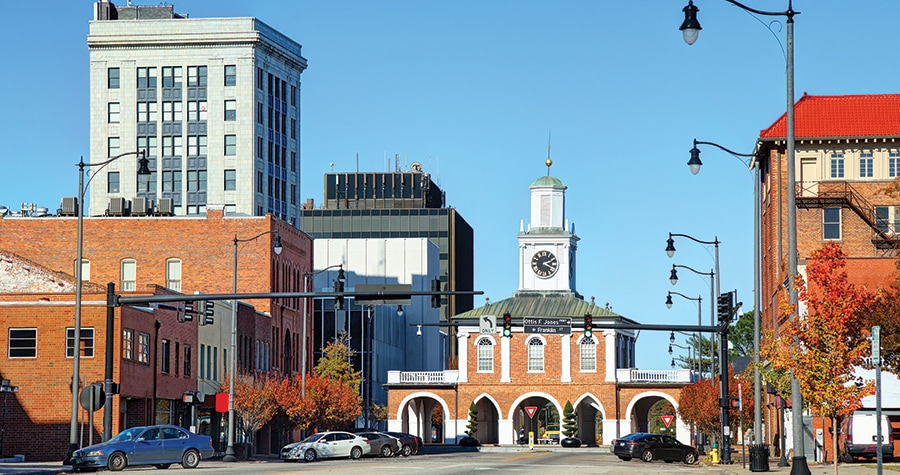
History of Fayetteville North Carolina
Fayetteville, North Carolina, is one of the most historic and important cities in the southeastern part of the state. Located along the Cape Fear River, Fayetteville has been shaped by Native communities, European settlement, river trade, the American Revolution, military development, agriculture, industry, transportation, civil rights, and the long presence of nearby Fort Bragg, now known as Fort Liberty. Its story reaches back centuries and reflects many of the major forces that shaped North Carolina and the wider South.
Fayetteville is often associated with the military because of its close relationship with Fort Liberty, one of the largest military installations in the world. But the city’s history is much older than its modern military identity. Long before soldiers, highways, shopping centers, and neighborhoods defined the area, the land was home to Indigenous people and later became an important inland trading community. Its location on the Cape Fear River helped make it a center of commerce, politics, and transportation.
The city has experienced moments of growth, hardship, destruction, rebuilding, and reinvention. Fayetteville has survived war, fire, economic change, racial injustice, natural disasters, and urban transformation. Through each era, it has remained a city with deep roots and a strong sense of place.
Native Land And Early Life Along the Cape Fear River
Before European settlers established towns and trading centers in the region, the area around present-day Fayetteville was connected to Indigenous communities who lived throughout the Cape Fear River basin and surrounding lands. Native peoples used the river and nearby forests for fishing, hunting, farming, transportation, trade, and community life.
The Cape Fear River was central to the region’s development long before colonial settlement. Rivers were natural highways, providing routes for travel and trade. The land around the river offered food, water, timber, and fertile soil. Native communities understood the landscape deeply and developed ways of living that were closely tied to the seasons and natural resources.
As European settlers moved into North Carolina, Indigenous communities faced displacement, disease, land pressure, violence, and political disruption. The colonial expansion that eventually produced Fayetteville was part of a much larger pattern of Native dispossession throughout the Southeast. This early history is important because the city’s later growth was built on land with a much older human story.
Colonial Settlement And the Rise of Cross Creek
The roots of Fayetteville can be traced to the colonial communities of Cross Creek and Campbellton. These settlements developed in the 18th century near the Cape Fear River and became important points of trade. Cross Creek, in particular, grew as merchants, farmers, and settlers used the river to move goods.
The Cape Fear River connected inland communities to the port of Wilmington and the Atlantic trade network. Goods such as naval stores, timber, agricultural products, and other materials moved through the region. This made Cross Creek an important inland market town.
Scottish Highlanders played a major role in the settlement of the area. Many Scottish immigrants came to North Carolina during the 18th century, especially after political conflicts in Britain. They brought language, customs, Presbyterian religious traditions, and community networks that shaped local life. Their presence became one of the defining features of the early Cape Fear region.
The area also included enslaved Africans and African Americans whose labor was central to agriculture, construction, domestic work, and trade. Like much of colonial North Carolina, the economy and social order were deeply tied to slavery. This reality shaped the development of the region and created inequalities that would continue long after slavery ended.
Fayetteville And the American Revolution
Fayetteville has a strong connection to the American Revolution. During the revolutionary era, the Cross Creek area was politically divided. Some residents supported independence from Britain, while others, especially some Scottish Highlanders, remained loyal to the Crown. These divisions reflected the complexity of colonial society, where loyalty, religion, culture, economics, and personal relationships all influenced political choices.
The region was connected to the Battle of Moore’s Creek Bridge, fought on February 27, 1776, in southeastern North Carolina. Patriot forces defeated Loyalists, including many Highland Scots, in a battle that helped secure revolutionary control in North Carolina. This victory weakened Loyalist strength in the state and helped support the independence movement.
After the war, the communities of Cross Creek and Campbellton continued to grow. The American Revolution changed the political future of the region and helped inspire the naming of the city. In 1783, the towns of Cross Creek and Campbellton were joined and renamed Fayetteville in honor of the Marquis de Lafayette, the French military officer who aided the American cause during the Revolution.
Fayetteville was one of the first American cities named for Lafayette, showing the depth of admiration many Americans felt for his role in the fight for independence.
The Naming of Fayetteville
The decision to name the city Fayetteville was both symbolic and patriotic. The Marquis de Lafayette was celebrated across the young United States as a hero of the American Revolution. Naming the city after him connected Fayetteville to the ideals of independence, alliance, and republican government.
The name also gave the city a broader national identity. Rather than keeping the older names of Cross Creek or Campbellton, the new name placed the community within the larger story of the American Revolution. It helped define Fayetteville as a city proud of its patriotic heritage.
In the early years of the United States, naming places after revolutionary figures was common. But Fayetteville’s connection to Lafayette became especially meaningful because of the city’s early adoption of the name and its continued embrace of revolutionary history.
This identity remains visible today in the city’s historic markers, museums, public memory, and civic pride.
A Center of Politics And State History
Fayetteville played an important role in early North Carolina politics. In 1789, the city hosted the state convention where North Carolina ratified the United States Constitution. This was a major moment in the state’s history because North Carolina had initially delayed ratification while debates continued over rights, federal power, and the structure of the new national government.
The same convention also led to North Carolina’s decision to charter the University of North Carolina, making Fayetteville connected not only to constitutional history but also to the development of public higher education in the state.
For a time, Fayetteville was considered as a possible state capital. Its location, river access, and political importance made it a logical candidate. Although Raleigh was ultimately chosen as the state capital, Fayetteville remained an important regional center.
These early political events show that Fayetteville was not simply a trading town. It was a city connected to state-building, constitutional debate, education, and the future of North Carolina.
Commerce, River Trade, And Agriculture
During the late 18th and early 19th centuries, Fayetteville grew as a commercial center. Its position on the Cape Fear River allowed it to serve as a gateway between inland farms and coastal markets. Goods moved downriver toward Wilmington, while supplies and manufactured items came inland.
The local economy depended on agriculture and trade. Farmers in the surrounding region produced crops and goods that were transported through Fayetteville. Naval stores, including tar, pitch, and turpentine, were important products in North Carolina’s early economy. Timber and other natural resources also helped support commerce.
Merchants, wagon drivers, river workers, craftsmen, enslaved laborers, and farmers all contributed to the local economy. The city’s streets, warehouses, markets, and riverfront activity reflected its role as a trade hub.
This commercial growth helped Fayetteville become one of the larger and more important towns in North Carolina during the early republic. However, the city’s economy was also tied to slavery, which shaped wealth, labor, and social power throughout the region.
Slavery And African American Life
The history of Fayetteville cannot be told honestly without discussing slavery and African American life. Enslaved people lived and worked in Fayetteville and the surrounding countryside, performing agricultural labor, domestic service, skilled trades, construction, and commercial work. Their labor helped build the city’s economy and infrastructure.
Enslaved African Americans also created families, religious traditions, cultural practices, and forms of resistance despite the brutality of slavery. Their lives were constrained by law and violence, but they remained central to the human story of the city.
Free Black people also lived in parts of North Carolina before the Civil War, though their rights were limited and often threatened. African American communities navigated a world marked by racial control, economic hardship, and discrimination.
After emancipation, Black residents in Fayetteville worked to build churches, schools, businesses, political organizations, and community institutions. These efforts were essential to the city’s postwar development and remain an important part of Fayetteville’s identity.
The Great Fire of 1831
One of the most destructive events in Fayetteville’s history was the Great Fire of 1831. The fire devastated much of the city, destroying homes, businesses, churches, public buildings, and commercial areas. It was a massive disaster that reshaped the physical appearance and economic life of Fayetteville.
Fires were a serious danger in 19th-century towns because many buildings were made of wood, streets were crowded, and firefighting technology was limited. Once a major fire began, it could spread quickly and cause catastrophic damage.
The Great Fire forced Fayetteville to rebuild. In the aftermath, residents and business leaders worked to restore the city, reconstruct buildings, and revive commerce. The rebuilding process changed parts of the city’s architecture and civic layout.
Although the fire was devastating, Fayetteville survived. The city’s recovery showed its resilience and determination to remain an important North Carolina community.
Fayetteville During the Civil War
The Civil War brought major disruption to Fayetteville. North Carolina seceded from the Union in 1861, and Fayetteville became part of the Confederate war effort. The city’s industry and transportation connections made it strategically important.
One of the most significant wartime sites was the Fayetteville Arsenal, which supported Confederate military production. The arsenal and related facilities made the city a target for Union forces as the war moved through the South.
In March 1865, near the end of the war, Union forces under General William T. Sherman entered Fayetteville during the Carolinas Campaign. Sherman’s troops destroyed the arsenal, damaging a major symbol of Confederate military capacity. The city experienced the fear, uncertainty, and destruction that came with military occupation and defeat.
The Civil War left deep scars. It disrupted the economy, ended slavery, reshaped social life, and forced the city and region into the difficult period of Reconstruction.
Reconstruction And Struggle After the War
After the Civil War, Fayetteville entered Reconstruction, a period of political, social, and economic change. Formerly enslaved people sought freedom, education, land, work, family reunification, political rights, and protection under the law. Black churches, schools, and community organizations became vital institutions.
Reconstruction also brought resistance from white residents who opposed Black freedom and political participation. Like much of the South, Fayetteville and the surrounding region experienced racial tension, economic hardship, and struggles over power.
African Americans made important gains during Reconstruction, including participation in politics and education. However, those gains were later attacked through segregation, voter suppression, racial violence, and Jim Crow laws.
The postwar period was difficult for the entire region. The economy had to adjust after slavery, and many residents faced poverty. Yet Black communities continued to build institutions and traditions that shaped Fayetteville’s future.
Railroads, Industry, And Modernization
In the late 19th and early 20th centuries, Fayetteville adapted to changes in transportation and industry. Railroads became increasingly important, reducing the city’s dependence on river trade. Rail connections helped move people, goods, and agricultural products more efficiently.
Industry also developed in and around Fayetteville. Textile mills, lumber businesses, tobacco-related enterprises, and other manufacturing activities contributed to the economy. Like many Southern towns, Fayetteville balanced agriculture with growing industrial development.
Modernization brought new roads, schools, utilities, businesses, and civic improvements. The city continued to serve as a regional center for Cumberland County and surrounding areas.
Despite these changes, Fayetteville still faced challenges, including poverty, racial segregation, limited opportunity for many Black residents, and economic dependence on agriculture and military-related activity.
The Rise of Fort Bragg And Military Influence
One of the biggest turning points in Fayetteville’s modern history was the creation and growth of Fort Bragg, now known as Fort Liberty. The military installation was established during World War I as an artillery training site. Over time, it grew into one of the largest and most important military installations in the United States.
The presence of Fort Bragg transformed Fayetteville. Soldiers, military families, civilian workers, contractors, businesses, and service industries became deeply connected to the city’s economy and culture. Restaurants, housing, retail stores, schools, churches, medical services, and entertainment venues all adapted to serve a large military population.
Fort Bragg’s growth during World War II and the Cold War increased Fayetteville’s importance. The base became associated with airborne forces, special operations, and major military training. Its presence gave Fayetteville a national and international connection because soldiers and families came from across the country and around the world.
The relationship between the city and the military has not always been simple. Military growth brought jobs and economic activity, but it also brought rapid population changes, pressure on housing and services, and social challenges. Still, Fayetteville’s identity became inseparable from its role as a military community.
Civil Rights And Social Change
The civil rights era brought major change to Fayetteville. Like other Southern cities, Fayetteville had been shaped by segregation in schools, public spaces, housing, employment, and politics. Black residents faced discrimination and unequal treatment, but they also organized for justice, education, voting rights, and dignity.
Churches, students, local leaders, and community organizations played roles in challenging segregation. The broader civil rights movement of the 1950s and 1960s pushed Fayetteville and the rest of North Carolina toward legal and social change.
Desegregation did not end inequality overnight. Many challenges remained, including economic gaps, housing discrimination, school inequality, and racial tension. However, the civil rights movement forced major changes in law, public life, and political participation.
African American history remains central to Fayetteville’s identity. Black communities have helped shape the city through education, business, military service, church life, arts, politics, and civic leadership.
Downtown Fayetteville And Historic Preservation
Downtown Fayetteville has long been the symbolic and commercial heart of the city. Over time, it has experienced cycles of growth, decline, rebuilding, and revitalization. Historic buildings, government offices, shops, restaurants, museums, and cultural venues give downtown a strong sense of place.
Like many American downtowns, Fayetteville’s city center faced challenges during the second half of the 20th century as suburban shopping centers, highways, and changing development patterns drew activity away from older commercial districts. However, preservation and revitalization efforts have helped bring new attention to downtown.
Historic preservation has become important because Fayetteville’s built environment tells the story of its past. Old churches, commercial buildings, cemeteries, homes, and public spaces connect residents and visitors to earlier eras.
Today, downtown Fayetteville serves as a place for dining, events, museums, festivals, government, arts, and local business. It reflects the city’s effort to honor history while supporting modern life.
Museums And Public Memory
Fayetteville preserves its history through museums, memorials, historic sites, and cultural institutions. The city’s connection to the military is represented through museums and monuments that honor service members, veterans, and military families. At the same time, local history sites tell stories of settlement, trade, politics, slavery, Reconstruction, and community life.
Public memory is important in Fayetteville because the city’s history is complex. It includes revolutionary pride, slavery, war, military service, civil rights, economic struggle, and cultural diversity. Telling the full story requires attention to many different voices.
Museums and historic sites help residents and visitors understand that Fayetteville is more than a military town. It is a city with centuries of history and many communities that contributed to its development.
Modern Fayetteville
Modern Fayetteville is a growing city with a diverse population and a strong military connection. It serves as a regional hub for southeastern North Carolina and continues to be shaped by Fort Liberty, local universities, health care, retail, small businesses, government, and transportation.
The city is home to people from many backgrounds, including military families who may stay for only a few years and longtime residents whose families have lived in the region for generations. This mix gives Fayetteville a distinctive personality. It is both rooted and constantly changing.
Fayetteville’s diversity is visible in its restaurants, neighborhoods, churches, schools, and cultural life. The presence of military families from across the United States and abroad has introduced many influences into the city’s food, music, businesses, and community traditions.
The city also faces modern challenges, including poverty, crime concerns, infrastructure needs, housing issues, storm recovery, and the difficulty of balancing growth with quality of life. Yet Fayetteville continues to adapt, building on its history while looking toward the future.
Fort Liberty And the City’s Identity Today
The renaming of Fort Bragg to Fort Liberty marked a new chapter in the area’s military history. The change reflected a broader national effort to remove Confederate names from military installations and replace them with names that better represent shared values.
For Fayetteville, the installation remains central to daily life regardless of its name. Fort Liberty continues to influence the local economy, culture, population, and identity. Military service members and their families are part of the city’s everyday rhythm. Local businesses often depend on military customers, and community events frequently honor service and sacrifice.
The relationship between Fayetteville and Fort Liberty makes the city unique in North Carolina. Few places are as closely tied to the military. This connection gives Fayetteville a global reach because people who serve at Fort Liberty often come from across the nation and later carry memories of Fayetteville wherever they go.
A City of Resilience And Reinvention
The history of Fayetteville, North Carolina, is a story of resilience. The city grew from Native land and colonial settlements into a river trade center, revolutionary city, political gathering place, commercial hub, military community, and modern regional center. It has endured fire, war, segregation, economic change, and repeated reinvention.
Fayetteville’s past is not simple. It includes patriotic milestones and painful injustices. It includes growth and destruction, opportunity and inequality, military pride and civilian struggle. That complexity is what makes the city historically important.
Today, Fayetteville continues to write its story. Its downtown is evolving, its neighborhoods are changing, its military connection remains strong, and its diverse population continues shaping the city’s identity. The city’s history can be seen in its streets, museums, riverfront, churches, public buildings, and communities.
Fayetteville is more than a military city and more than a historic name on a map. It is a place where North Carolina’s past and present meet. Its story reflects the larger story of the South, from Indigenous homelands and colonial settlement to revolution, slavery, war, freedom struggles, military power, and modern growth.
Discover more from City Towner
Subscribe to get the latest posts sent to your email.