Blue Ridge Savings Bank Murders in Greer South Carolina
On May 16, 2003, a quiet Friday afternoon in Greer, South Carolina, became the setting of one of the city’s most disturbing unsolved crimes. What began as an ordinary day inside Blue Ridge Savings Bank ended with three people dead, a community shaken, and investigators facing a case that would remain open for decades.
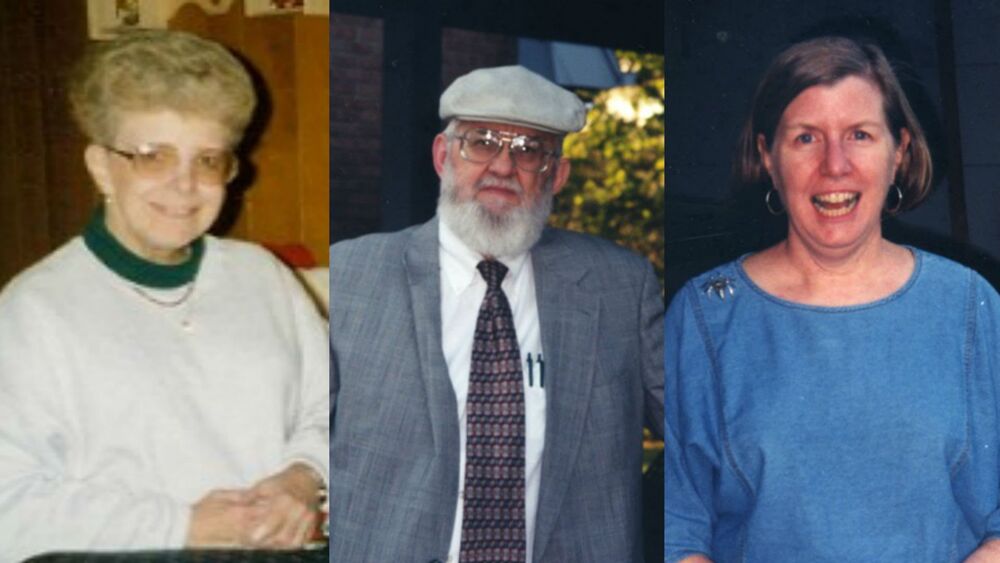
The victims were 56-year-old bank teller Sylvia Holtzclaw and customers Dr. James Elbert “Eb” Barnes and Margaret “Maggie” Barnes. Holtzclaw was working at the bank that day, while the Barnes couple had come in to handle personal financial business. Within a short period of time, all three were shot and killed during what authorities believe was a robbery.
The crime shocked Greer because of its brutality, its timing, and the seemingly ordinary setting where it unfolded. Blue Ridge Savings Bank was not a place most people associated with danger. It was a neighborhood bank, the kind of place where customers were familiar, routines were predictable, and employees were part of the community. The murders changed that sense of safety almost instantly.
A Normal Friday Turns Deadly
May 16, 2003, started like any other workday at Blue Ridge Savings Bank in Greer. The bank was located near Interstate 85 and Highway 14, a busy area with traffic, businesses, and people moving through during the day. It was not an isolated place, which made the crime even more unsettling. The killer or killers entered a functioning bank in the middle of the day and left behind three victims.
Sylvia Holtzclaw was the teller on duty. Reports about the case have noted that she was working alone at the bank that day. Her presence at the bank was routine, and there was no public sign that anything unusual was about to happen. She was a working woman doing her job, serving customers, and going through the familiar duties of a bank employee.
Dr. James Elbert Barnes and his wife, Margaret Barnes, were also inside the bank. They were not random strangers passing through the area. They were members of the broader community and had gone to the bank for financial business. Dr. Barnes, often known as Eb, was associated with higher education and was remembered as a professor. Maggie Barnes was also known as a working professional and a wife who was simply accompanying her husband during what should have been a routine errand.
Sometime around 1:30 p.m., the ordinary rhythm of the bank was broken. A silent alarm was triggered, signaling that something was wrong. Police responded to the location, but when they first arrived, the outside of the bank did not immediately reveal the horror inside. There were no obvious signs of a dramatic confrontation from the street. The building stood as it had before, but inside, three lives had already been taken.
The Discovery Inside the Bank
When officers entered Blue Ridge Savings Bank, they found the main area of the bank strangely quiet. What they eventually discovered was devastating. Sylvia Holtzclaw, Dr. Eb Barnes, and Maggie Barnes had been shot to death. Their bodies were found in a back area of the bank, away from the front where customers would normally conduct business.
The placement of the victims raised immediate questions. Investigators had to determine whether the victims had been forced into the back area, whether they had been surprised there, or whether the killer moved them as part of controlling the scene. The details suggested more than a chaotic robbery. The crime carried signs of deliberation, intimidation, and calculated violence.
Money was taken from the bank, which led investigators to treat the case as a robbery turned triple homicide. But the level of violence stood out. Bank robberies do not always end in murder, and the killing of three people suggested a suspect who was either desperate, ruthless, or determined to leave no witnesses behind.
One particularly important detail was the bank’s missing security tape. At the time, many banks still relied on VHS recording systems. The tape that might have captured the robbery and the killer’s actions was gone. That missing tape became one of the most frustrating parts of the investigation. It suggested that the person responsible may have known to look for it, may have been familiar with bank security procedures, or may have taken it in an attempt to erase evidence.
The Victims Remembered
Sylvia Holtzclaw was more than a bank teller listed in a police report. She was a mother, a worker, and a familiar presence to people who used the bank. Her death was especially painful because she was simply doing her job. There was no indication that she had any connection to the violence other than being present when the robber entered.
In small and mid-sized communities, bank tellers often become familiar faces. Customers see them during deposits, withdrawals, loan payments, and daily errands. They are part of the local routine. Holtzclaw’s killing struck people because it showed how quickly an ordinary job could become deadly through no fault of the person working it.
Dr. James Elbert Barnes, known as Eb, was remembered as an educated man with a respected professional life. He had spent his career in academics and was associated with teaching and science. His presence at the bank that day was accidental in the sense that he was not the target of a known personal attack. He and his wife were there as customers, handling business during the day.
Margaret Barnes, known as Maggie, was killed alongside her husband. Her death added another layer of heartbreak to the case because the couple died together during a routine visit to the bank. They had no reason to believe that walking into Blue Ridge Savings Bank that afternoon would place them in the path of a killer.
The three victims represented different parts of the community: an employee, an educator, and a professional woman. Their lives intersected inside the bank for only a short time, but they became forever linked by the violence of May 16, 2003.
A Search For the Suspect
The investigation into the Blue Ridge Savings Bank murders quickly became a major law enforcement effort. Local police, county investigators, state authorities, and federal agents were involved. Because the crime happened during a bank robbery, the FBI also had a role in the investigation.
Investigators focused on identifying anyone who had been near the bank before and after the killings. A possible suspect description was developed, along with information about a vehicle believed to have been seen in the area. Authorities looked into a red car, possibly an Oldsmobile Alero or a similar vehicle, that may have been connected to the crime.
Witness accounts and surveillance from nearby businesses became important because the bank’s own security tape was missing. Investigators had to build the case from fragments: sightings, timelines, physical evidence, ballistics, vehicle descriptions, and tips from the public. Every small detail mattered because the most direct recording of the crime was gone.
The suspected gun used in the killings was believed to be a .40 caliber firearm, often reported in connection with a Glock-style weapon. That detail helped investigators compare evidence and look at individuals who had access to similar weapons. However, a weapon alone was not enough. Police needed a person, a motive, and evidence strong enough to prove responsibility.
The Red Car Lead
One of the most discussed leads in the Blue Ridge Savings Bank murders involved a red vehicle. The car was reportedly seen in the area around the time of the robbery and killings. Investigators worked to determine the make and model, and attention eventually centered on a red Oldsmobile Alero or a similar car.
A vehicle lead can be extremely valuable in a case like this, but it can also be difficult to confirm. Many red cars may have been on the road near Interstate 85 and Highway 14 that day. Investigators had to determine which sightings were meaningful and which were ordinary traffic. They also had to rely on people’s memories, camera footage, and technical analysis of images that may not have been clear.
The red car became important because it may have been used by the killer to arrive at or leave the bank. If the suspect was unfamiliar with the area, the location near major roads could have provided a fast escape route. If the suspect was familiar with Greer, the route may have been chosen because it allowed quick movement without drawing attention.
Over time, investigators examined possible connections between the red car and persons of interest. One reported lead involved a man later connected to a red Alero and other criminal activity. However, no one was publicly charged in the Blue Ridge Savings Bank murders, and the case remained unresolved.
Why the Case Was So Difficult
The Blue Ridge Savings Bank murders were difficult to solve for several reasons. The first major challenge was the missing security tape. In a bank robbery, security footage can be one of the most important pieces of evidence. It can show the suspect’s face, clothing, movements, weapon, timing, and behavior. Without that tape, investigators lost a direct visual record of the crime.
The second challenge was the lack of surviving witnesses inside the bank. The three people who could have described the killer were murdered. If the motive included eliminating witnesses, the killer succeeded in making the investigation much harder.
The third challenge was the speed of the crime. The robbery and murders appear to have happened within a relatively narrow window of time. That meant the suspect may have entered, acted quickly, taken money, removed the tape, and left before police arrived. A short timeline can limit the number of people who saw anything useful.
The fourth challenge was that the bank was located near busy roads. While that meant there were potential witnesses, it also meant there was a lot of normal traffic. A suspect vehicle could blend into everyday movement. People may have seen the car without realizing it was important until later, when memory had already begun to fade.
Another issue was that the stolen money was not enough by itself to track the killer. If the cash was not marked or traceable, it could have been spent without creating a clear trail. That left investigators to rely on other evidence, including ballistics, vehicle leads, tips, and possible criminal patterns.
The Community Impact
The murders deeply affected Greer and the surrounding area. Bank employees, customers, educators, friends, family members, and ordinary residents all had reason to feel shaken. A place that represented routine and trust had become a murder scene.
For people who lived in Greer, the case was not just another crime story. It happened in daylight, in a public business, in a familiar part of town. The victims were not involved in dangerous activity. They were not in a secluded place late at night. They were doing normal things in a normal place when violence found them.
The killings also created fear because the suspect was not immediately caught. When a violent crime remains unsolved, communities are left with uncertainty. People wonder whether the killer was a stranger passing through, someone with ties to the area, or someone capable of committing another violent act elsewhere.
For the families of Sylvia Holtzclaw, Eb Barnes, and Maggie Barnes, the lack of an arrest meant grief was compounded by unanswered questions. Losing loved ones is devastating under any circumstance, but losing them to murder and then waiting years for justice adds a lasting burden.
Theories And Questions
Over the years, several questions have surrounded the Blue Ridge Savings Bank murders. Did the killer choose that bank because it appeared vulnerable? Did the suspect know only one teller would be working? Was the bank selected because of its location near major roads? Did the killer have prior knowledge of the security system? Was the missing tape taken because the suspect appeared clearly on camera?
The fact that all three victims were killed suggests that the suspect may have wanted to eliminate witnesses. It is also possible that something went wrong during the robbery, leading to panic and violence. However, the removal of the security tape suggests at least some level of planning after or during the crime.
Another question involves whether the killer was an experienced criminal. The ability to control three people, steal money, remove evidence, and escape quickly could point to someone with criminal experience. On the other hand, the violence could also suggest someone unstable, desperate, or willing to kill to avoid identification.
The red vehicle lead has remained one of the central public clues. If the suspect used that vehicle, then someone may have noticed it before or after the crime. Someone may have seen damage, unusual behavior, sudden travel, unexplained cash, or a person acting nervous after May 16, 2003.
A Case Still Waiting For Justice
More than two decades after the Blue Ridge Savings Bank murders, the case remains a painful open wound. The names Sylvia Holtzclaw, Dr. James Elbert Barnes, and Margaret Barnes are still tied to a crime that has never been fully answered in court. Their families and the Greer community have lived with the reality that someone carried out a brutal robbery and triple homicide and was never publicly held accountable.
Cold cases remain alive because evidence can be reexamined, technology can improve, and people who stayed silent can eventually come forward. DNA testing, ballistics comparisons, digital enhancement, and renewed public attention have helped solve older cases across the country. Even a small tip can become important when matched with evidence investigators already have.
The Blue Ridge Savings Bank murders are remembered not only because of the violence, but because of the ordinary lives interrupted. A teller came to work. A married couple came to handle financial business. None of them returned home. Their deaths left behind grief, fear, and a demand for answers that has never gone away.
The case stands as one of Greer’s most haunting unsolved crimes. It is a story about a bank robbery, but it is also a story about three people whose lives mattered. Until the truth is fully known, May 16, 2003, will remain a date marked by tragedy in Greer, South Carolina.
Discover more from City Towner
Subscribe to get the latest posts sent to your email.